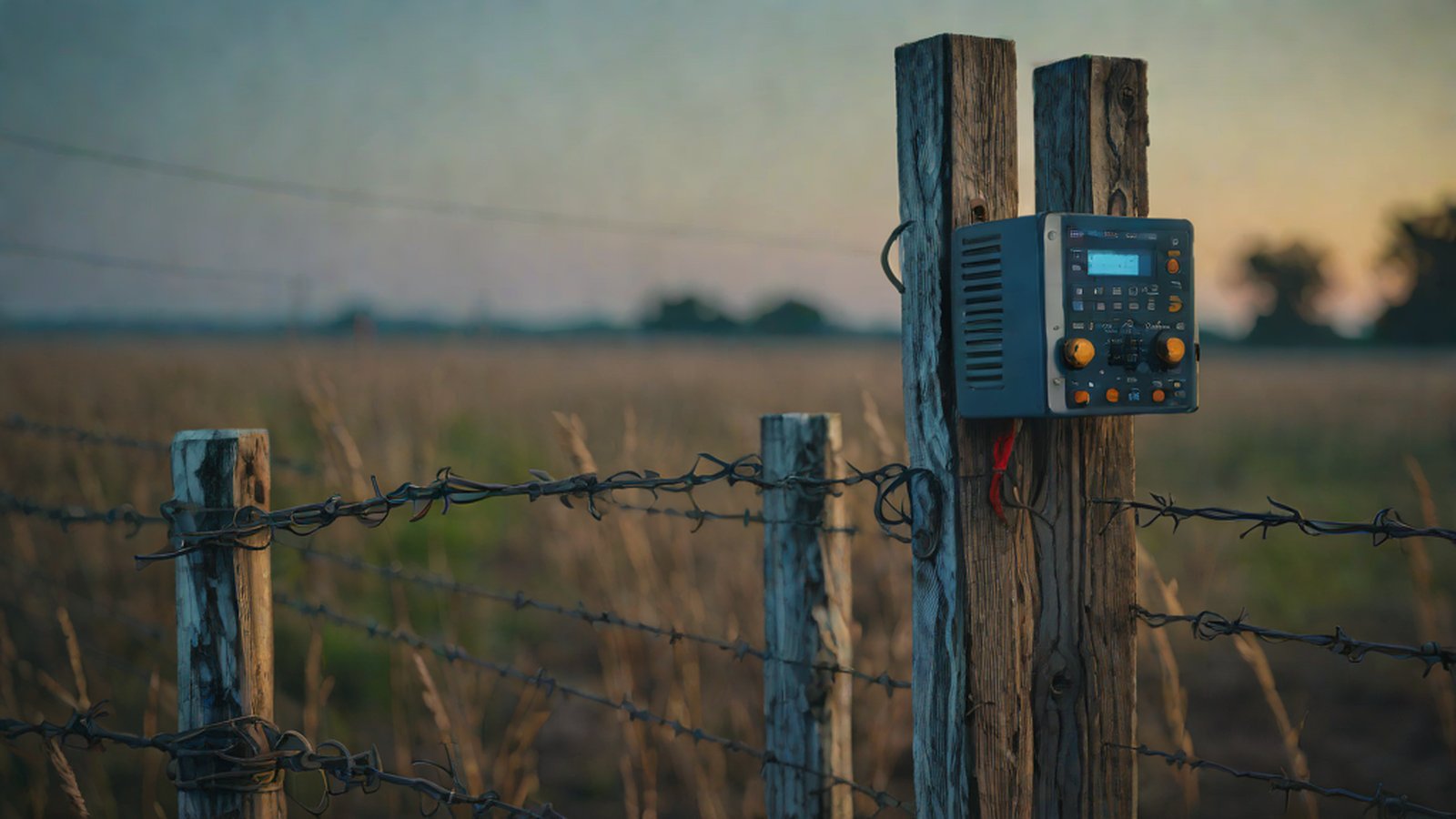
New hardware combining two frequencies to increase the speed of ultra-low-power, long-range 'LoRa' technology by 100 times has emerged, but it has become the center of controversy after encountering the obstacle of potential telecommunications law violations.
Imagine this. You’ve gone camping for the weekend in a remote rural area or deep in the rugged mountains where smartphone signals don’t reach at all. The antenna bars at the top of your smartphone have completely vanished, and only the words ‘No Service’ are left stranded on the screen. In this moment when you feel entirely disconnected from the world, what if you could chat in real-time with your group via a messenger, receive temperature or rainfall data from around a distant tent, and clearly see your companions’ locations on a map?
There is a communication technology that makes this kind of magic possible without the need for massive telecom cell towers or expensive satellite connections. It is a wireless network utilizing a technology called ‘LoRa’. Until now, this technology was so slow that it was barely used for anything more than sending very short text messages. Recently, however, the global tech community has been buzzing with news of a new hardware called ‘BYOMesh,’ which has drastically boosted communication speeds by widening the data pathways by a staggering 100 times. Let’s take a step-by-step look at the principles that enable cell-tower-free communication in the forest, and what kind of regulatory controversies are hiding behind this 100x speed increase.
Why It Matters
The 5G cellular networks on our smartphones and the Wi-Fi in our homes that we comfortably use every day are incredibly fast. You can download high-definition videos in just a few seconds. However, there is a fatal weakness: they consume an enormous amount of electricity. To use an analogy, Wi-Fi is like a top-tier sports car that goes incredibly fast but guzzles fuel like water. Wi-Fi routers must always be plugged into a wall, and a smartphone turns into a useless black brick if you forget to charge it for even a single day. In the outdoors, where electricity is scarce, they are completely useless.
On the other hand, devices designed around LoRa technology have power consumption that is miraculously low compared to Wi-Fi or cellular networks (GSM). With just a single battery installed or a coin-sized solar panel attached, the devices can operate autonomously for months or even years Source Title. It’s like a bicycle that, while slow, can travel halfway around the globe on just a single spoonful of food. Thanks to this characteristic of transmitting radio waves over long distances while barely using electricity, LoRa has long been in the spotlight in the field of long-range communication using free, unlicensed frequency bands that do not require expensive permits from telecoms or governments Source Title.
Open-source software projects like ‘Meshtastic’, in particular, have fully utilized these inexpensive LoRa devices. As a result, they have served as excellent ‘off-grid’ communication platforms in remote areas with no existing network infrastructure or regions where communication networks have been paralyzed by disasters Source Title.
However, LoRa technology also had one fatal unsolved challenge. In exchange for extreme power efficiency, the amount of data it could carry at once was sorely lacking, meaning it was primarily used only to exchange lightweight text messages Source Title.
Yet, the newly developed ‘BYOMesh’ has reportedly increased the width of the road for connecting and transmitting data—namely, the ‘backhaul bandwidth’ (the core artery where large volumes of data pass)—by a massive 100 times Source Title. A 100-fold expansion of the communication road signifies an unimaginably monumental change. Beyond simple text transmission, the path is now wide open for entirely new applications handling large and heavy data, such as agricultural Internet of Things (IoT) that can monitor the status of massive farms by zone all at once, real-time sensing of vast natural environments, and tracking complex logistics delivery networks Source Title.
The Explainer
How on earth can you talk to a colleague far away without a single massive telecom cell tower? To understand this, you need to know the principles behind the two core pillars supporting this technology: the ‘Mesh Network’ and ‘Chirp Spread Spectrum’.
First, the Mesh Network structure is very easy to understand if you think of it as a kind of ‘bucket brigade’. Imagine people standing in a long line from a fire truck to the scene of a fire, passing buckets of water to the person next to them, over and over. Instead of a large central cell tower controlling all devices at once, each device (node) scattered in the forest connects to neighboring devices like a ladder, continuously passing the message to the next one until it reaches its final destination Source Title. For conversations to be transmitted accurately without interference during this process, devices belonging to the same mesh network must have their Region settings or internal modem Presets configured identically to achieve a proper relay Source Title.
Then, with what kind of ‘voice’ do these small devices shoot radio waves at each other in the harsh wilderness? This is where LoRa’s core magic, the ‘Chirp Spread Spectrum’ technology, comes into play. Let’s use an analogy. If you try to speak in a normal voice to a distant friend in the middle of a noisy party with loud music, your voice will be completely drowned out by the surrounding noise. But what if, instead of speaking, you made a sharp, unique ‘whoosh’ sound with a rapidly rising and falling pitch, like a sharp whistle? No matter how loud the surrounding noise is, that peculiarly patterned whistle would sharply pierce through and reach your friend’s ears. LoRa uses a radio wave method similar to this unique acoustic pattern to securely transmit digital signals even amidst complex physical obstacles in reality. Under the right conditions, it can easily reach distances of several kilometers Source Title. Nowadays, devices adopt the latest SX1262 chip, a smarter and more advanced form than the older SX1276 chips, minimizing power usage to the extreme while astonishingly extending the reach of the radio waves Source Title.
So, what exactly did today’s main character, BYOMesh, do to cause this bucket brigade’s speed to explode by 100 times? The secret lies in “masterfully combining two lanes into one.” BYOMesh hardware successfully combines the traditionally used sub-1GHz frequency band with the 2.4GHz frequency band commonly used for Wi-Fi Source Title. To use an analogy, it’s like opening up a wide, smooth, straight highway lane right next to a bumpy, narrow, and slow one-lane dirt road in a rural village, effectively merging the two paths. Thanks to this 100-fold widened bandwidth for the backhaul network (the core data pathway), the mesh network—a collection of small devices—can now effortlessly handle much heavier data while instantly expanding the communication network’s coverage across vastly broader geographical areas Source Title.
Where We Stand
The news of this tremendous performance improvement immediately captivated the global IT community. On ‘Hacker News,’ a famous community where meticulous tech enthusiasts and developers gather, the article became a massive talking point, garnering over 150 upvotes in just three hours after it was posted, and the news spread rapidly via the Telegram messenger Source Title. Other sites reporting on various latest IT news also recorded high view counts day after day, representing people’s curiosity and anticipation for the new technology Source Title Source Title.
However, behind the developers’ enthusiastic cheers lie the cold barriers of reality and sharp criticism. The core of the controversy is a sharp suspicion over whether such a groundbreaking speed increase is a result achieved legally within the ‘regulatory boundaries (telecommunications law)’ strictly established by the government.
Fundamentally, radio waves are an invisible but limited ‘public good’ that everyone must share. To prevent the disaster of communication paralysis caused by entangled frequencies, governments around the world have enacted exceedingly strict laws for each band. Simply put, just as you shouldn’t blindly plug a 220V-exclusive appliance used in Korea into a 110V outlet in the US, radio frequency specifications differ thoroughly by country. To legally use mesh equipment in the US and the Americas, you absolutely must purchase and operate devices tuned to the 915 MHz band. If you arbitrarily operate a model intended for the European region (868 MHz)—which uses a completely different frequency band—in the US, it immediately becomes a crime of illegal radio transmission Source Title.
One Hacker News user keenly zeroed in on exactly this point. They pointed out, “Even the mesh network protocols currently popular in the US (such as MeshCore, Meshtastic, etc.), strictly speaking, are walking a tightrope where they don’t fully comply with the Federal Communications Commission’s (FCC) complex telecommunications regulations.” Furthermore, they left a biting critique: “A 100x bandwidth achieved through the expedient of simply ignoring and violating national radio rules is qualitatively entirely different from a legal 100x bandwidth achieved while fully complying with the law” Source Title.
Given this situation, there’s also a cynical view that while the technological achievement itself is highly intriguing and amazing, it is premature to immediately utilize it as a robust communication ‘infrastructure’ that reliably supports our society. Another community user clearly delineated the realistic limitations facing the current hardware, stating, “Current mesh radio systems are just a toy (a plaything) that’s good for chatting for fun with radio communications nerds living around your neighborhood; it’s a stretch to consider them a heavy and serious infrastructure facility” Source Title.
What’s Next
Despite these concerns over legal regulatory violations and realistic limitations, technological progress doesn’t stop and continues to forge new breakthroughs. Novel attempts to completely revamp the very software architecture that forms the foundation of the technology are ongoing in order to overcome outdated communication methods.
For example, the way messengers navigate addresses without getting lost is also rapidly evolving. The existing Meshtastic system used a rather simple and intuitive structure where, if you wanted to send a radio message to someone, you would use the radio device’s ‘short name’ (or the name of the device itself) as the destination address to communicate. However, in the recently emerging ‘Reticulum’ environment, the structural system for precisely assigning an individual’s unique address and delivering messages is designed in a fundamentally different way from existing mesh networks, actively exploring new possibilities for broader and more complex network environments Source Title.
Furthermore, as BYOMesh demonstrated earlier, substantial advancements on the hardware side that aim to freely mix and use multiple frequencies altogether are steadily making their appearance. At ‘electronica,’ a global advanced technology trade fair held in 2024, the first successful demonstration of such a smart module capable of simultaneously covering multiple frequency bands took place. The successful commercialization of these dual-band devices presents future customers with superb flexibility to smoothly navigate complex regulations or adapt to country-specific standards, providing a shining opportunity to dive into a much broader and more massive applications market going forward Source Title.
Amidst a tense tug-of-war between strict regulation and free innovation, these tiny, marvelous devices that silently weave together distant, disconnected spaces while barely consuming electricity are fully geared up to progressively—and more solidly—connect the invisible blind spots around our lives (massive farms, devastated natural disaster zones, and desolate, remote forests).
AI’s Take
MindTickleBytes AI Reporter’s Take: In front of the sweet news of an eye-opening ‘100x speed innovation’, there invariably stands a thick, cold wall of strict national telecommunication regulations and the protection of public frequencies. To go beyond being a fascinating walkie-talkie in the woods and be firmly recognized as a true ‘low-power giant mesh infrastructure’ that supports countries and industries, it must evolve past the joyful plaything of a few enthusiasts. Rather than showing off technical performance, a mature process of compatibility and standardization that respects legal boundaries and garners public trust must precede any other innovation. Innovation and institutions are bound to move forward step by step through an endless, tense game of hide-and-seek.
References
- Meshtastic - Wikipedia
-
[BYOMesh – New LoRa mesh radio offers 100x the bandwidth Hacker News](https://news.ycombinator.com/item?id=47999636) -
[BYOMesh: The Next Generation of LoRa Mesh Radio Hardware TechPlanet](https://techplanet.today/post/byomesh-the-next-generation-of-lora-mesh-radio-hardware) -
[LoRa Configuration Meshtastic](https://meshtastic.org/docs/configuration/radio/lora/) -
[It sucks how everything feels like a toy. I think meshtastic is the closest thin… Hacker News](https://news.ycombinator.com/item?id=48000453) -
[Top Mesh Radio Devices 2026: LoRa Hardware Guide RegionMesh](https://www.regionmesh.com/best-mesh-radio-devices-2026/) -
[Introduction Meshtastic](https://meshtastic.org/docs/introduction/) - BYOMesh–NewLoRameshradiooffers100xthebandwidth
- BYOMesh–NewLoRameshradiooffers100xthebandwidth
- Hacker News – Telegram
- Meshtastic: радиосеть на базе технологииLoRa
-
[Vue HN 2.0 BYOMesh–NewLoRameshradiooffers100xthe…](https://vue-hackernews-ssr-5cavbdjcta-ew.a.run.app/item/47999636) -
[Radio Hobbyists, Rejoice! Good News for LoRa & Mesh Electronic Frontier Foundation](https://www.eff.org/deeplinks/2025/07/radio-hobbyists-rejoice-good-news-lora-mesh) - lora radio mesh communication
- NeoMesh as you want it! - Electronics Industry Magazine

- They consume more power than Wi-Fi or cellular networks and need frequent charging.
- You must purchase an expensive frequency license from a government agency to use them.
- They consume very little power, enabling long-term off-grid communication using batteries or solar power.
- Secretly tapping into the spare bandwidth of nearby commercial 5G cell towers.
- Simultaneously combining a sub-1GHz frequency band and a 2.4GHz frequency band.
- Illegally increasing the transmission power of the device by maximizing battery consumption.
- 868 MHz, the same as in Europe.
- 915 MHz, exclusively for the Americas region.
- You can use any frequency freely without restriction.