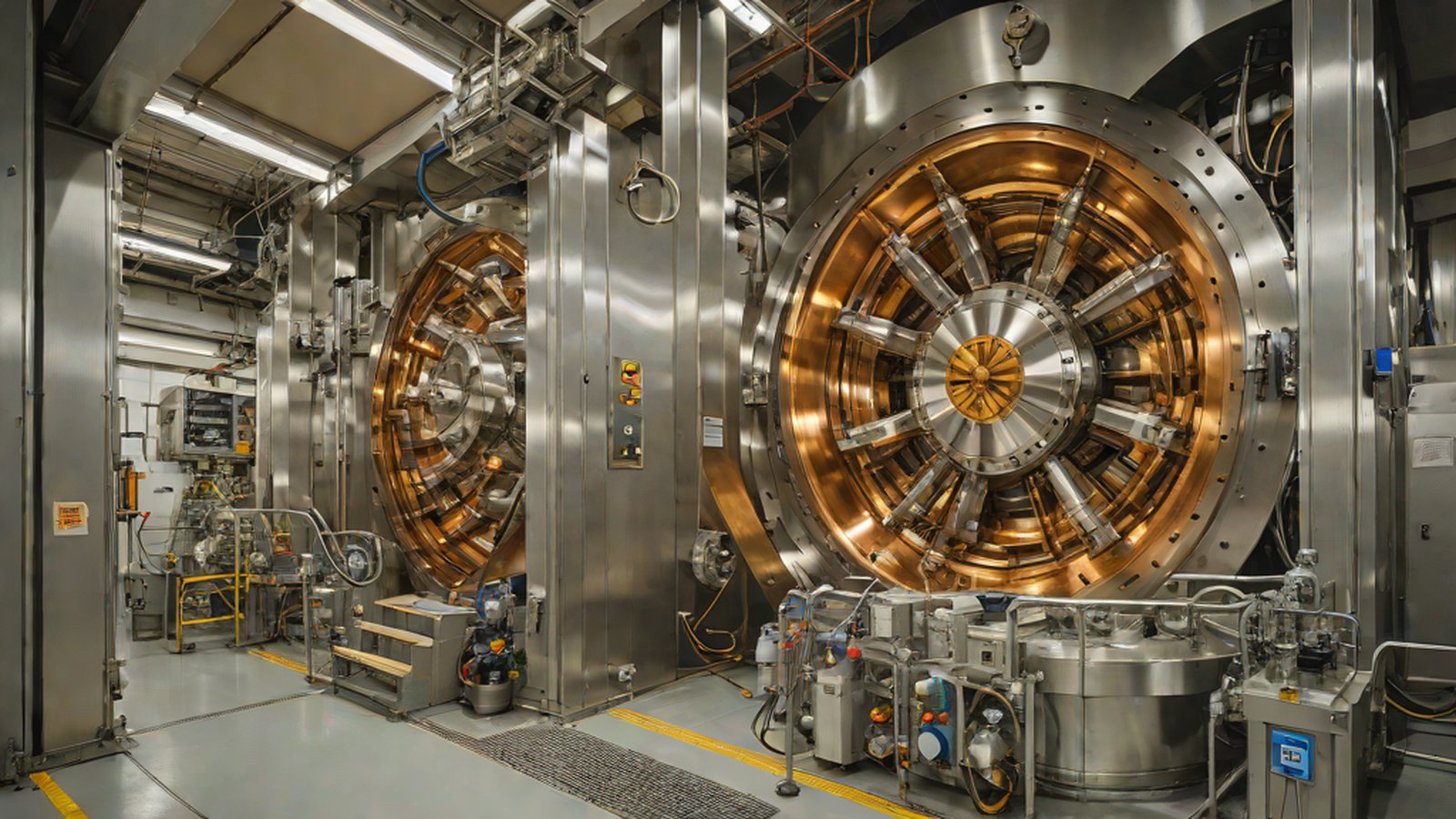
Collaboration between Google DeepMind and fusion startups, alongside AI-driven ultra-high-temperature plasma control, is accelerating the era of clean, limitless energy.
How to Bring the Heart of the Sun to Earth
Imagine this. What if the electricity powering your living room lights was generated using the same principle as the Sun floating far away in space? The Sun, which brightens the world every morning, is actually a massive ‘natural energy factory.’ In its core, hydrogen nuclei fuse together under extreme heat and pressure, releasing enormous amounts of energy—a process called nuclear fusion (the reaction where light atomic nuclei combine to form heavier nuclei, releasing energy) Bringing AI to the next generation of fusion energy - ONMINE.
Scientists have long dreamed of bringing this solar principle to power plants on Earth. If successful, we would gain access to virtually ‘limitless clean energy’ with zero carbon emissions and minimal concerns about radioactive waste Bringing AI to the next generation of Fusion Energy. However, the path to making this dream a reality has been anything but easy. It requires enduring temperatures far hotter than the Sun’s core and managing volatile energy with absolute precision.
Recently, Artificial Intelligence (AI) has stepped in as a ‘magic hand’ to help solve this seemingly impossible puzzle.
Why Does This Matter?
Why is the world so enthusiastic about nuclear fusion, and why is AI necessary now? The primary reason is that fusion is the ‘ultimate solution’ to humanity’s energy problems.
- A Sustainable Future: Unlike fossil fuels, nuclear fusion does not emit carbon dioxide. Furthermore, unlike conventional nuclear power (fission), it does not produce high-level radioactive waste that lasts for tens of thousands of years, making it extremely safe Bringing AI to the next generation of fusion energy - ONMINE.
- Infinite Fuel: Deuterium, the primary fuel for fusion, can be extracted from seawater, meaning resources are virtually inexhaustible Bringing AI to the next generation of Fusion Energy. To put it in perspective, the fuel from just one cup of seawater could provide enough electricity for a household for decades.
-
Explosive Investment: Capital is moving quickly to capture this potential. Total investment in the fusion industry has skyrocketed more than eightfold in five years, from $1.7 billion (approx. 2 trillion KRW) in 2020 to $15 billion (approx. 20 trillion KRW) as of September 2025 [Why the AI Industry Is Betting on Fusion Energy TIME](https://time.com/7328213/nuclear-fusion-energy-ai/).
However, to succeed in fusion, we must confine and control plasma (an ionized gaseous state where nuclei and electrons are separated) at temperatures exceeding 100 million degrees Celsius—far hotter than the Sun Bringing AI to the next generation of fusion energy - ONMINE. This process is so complex and occurs in timeframes shorter than a blink of an eye that human calculation alone cannot keep up. This is exactly where AI proves its value.
Easy Understanding: How Does AI Tame the ‘Artificial Sun’?
What happens inside a fusion reactor is essentially like “using invisible magnetic forces to keep a very hot, wild mass of jelly suspended in mid-air.” If this jelly (plasma) loses balance for even a moment and touches the wall, the device melts or the reaction stops.
1. A 0.001-Second Battle: Real-Time Control
Google DeepMind recently partnered with Commonwealth Fusion Systems (CFS) to tackle this challenge Bringing AI to the next generation of fusion energy. DeepMind’s AI system monitors the fluctuating state of the plasma inside the reactor in real-time and instantly decides how to adjust the magnetic fields to keep the plasma stable Plasma Under Control: How AI is Driving Fusion’s Next Leap.
Imagine a circus performer spinning thousands of plates at once. AI predicts which way each plate is tilting and moves its fingertips in 0.001 seconds to prevent them from falling. This real-time control system is essential for next-generation fusion reactors to operate safely for long periods AI makes fusion energy smarter and safer with real-time plasma monitoring.
2. Infinite Practice in the Virtual World (Simulation)
The Princeton Plasma Physics Laboratory (PPPL) introduced a new computing platform called ‘STELLAR-AI’ PPPL launches STELLAR-AI platform to accelerate fusion energy research. This platform combines AI and high-performance computing to simulate (conducting mock experiments of real situations on a computer) fusion reactions in a virtual environment.
While a single real-world fusion experiment is incredibly costly and time-consuming, AI can perform tens of thousands of virtual experiments in its place. This allows researchers to identify which materials resist high heat or which structures are most efficient, dramatically accelerating the pace of research Machine Learning Applications Enabling Fusion Energy: Recent …. It’s like a pilot undergoing thousands of hours of training in a flight simulator before ever taking to the actual sky.
Current Status: How Far Have We Come?
Beyond mere theory, tangible results are now being reported one after another.
- DeepMind and CFS Partnership: In October 2025, DeepMind officially announced a research collaboration with CFS, a global fusion leader Bringing artificial intelligence to the next generation of fusion energy. This is an attempt to apply DeepMind’s previous breakthrough research on AI plasma control to commercial-scale devices Bringing AI to the next generation of fusion energy.
- Toward Net Energy Gain: CFS is currently building a device called ‘SPARC.’ Their goal is to demonstrate ‘Net Energy Gain’—producing more energy than was put in—by the end of 2026 Top 10 Fusion Energy Startups to Watch in 2026.
- Supply Chain Establishment: Beyond technical development, a supply chain for producing specialized materials and components (such as capacitors) for fusion plants is already being established Minh Q. Tran on LinkedIn.
Experts agree that “computing tools are making fusion research more agile and precise” AI ignites innovation in fusion - iter.org. While fusion might not power your home tomorrow, it is clear that AI is bringing that day much closer.
What’s Next?
We have exciting milestones ahead of us.
First is the SPARC experiment in 2026. If the SPARC device produces energy as planned, nuclear fusion will be elevated from science fiction to a ‘commercially viable energy business’ Top 10 Fusion Energy Startups to Watch in 2026.
Second is the start of commercial energy supply. Another startup, Helion Energy, has already signed a contract to supply fusion energy to Microsoft by 2028 Top 10 Fusion Energy Startups to Watch in 2026. This could be the first instance of fusion energy being traded in the private market.
Third is the deepening integration of AI and physics. According to Google’s latest updates, researchers are now using experimental generative AI models to accelerate fusion research Here are Google’s latest AI updates from October 2025. Machine learning algorithms will expand beyond controlling plasma to designing new heat-resistant materials Machine Learning Applications Enabling Fusion Energy: Recent ….
MindTickleBytes AI Reporter’s Perspective
The sight of AI standing before the massive physical challenge of nuclear fusion looks like ‘the sharpest intelligence (AI)’ taming ‘the hottest force (fusion).’ Complex physical hurdles that were expected to take decades are being solved one by one thanks to AI’s real-time calculations and infinite simulations.
We have moved past the era of uncertainty where we asked ‘if’ we could build an artificial sun, and are now entering the era of commercialization, competing to see ‘how fast’ we can apply it to our lives with the help of powerful AI partners. In a future filled with clean, limitless energy, AI is lighting the way.
References
- Bringing AI to the next generation of fusion energy
- Bringing AI to the next generation of fusion energy - ONMINE
- PPPL launches STELLAR-AI platform to accelerate fusion energy research
- Bringing AI to the next generation of fusion energy - Vivold
- Bringing AI to the next generation of Fusion Energy - DataForcee
- Bringing artificial intelligence to the next generation of fusion energy
- Machine Learning Applications Enabling Fusion Energy: Recent Progress and Future Directions
- AI ignites innovation in fusion - iter.org
- Plasma Under Control: How AI is Driving Fusion’s Next Leap
- AI makes fusion energy smarter and safer with real-time plasma monitoring
- Here are Google’s latest AI updates from October 2025
-
[Why the AI Industry Is Betting on Fusion Energy TIME](https://time.com/7328213/nuclear-fusion-energy-ai/) - Minh Q. Tran on LinkedIn - #fusionenergy #innovation
- Top 10 Fusion Energy Startups to Watch in 2026
- General Fusion to Showcase Practical Path to Commercial Fusion Energy

- Solid
- Liquid
- Plasma
- $1.7 billion
- $15 billion
- $50 billion
- Supplying power to Microsoft
- Demonstrating Net Energy Gain
- Developing fuel for Mars exploration