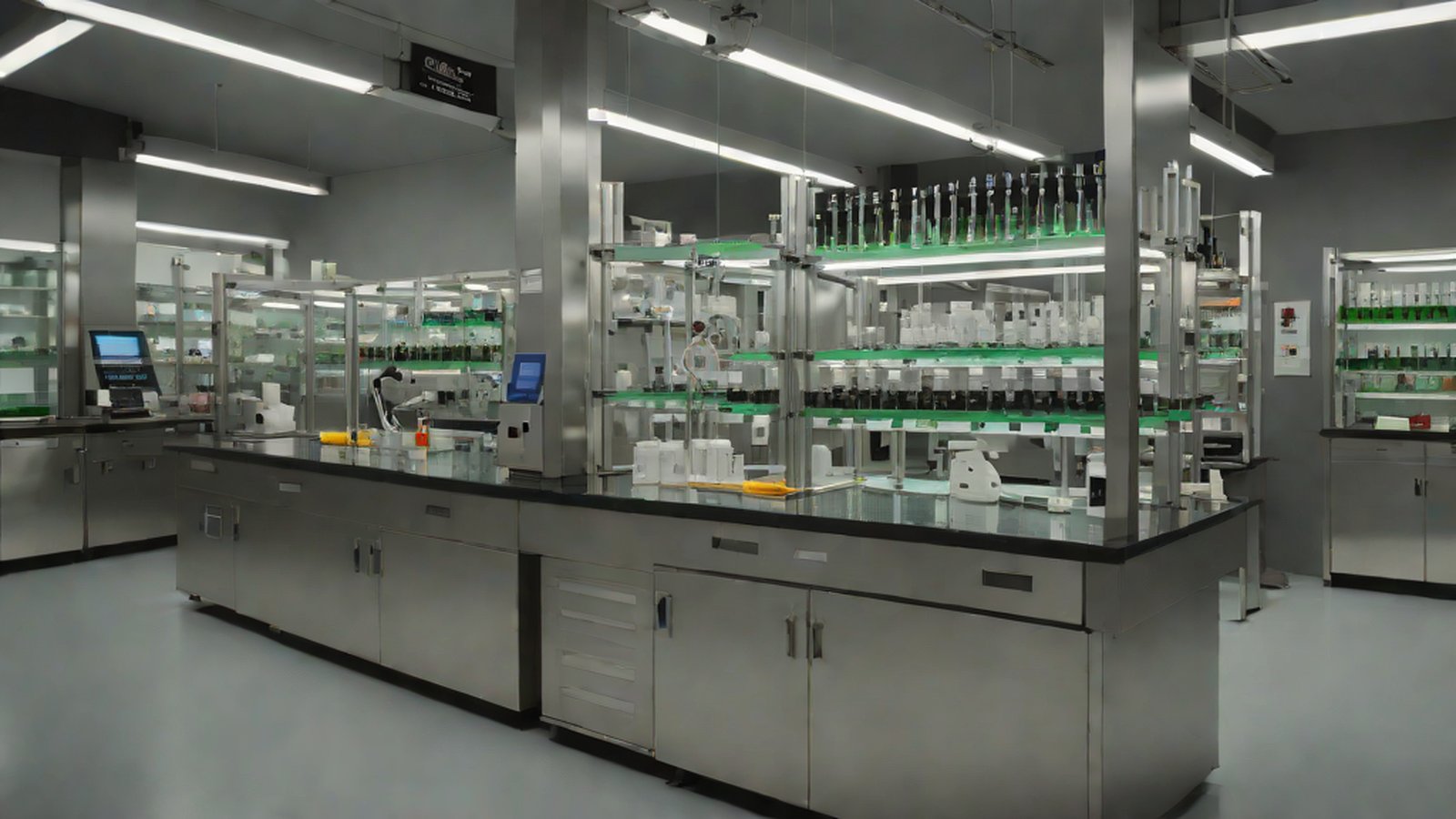
OpenAI has launched 'GPT-Rosalind', a life sciences-specialized model named after 20th-century British scientist Rosalind Franklin, opening an era of accelerated research that connects ideas to actual experimental evidence.
Imagine this: a new variant of a virus suddenly emerges, threatening the entire world. Tens of thousands of scientists stay up all night trying to find a cure, but analyzing the virus’s complex genetic structure and finding a therapeutic compound among trillions of chemicals could take months, or even years. But what if an Artificial Intelligence (AI) scientist could sit at a computer, instantly scour thousands of databases, propose optimal drug candidates, and perfectly finish the experimental design?
This is no longer a story from a movie set in the distant future. On April 16, 2026, OpenAI, the creator of ChatGPT, released a new AI model specifically designed for life sciences research called ‘GPT-Rosalind’ Introducing GPT‑Rosalind for life sciences research - OpenAI.
Today, we will break down what this smart ‘AI scientific assistant’ is and why it will bring important changes to our healthy future.
Why is this important?
While the ChatGPT we’ve been using is an ‘all-around knowledgeable friend’ who knows everything about the world, the newly announced GPT-Rosalind is like a ‘professional scientist’ with a biology degree and years of grueling laboratory experience OpenAI debuts GPT-Rosalind, a new limited access model for life ….
To use an analogy, if previous AI was a student who memorized an entire encyclopedia, GPT-Rosalind is a doctor who looks through a microscope to observe cells directly and analyze the causes of diseases. In reality, developing a single new drug in the life sciences field costs an average of trillions of won and takes more than 10 years. The reason is that biological data is so vast and complex that there are physical limits to how many possibilities a human scientist can review individually.
Through GPT-Rosalind, OpenAI has set an ambitious goal to radically narrow the gap between “promising scientific ideas” and actual “evidence, experiments, and results” OpenAI debuts GPT-Rosalind, a new limited access model for life …. In simple terms, it means building a ‘superhighway’ for the process of turning brilliant ideas in a scientist’s head into actual drugs or treatments.
Easy Understanding: Key Capabilities of GPT-Rosalind
Let’s summarize how GPT-Rosalind differs from general AI into three key points that will change our lives.
1. Specialized Scientific ‘Reasoning’ Model
This model doesn’t just generate plausible sentences; it is a ‘reasoning model’ (a model that finds the right answer on its own through complex logical steps) that solves problems by considering scientific logic step by step Introducing GPT‑Rosalind for life sciences research - OpenAI.
Let’s use an analogy. If you ask a beginner cook to “make a delicious dinner,” they might recite a recipe they saw on the internet. However, a professional chef looks at the ingredients in the fridge and the weather and judges for themselves, saying, “The humidity is high today, so a warm, nutritious soup would be better than crispy fried food.” Like this ‘professional chef,’ GPT-Rosalind deeply understands and logically analyzes complex chemical structures, protein engineering, and genetic information to find the best answers Introducing GPT‑Rosalind for life sciences research - OpenAI.
2. ‘Direct Connection’ to Biological Databases
Typical AI only answers within the knowledge it has studied (learned) in the past, but GPT-Rosalind has the ability to directly access major public biological databases worldwide OpenAI launches GPT-Rosalind, a biology-tuned LLM.
Comparing it to a library, it’s not just about memorizing books; it’s about going directly to the shelves whenever needed to find and read the latest papers, and then determining drug targets or reasoning the structural characteristics of proteins based on that information OpenAI launches GPT-Rosalind, a biology-tuned LLM. Its greatest strength is being constantly armed with ‘the latest information.’
3. Training on 50 Scientific Workflows
It has pre-learned 50 core research procedures, or workflows (the step-by-step flow of research or work), that researchers repeatedly perform in the lab OpenAI launches GPT-Rosalind, a biology-tuned LLM.
- Target Discovery: The process of accurately identifying key causal substances (such as proteins or genes) that cause disease Introducing GPT-Rosalind for life sciences research
- Genomics Interpretation: Analyzing complex genetic maps to find decisive clues to genetic diseases Introducing GPT-Rosalind for life sciences research
- Hypothesis Generation: Logically formulating scientific hypotheses such as “If we inhibit the activity of this protein, won’t cancer cells decrease?” Introducing GPT-Rosalind for life sciences research
Since AI understands these step-by-step research processes, researchers can immerse themselves in more creative and essential research instead of simple and cumbersome data organization.
Current Status: Honoring the Name of Rosalind Franklin
This model is named after the great 20th-century British scientist Rosalind Franklin OpenAI launches AI model GPT-Rosalind for life sciences research. She was a tragic genius who took the X-ray photographs that played a decisive role in uncovering the double-helix structure of DNA but did not receive proper recognition for her work at the time. Like her name, which changed the history of science, the name contains OpenAI’s strong will to open a new chapter in life sciences.
Currently, GPT-Rosalind is not available to everyone. It was first released with Limited Access to professionally support research in life sciences and Translational Medicine (the stage of applying basic science research results to actual patient treatment) OpenAI debuts GPT-Rosalind, a new limited access model for life … GPT-Rosalind: AI Plugin Transforms Life Sciences Research. Even at this moment, selected researchers around the world are preparing various innovations, from human genetics to protein design, with the help of GPT-Rosalind.
What will happen in the future?
The life sciences community expects the emergence of GPT-Rosalind to drastically increase the speed of drug development. Especially in specialized fields such as Biochemistry, Protein Engineering, and Genomics, the hypotheses proposed by AI and its sophisticated data analysis capabilities will combine with human scientists’ insights to create huge synergy Introducing GPT‑Rosalind for life sciences research - OpenAI OpenAI launches AI model GPT-Rosalind for life sciences research.
In the not-too-distant future, the news we see might be the heart-pounding announcement that “treatments for cancer or rare diseases, which were once considered incurable, have finally been discovered.” And behind that news, there’s a high possibility that AI scientific assistants like ‘GPT-Rosalind,’ which silently analyzed data and suggested experimental paths, were active. AI is moving beyond being a tool for writing and drawing and becoming a reliable partner in saving human lives.
AI Reporter’s Perspective
Passing the era of general-purpose AI, I feel that the era of ‘expert AI’ that digs deep into specific fields has arrived. GPT-Rosalind will be a powerful colleague that shortens the hours of agony scientists spend alone in cold laboratories and helps them derive more accurate and safe results. Now, AI has gone beyond the stage of satisfying human intellectual curiosity and has stood at the forefront of scientific research that actually saves lives. I hope that the progress of technology leads to a warm revolution that reduces human suffering.
References
- Introducing GPT‑Rosalind for life sciences research - OpenAI
- OpenAI launches AI model GPT-Rosalind for life sciences research - Reuters
- OpenAI launches AI model GPT-Rosalind for life sciences research - Yahoo Tech
- OpenAI debuts GPT-Rosalind, a new limited access model for life sciences - VentureBeat
- OpenAI launches GPT-Rosalind, a biology-tuned LLM - LetsDataScience
- Introducing GPT-Rosalind for life sciences research - OpenAI Help
- GPT-Rosalind: AI Plugin Transforms Life Sciences Research - AIDailyPost
- A New Frontier: OpenAI Unveils GPT-Rosalind for Life Sciences - Creati AI
FACT-CHECK SUMMARY
- Claims checked: 15
- Claims verified: 13
- Verdict: PASS

- Marie Curie
- Rosalind Franklin
- Ada Lovelace
- 10
- 30
- 50
- Drug discovery
- Protein engineering
- Financial market prediction