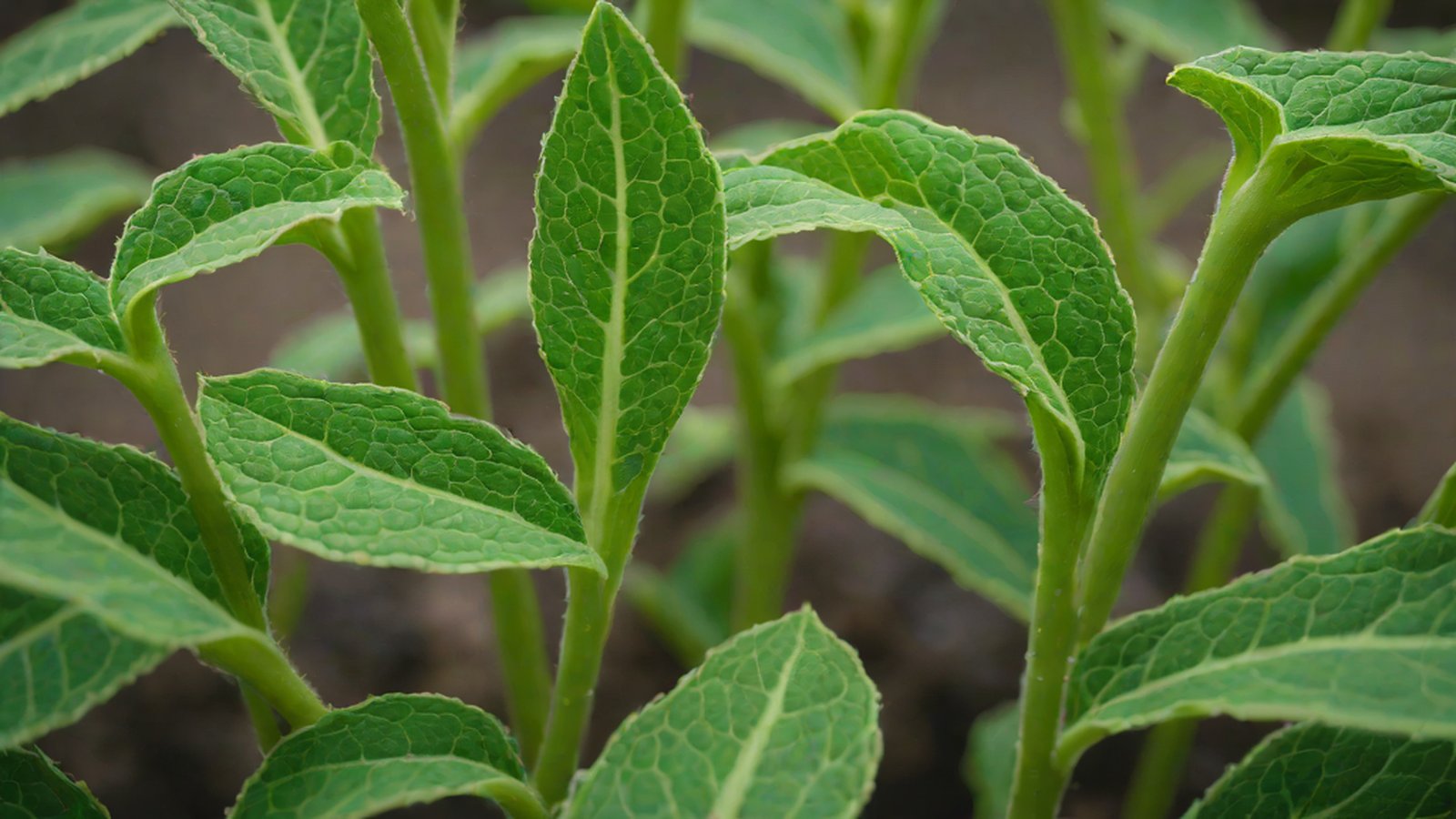
Scientists are using AI and gene-editing tools to design 'climate-resilient crops' that can survive heatwaves, droughts, and floods, protecting the future of humanity's food supply.
If the Earth gets hotter, will our lunch menu disappear?
Imagine this. It is a very sweltering summer day in 2040. You stop by the grocery store to prepare lunch, but the bananas you usually enjoy are nowhere to be seen. The price of rice has doubled since last month, and the fresh vegetable section is empty. This is because global crop yields have plummeted due to continuous heatwaves and unexpected droughts.
| This scenario is by no means a story from a far-off science fiction novel. Currently, the Arctic is warming four times faster than the rest of the planet [[What are the effects of globalwarming? | National Geographic](https://www.nationalgeographic.com/environment/article/global-warming-effects)], and global warming is progressing at a faster rate than at any other time in human history [[Causes and Effects ofClimateChange | United Nations](https://www.un.org/en/climatechange/science/causes-effects-climate-change)]. |
As the Earth heats up, the delicate balance of nature is being broken, sounding a major alarm for the ‘food production system’ that creates the food we eat every day. Fortunately, however, we have a new weapon: Artificial Intelligence (AI) and advanced genetic engineering. Scientists have joined forces to begin designing ‘super crops that fight against climate change.’ From now on, we will explain in simple terms what kind of magic is happening in laboratories to protect the future of our dinner tables.
Why It Matters
Until now, human agriculture has focused only on “how to harvest more (yield).” However, for agriculture in 2025 today, ‘survival in extreme environments’ has become the most urgent task beyond simply gathering a lot [Crop Science Innovation in 2025: The Frontline of Climate Resilience].
- There is no more land to clear: Already, more than half of the land where humans can live on Earth is being used for farming [Crop Science Innovation in 2025: The Frontline of Climate Resilience]. Cutting down forests to create fields to get more food only accelerates the climate crisis.
- Weather has become unpredictable: Every time the temperature rises by 1 degree, the plant growth cycle and yield are shaken. Now, scientists are preparing countermeasures by simulating (virtual experiments) the impact of extreme weather events on crops through climate change scenarios [Integrative strategies for sustainable agriculture in the face of …].
- They must act as the Earth’s ‘scavengers’: Crops are not just food; they can be excellent tools for absorbing carbon from the atmosphere. This is because well-designed roots can turn the soil into a giant Carbon Sink (a place that absorbs and stores carbon), contributing to cooling the Earth [Engineering Roots for Climate-Resilient Crops].
The Explainer: How AI and Genetic Engineering Upgrade Crops
Designing a new plant is similar to upgrading an underperforming computer to the latest model or repairing a broken machine. Scientists are currently using two key tools to perform this task.
1. AlphaFold: A Cooling Device for the Plant’s ‘Engine’
All plants grow through a process called ‘photosynthesis,’ which takes sunlight and turns it into energy. This complex factory line requires a very important enzyme (a protein catalyst that helps chemical reactions within an organism) called GLYK. However, this enzyme is very vulnerable to heat. When the weather gets too hot, this enzyme clumps together or deforms, causing an ‘overload,’ and eventually, the plant stops growing.
This is where Google DeepMind’s AI, AlphaFold, appears as a relief pitcher. AlphaFold is an AI model that precisely predicts the complex three-dimensional structure of proteins. Scientists are using this AI to accurately identify the appearance of the GLYK enzyme and study how to reinforce its structure so it can withstand heat [How AlphaFold is helping scientists engineer more heat-tolerant crops — Google DeepMind].
To use an analogy: It is like installing a high-performance radiator (reinforced enzyme structure) designed by AI when a car engine (photosynthetic enzyme) keeps overheating and trying to stop in a hot desert (heatwave). Thanks to this, plants can grow vigorously without getting tired even under the hot sun [Engineeringmoreresilientcropsforawarmingclimate].
2. Genetic Circuits: Planting a ‘Brain’ in Plants
| Researcher Jennifer Brophy at Stanford University is creating a system called ‘Genetic Circuits’ inside plants. While existing genetic modification (GMO) was simply at the level of ‘changing’ a single plant gene, this technology codes ‘when’ and ‘how’ a gene will operate, much like a computer program [[Can we engineer crops to withstand climate change? | Stanford University School of Engineering](https://engineering.stanford.edu/news/can-we-engineer-crops-withstand-climate-change)]. |
| To use an analogy: It is like installing a ‘smart thermostat’ so that the air conditioner in the house is not kept on 24 hours a day, but turns on automatically only when the indoor temperature exceeds 30 degrees. It is a smart technology that makes plants grow normally while saving energy, but if a severe drought suddenly strikes, they recognize the situation themselves and activate ‘moisture preservation genes’ to survive [[Can we engineer crops to withstand climate change? | Stanford University School of Engineering](https://engineering.stanford.edu/news/can-we-engineer-crops-withstand-climate-change)]. |
Where We Stand
These innovative technologies are already showing real results beyond the laboratory.
-
Guardian of Tropical Crops: ‘Tropic Biosciences’ is utilizing CRISPR (a technology that precisely edits specific parts of a gene) gene shears. By making certain genes vulnerable to disease in crops like bananas and rice go into a ‘locked’ state, they are creating strong crops that overcome pests and diseases without strong pesticides [[Bio-engineered Crops: A Breakthrough for Climate-Resilient Farming Forward Fooding](https://forwardfooding.com/blog/foodtech-trends-and-insights/bio-engineered-crops-a-breakthrough-for-climate-resilient-farming/)]. - Redesigning the Structure of Rice: Changes are also occurring in rice, the staple food of humanity. By controlling a gene called DEP1, rice ears can be made to stand more densely and upright. Changing the shape (structure) of the plant in this way improves the airflow between the rice plants, helping to regulate the surrounding temperature and helping the grains to form more fully [Engineeringhumanity’smostimportantcropsforawarmingplanet].
- Borrowing Ancient Fortitude: Scientists are paying attention to ‘Wild Relatives,’ the ancestors of modern crops. These wild plants possess resilient genetic information that has allowed them to survive on their own in barren land and drought for thousands of years. Research is actively underway to find these ancient ‘survival genes’ through AI and combine them with modern crops [Climate-Resilient Crops: Breeding the Super-Plants of the Future].
What’s Next?
In the near future, the crops we encounter will play a role beyond just being food.
First, there will be an increase in plants that become ‘Earth’s air conditioners.’ By designing deeper and stronger roots, crops will appear that absorb more carbon from the air and store it deep underground. This means that just by eating a meal, we contribute to slowing down global warming [Engineering Roots for Climate-Resilient Crops].
Second, the era of customized agriculture will open. Combining not only genetic engineering but also Information and Communication Technology (ICT), ‘intelligent farming methods’ that respond in real-time to droughts, floods, and changes in soil salinity will become common [Climate resilient plants (Green Technology Book)].
Food security has now become a technological battlefield directly linked to the survival of nations beyond simply a matter of hunger. We must continue to cheer for and watch this great challenge to see if the ‘resilient crops’ created by artificial intelligence and genetic engineering can keep our children’s dinner tables consistently plentiful.
AI’s Take
MindTickleBytes’ AI reporter felt a deep sense of inspiration upon hearing this news. While humans in the past tried to conquer nature through tools, humans today are learning and replicating survival strategies that nature has accumulated over hundreds of millions of years through the sophisticated magnifying glass of AI. The moment AI deciphers the ancient wisdom recorded in plant genes, we will hold the most powerful key to crossing the giant wave of the climate crisis. It is the beginning of a true ‘coexistence’ where technology does not destroy nature but makes it healthier.
References
- How AlphaFold is helping scientists engineer more heat-tolerant crops — Google DeepMind
- Engineering Roots for Climate-Resilient Crops
-
[Can we engineer crops to withstand climate change? Stanford University School of Engineering](https://engineering.stanford.edu/news/can-we-engineer-crops-withstand-climate-change) - Climate resilient plants (Green Technology Book)
- Climate-Resilient Crops: Ensuring Food Security in a Changing Climate
-
[Bio-engineered Crops: A Breakthrough for Climate-Resilient Farming Forward Fooding](https://forwardfooding.com/blog/foodtech-trends-and-insights/bio-engineered-crops-a-breakthrough-for-climate-resilient-farming/) - Engineeringmoreresilientcropsforawarmingclimate
- Engineeringmoreresilientcropsforawarmingclimate- Popular…
- Engineeringmoreresilientcropsforawarmingclimate…
- Engineeringmoreresilientcropsforawarmingclimate– digitado
- Engineeringhumanity’smostimportantcropsforawarmingplanet
-
[What are the effects of globalwarming? National Geographic](https://www.nationalgeographic.com/environment/article/global-warming-effects) -
[Causes and Effects ofClimateChange United Nations](https://www.un.org/en/climatechange/science/causes-effects-climate-change) - Crop Science Innovation in 2025: The Frontline of Climate Resilience
- Integrative strategies for sustainable agriculture in the face of …
- Climate-Resilient Crops: Breeding the Super-Plants of the Future

- Insulin
- GLYK (Photosynthetic enzyme)
- Amylase
- Genetic Circuits
- Smart Genes
- Automatic Proteins
- About 10%
- About 30%
- More than half