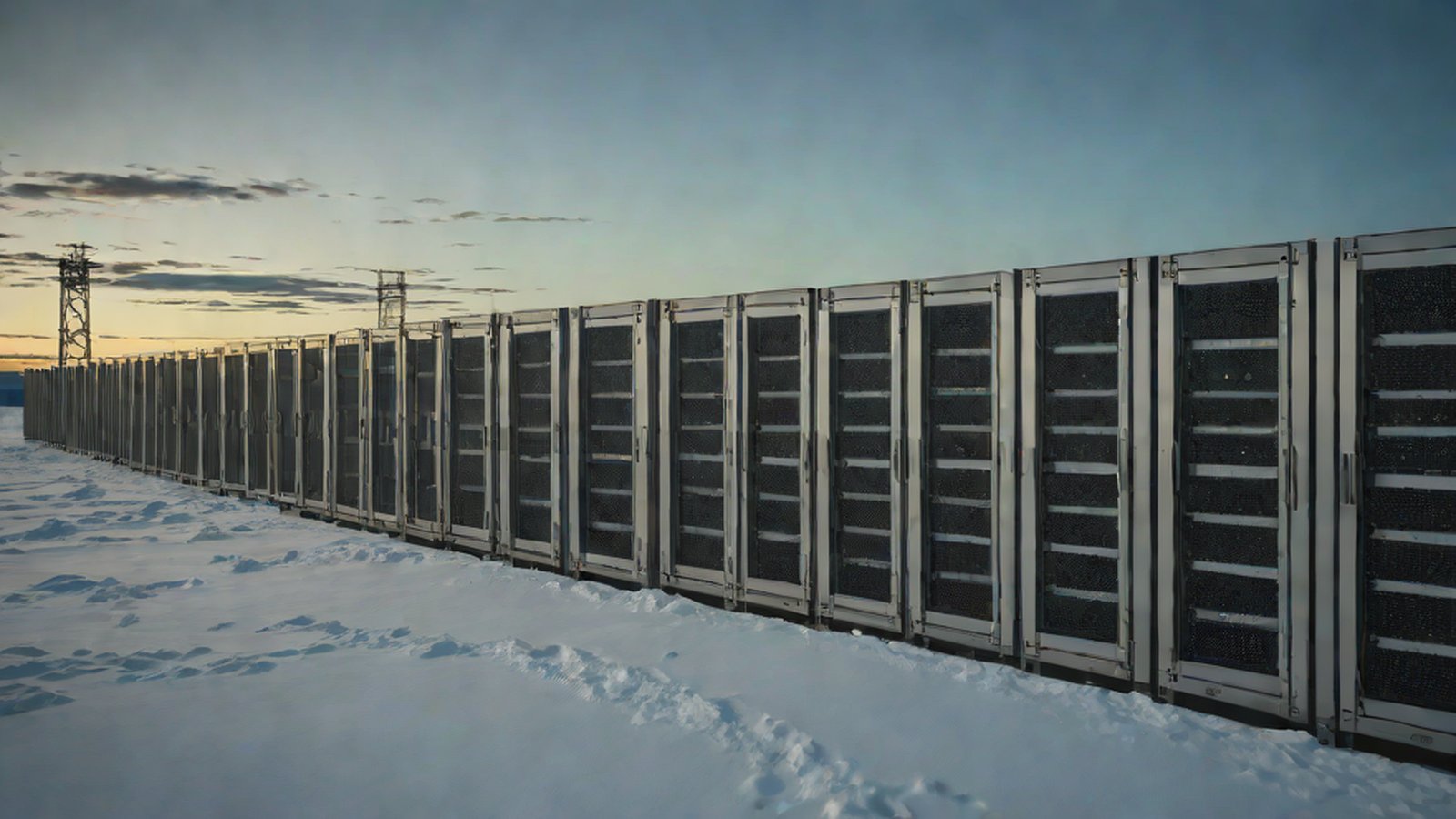
Google DeepMind's DiLoCo technology enables efficient training of massive AI models by linking multiple computers even over slow internet connections, ushering in a new era of distributed training that is energy-efficient and resilient to system failures.
Do We Really Need ‘Expensive Buildings’ to Create AI?
Imagine this. You and 10 friends scattered around the world decide to write a massive encyclopedia together. In the past, all 10 of you would have to sit in the same room. You would need to check every sentence each person wrote, every second, without rest. If even one person went to the bathroom or broke their pencil, the entire project would grind to a halt. Furthermore, to bring everyone together, you had to rent an expensive conference room and run dozens of air conditioners, incurring enormous electricity bills.
This is exactly what the process of creating large language models (LLMs) like ChatGPT looks like today. Thousands of cutting-edge graphics cards (GPUs, specialized computing chips) must be packed into massive buildings called “data centers” and tightly connected with incredibly expensive, high-speed cables Decentralized AI Training: A New Era with DiLoCo and DeMo. Naturally, this process consumes vast amounts of electricity and astronomical sums of money Google DeepMind debuts DiLoCo to cut AI training energy use - MSN.
However, Google DeepMind recently announced a breakthrough technology that shatters this paradigm: DiLoCo (Distributed Low-Communication Training) DiLoCo: Distributed Low-Communication Training of Language Models. With this technology, you can link computers across the globe to train intelligent AI without being in the same location—even if the internet connection is somewhat slow.
Why It Matters
Until now, massive AI has been the “exclusive playground of the wealthy.” Only global Big Tech companies capable of building multi-billion dollar data centers could monopolize the highest-performing AI. DiLoCo has the potential to change this landscape.
- Energy and Cost Savings: Google DeepMind emphasizes that DiLoCo is designed to reduce the massive energy required for AI training Google DeepMind debuts DiLoCo to cut AI training energy use - MSN. To use an analogy, it’s like switching from flying everyone to a central meeting point to working from home and occasionally exchanging emails. Because it works over standard internet rather than expensive dedicated networks, infrastructure costs are drastically reduced.
- An Unstoppable Training System: Traditional methods have a fatal weakness: if even one of the thousands of computers fails, the entire training process stops. DiLoCo, however, uses an independent “Island” structure. This provides powerful Fault Tolerance, allowing the remaining “islands” to continue training even if hardware in one or two locations fails Decentralized AI Training Turns Homes Into Data Hubs - IEEE Spectrum.
- Resurrection of Idle Computers: Now, personal computers in homes or small-to-medium server rooms scattered worldwide can share the role of a “data center” for building giant AI. It’s essentially the birth of a massive virtual intelligence that pools idle resources from around the world Decentralized AI Training Turns Homes Into Data Hubs - IEEE Spectrum.
How It Works: The Magic of DiLoCo
The core of DiLoCo is “study hard independently, and meet occasionally to sync answers.” Technically, it is a variant of “Federated Averaging” DiLoCo: Distributed Low-Communication Training of Language Models. Let’s look closer.
Step 1: Intense Studying on Individual Islands (Inner Steps)
While traditional methods involve asking “Is this right?” for every single sentence, DiLoCo tells each group (computer island), “Complete 1,000 pages of study on your own before we meet again.” Within each island, a smart optimization algorithm called AdamW efficiently trains the AI DiLoCo: Distributed Low-Communication Training of Language Models | OpenReview.
Step 2: Occasional Meetings to Merge Knowledge (Outer Steps)
After studying independently for a while, the islands finally gather to share what they’ve learned. At this stage, another guiding algorithm called Nesterov momentum ensures the overall training direction stays on track DiLoCo: Distributed Low-Communication Training of Language Models | OpenReview. Because these meetings are infrequent, internet traffic is drastically reduced, making training possible even over slow connections.
A Step Further: The Evolution of ‘Decoupled’ and ‘DeMo’
Recently, this has evolved further with the addition of DeMo (Decoupled Momentum Optimization) Decentralized AI Training: A New Era with DiLoCo and DeMo. Simply put, while islands used to exchange their entire knowledge, they now only transmit the most critical change points, maximizing communication efficiency Distributed Low-Communication Training with Decoupled Momentum Optimization.
Additionally, new frameworks like DeToNATION break down the AI’s “brain structure” even further (Sharding), allowing training to continue flexibly even in unstable internet environments DeToNATION: Decoupled Torch Network-Aware Training on Interlinked Online Nodes.
Where We Stand: Reality, Not Just Theory
Does this technology actually work outside the lab? Recent research results are quite startling.
- Identical Performance: When training with eight independent computer groups using DiLoCo, the performance was nearly identical to traditional methods where all computers are centralized DiLoCo: Distributed Low-Communication Training of Language Models.
- Global Network Experiments: Actual experiments using OpenDiLoCo, an open-source framework available to everyone, achieved global connectivity. Computer resources scattered across two continents and three countries were linked for training. Despite communication delays due to physical distance, they succeeded in efficiently utilizing 90-95% of the computational resources OpenDiLoCo: An Open-Source Framework for Globally Distributed Low-Communication Training.
- Advantageous for Larger Models: Research has confirmed that as AI models grow in size, the DiLoCo method scales much more reliably than traditional approaches Communication-Efficient Language Model Training Scales Reliably and ….
What’s Next?
| DiLoCo is just taking its first steps, but experts already describe its impact as “Oversized” [Frontier Training | Sam Lehman - Symbolic Capital](https://www.symbolic.capital/writing/frontier-training). |
Imagine the future for a moment. When millions of gamers around the world aren’t using their computers at night, those idle resources could be linked via DiLoCo to train AI for cancer treatment or models to solve the climate crisis. The training of giant AI could move beyond being the exclusive domain of mega-corporations and begin a “true democratization” that utilizes the collective resources of humanity Decentralized AI Training Turns Homes Into Data Hubs - IEEE Spectrum.
By lowering dependence on expensive high-bandwidth interconnects, the barrier to AI development is becoming lower than ever before Distributed Low-Communication Training with Decoupled Momentum ….
AI’s Take
Perspective from MindTickleBytes’ AI Reporter: “Technological progress sometimes starts not with the question of ‘how to make something bigger and more expensive,’ but ‘how to connect things more harmoniously.’ Instead of building massive fortress walls (data centers), DiLoCo chose to build bridges connecting countless islands. This marks a critical turning point where AI technology ceases to be concentrated in specific hands and begins to permeate our collective daily lives. The day when our computers contribute to advancing human intelligence while we sleep is not far off.”
References
- Decentralized AI Training Turns Homes Into Data Hubs - IEEE Spectrum
- DiLoCo: Distributed Low-Communication Training of Language Models - arXiv
- Decentralized AI Training: A New Era with DiLoCo and DeMo - Toolify AI
- OpenDiLoCo: An Open-Source Framework for Globally Distributed Low-Communication Training - Prime Intellect
- DiLoCo: Distributed Low-Communication Training of Language Models - arXiv PDF
- Distributed Low-Communication Training with Decoupled Momentum Optimization - arXiv HTML
- DiLoCo: Distributed Low-Communication Training of Language Models - OpenReview
-
[Frontier Training Sam Lehman - Symbolic Capital](https://www.symbolic.capital/writing/frontier-training) - DeToNATION: Decoupled Torch Network-Aware Training on Interlinked Online Nodes - arXiv
- Distributed Low-Communication Training with Decoupled Momentum Optimization (v1) - arXiv
- NeurIPS Distributed Low-Communication Training with Decoupled Momentum … - NIPS
- Distributed Low-Communication Training with Decoupled Momentum … - SAO/NASA ADS
- GitHub - exalsius/diloco-training
- Google DeepMind debuts DiLoCo to cut AI training energy use - MSN
- Communication-Efficient Language Model Training Scales Reliably and … - NeurIPS
FACT-CHECK SUMMARY
- Claims checked: 25
- Claims verified: 25
- Verdict: PASS

- Computers must always be connected via ultra-fast internet.
- Computers study independently for longer periods, reducing the frequency of communication.
- It only works within a single country's data center.
- The ability to continue the entire training process even if one or two computers fail.
- The ability to correct the AI when it provides false information.
- A technology that reduces power consumption to zero.
- Training efficiency dropped below 10%.
- Training was only possible within a single country.
- Computational efficiency reached 90-95% even with resources scattered across 2 continents and 3 countries.