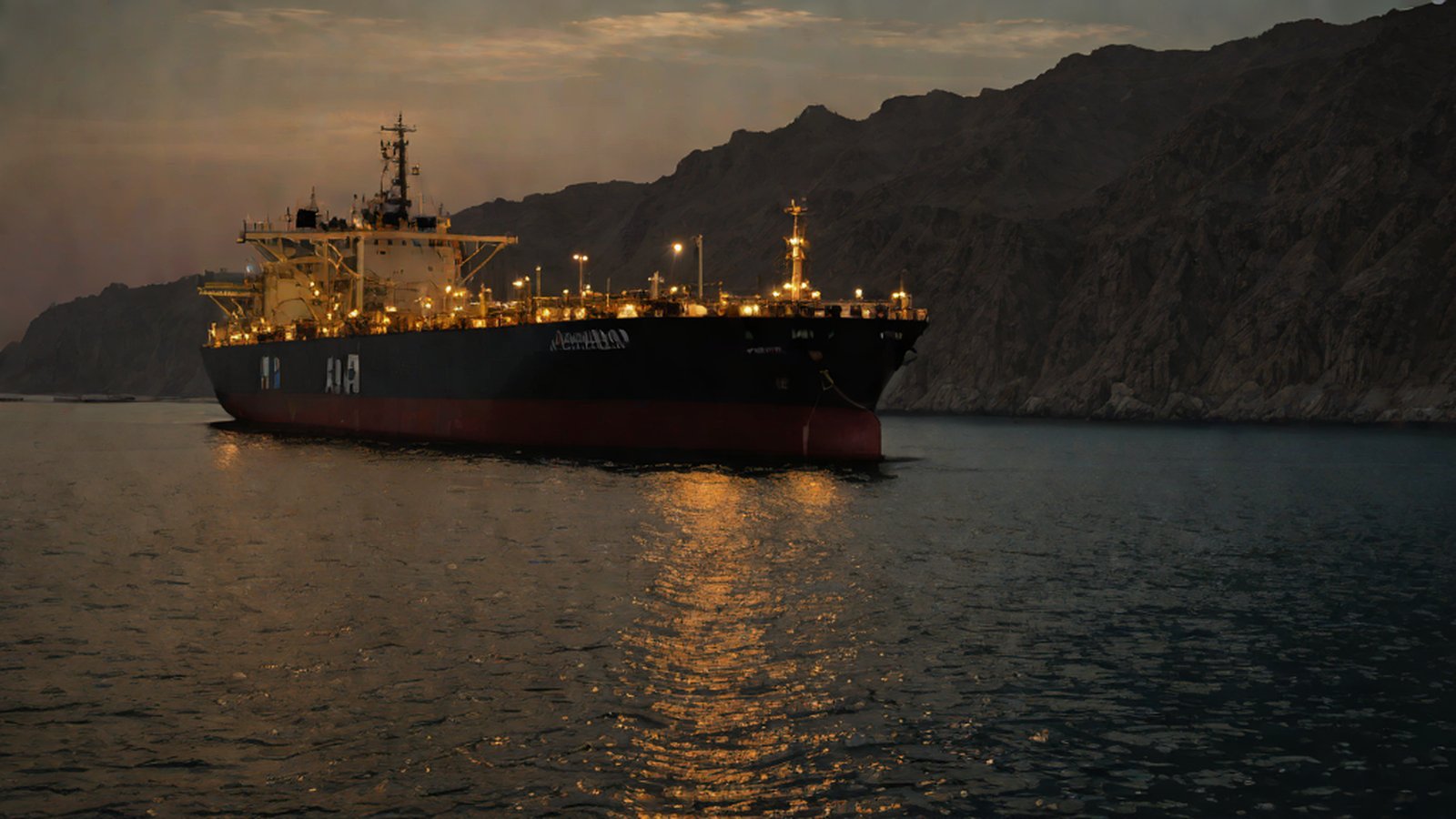
An analysis of the tech community's movement to monitor the real-time status of the Strait of Hormuz, which fluctuates between closure and opening due to military tensions, and the immense economic influence behind it.
Introduction: A Developer’s Simple but Weighty Question
What is the first thing we check every morning on our way to work? It’s likely checking ‘traffic information’ on our smartphones. We need to know which roads are congested or if there’s an accident to plan our day. Just as our daily lives depend on road conditions, there is a specific ‘road condition’ that the massive machine of the global economy must check to keep running without stopping. It is the narrow sea lane in the Middle East, the Strait of Hormuz.
| Recently, a post on ‘Hacker News,’ a community where developers and tech experts from around the world gather, went viral for its simple yet powerful message. It introduced a website called “Is Hormuz open yet?” [Show HN: Is Hormuz Open Yet? | Hacker News](https://news.ycombinator.com/item?id=47696562) |
This site doesn’t list complex political interpretations or difficult military jargon. Instead, it shows whether massive ships can pass through this strait at this very moment with a single word: ‘Yes’ or ‘No.’ Imagine this. Suppose you are the captain of an oil tanker carrying trillions of won worth of oil across the sea. Or consider yourself a consumer worried about how much gas prices at the local station will rise tomorrow. How desperate and weighty would that single word ‘Yes’ on the screen feel? Today, we will look at the situation of this urgent sea lane through the lens of data.
Why Does This Matter? The ‘Arteriosclerosis’ of the Global Economy
The Strait of Hormuz might sound a bit unfamiliar, but it is actually the ‘vessel of the Earth’ that is most deeply involved in our lives. A blockage here is no different from a major artery in our body being blocked, cutting off the oxygen supply.
1. A Scale Beyond Imagination, by the Numbers Throughout 2025, approximately 20 million barrels of oil and petroleum products passed through this strait every day. Iran war: What is the Strait of Hormuz and why does it matter? Does the number 20 million barrels not quite hit home? If you convert this into money, it means that energy trade worth a staggering $600 billion annually—about 800 trillion KRW—is occurring through this one narrow passage. Iran war: What is the Strait of Hormuz and why does it matter? An amount much larger than South Korea’s annual national budget passes through this sea every day.
2. A Chokepoint Directly Linked to the Cost of Living If this strait is blocked, it doesn’t just stop at rising gas prices for cars. This is because the energy required for generating electricity, running factories, and transporting the food we eat becomes more expensive. That’s why experts call this place a Chokepoint. Just as squeezing a person’s neck (choke) makes it hard to breathe, if this point is blocked, the windpipe of the world economy is constricted. Is Strait of Hormuz open or closed? Confusion amid firing, blockades…
Easy Understanding: How are Ships at Sea Being Monitored?
So, what specifically are AI and data technology doing to answer the question, “Is it open now?”
1. Real-time Navigation at Sea, AIS Just as we check where our food is on a delivery app, every ship at sea reports its position in real-time through a device called AIS (Automatic Identification System). HORMUZ STRAIT Live Ships Map Marine Traffic By collecting this vast amount of location information (data), one can see at a glance which ships have suddenly stopped on the vast ocean, or which ones have sensed danger and are taking a long detour.
2. "Data is Money" The developer who created this site shared an interesting grievance on Hacker News. The usage fees for the API (a programming interface for exchanging data), which is the channel for fetching real-time ship data, are surprisingly expensive. Show HN: Is Hormuz open yet? - SaaS Product & Tech Intel In a world where information is money, real-time data during such crises holds a value more precious than gold.
3. The Subtle Deception of "Selective Opening" What makes the current situation even more complex is the so-called ‘selective opening.’ The Iranian side claims, "The strait is open. It is only closed to our enemies." Trump seeks naval coalition to open Strait of Hormuz: Is… | Al Jazeera However, analyzing the actual data shows that only a extremely small number of ships are moving cautiously, testing the waters. Hormuz: Open — But Now Selective - Maritime Analytica To use an analogy, if a highway is advertised as open but they pick out certain types of cars to shoot at and crack down on, can that road really be called ‘open’? Data is revealing these very differences in detail.
Current Situation: 24 Hours of Brief Hope, Followed by Another Closure
Recent news from the Strait of Hormuz is like a rollercoaster where you can’t see even an inch ahead.
| On April 17, 2026, a brief message of hope reached the world. Iran unexpectedly announced it would open the strait to commercial vessels in line with the news of a ceasefire with Lebanon. Iran reopens Strait of Hormuz to commercial traffic following Lebanon… Unfortunately, this joy did not last even a day. The Iranian Revolutionary Guard Corps (IRGC) reversed the decision and returned to strong closure measures, including seizing ships and firing warning shots. [Strait of Hormuz 2026 — Is It Open? Live Blockade Status | IranWarLive](https://iranwarlive.com/strait-of-hormuz) |
| As of early May 2026, the status of the Strait of Hormuz is effectively ‘Not Open.’ The U.S. is maintaining a maritime blockade of Iranian ports, and Iran continues to forcibly stop ships passing through the strait, creating a persistent stalemate. [Strait of Hormuz 2026 — Is It Open? Live Blockade Status | IranWarLive](https://iranwarlive.com/strait-of-hormuz) |
What Lies Ahead? Signals We Should Watch
The international community is still moving busily to resolve this massive crisis. Here are two key points to keep an eye on when you watch the news.
1. The Appearance of ‘Bodyguards’: Formation of a Multinational Coalition The U.S. is trying to form a naval coalition with several countries to open the strait, even if it requires force. Trump calls for naval coalition to open Strait of Hormuz: Is… | Al Jazeera The plan is like placing armed bodyguards on the road to create a fence so ships can travel safely.
2. The ‘Real’ Signals from Data Dashboards
In the past, people only waited for official government announcements, but now they are beginning to trust real-time data dashboards more. The moment when the number of ships passing through recovers to normal levels on sites like ishormuzopenyet.com or hormuztracker.com will be the day the real crisis ends. Strait of Hormuz Live Tracker — Shipping Disruption Dashboard Diplomatic efforts are also being made in parallel, so we should wait for the positive changes that the data will show. Google News - Overview
AI Perspective: A Word from MindTickleBytes
It is truly amazing that we live in a world where we can monitor how ships move in a narrow sea lane on the other side of the planet with a single click on a smartphone. But at the same time, the cold truth shown by data reminds us once again how vulnerably we are connected to a single resource: energy. The question "Is it open now?" goes beyond simple technical curiosity; it is like a desperate message of peace to protect the daily lives of us ordinary people. Technology tells us the accurate ‘facts,’ but turning those facts into ‘peace’ will ultimately be up to people.
References
- [Source 1] Strait of Hormuz Live Tracker — Shipping Disruption Dashboard, https://www.hormuztracker.com/
-
[Source 4] Show HN: Is Hormuz Open Yet? Hacker News, https://news.ycombinator.com/item?id=47696562 - [Source 5] HORMUZ STRAIT Live Ships Map Marine Traffic, https://www.marinetraffic.org/HORMUZ-STRAIT/ship-traffic-tracker
-
[Source 6] Strait of Hormuz 2026 — Is It Open? Live Blockade Status IranWarLive, https://iranwarlive.com/strait-of-hormuz - [Source 8] Hormuz: Open — But Now Selective - Maritime Analytica, https://www.maritimeanalytica.com/p/hormuz-open-but-now-selective
- [Source 10] Show HN: Is Hormuz open yet? - SaaS Product & Tech Intel, https://roipad.com/saas-metrics/product/hn_47696562/a-tool-to-determine-if-the-strait-of-hormuz-is-open
-
[Source 11] Trump seeks naval coalition to open Strait of Hormuz: Is… Al Jazeera, https://www.aljazeera.com/news/2026/3/15/trump-calls-for-naval-coalition-to-open-strait-of-hormuz-can-it-work - [Source 12] Iran war: What is the Strait of Hormuz and why does it matter?, https://www.bbc.com/news/articles/c78n6p09pzno
- [Source 13] Is Strait of Hormuz open or closed? Confusion amid firing, blockades…, https://www.hindustantimes.com/world-news/is-strait-of-hormuz-open-or-closed-confusion-conflict-and-a-chokepoint-on-edge-iran-war-trump-blockade-101776656751471.html
- [Source 14] Iran reopens Strait of Hormuz to commercial traffic following Lebanon…, https://www.presstv.ir/Detail/2026/04/17/767038/Strait-of-Hormuz-open
- [Source 15] Google News - Overview, https://news.google.com/stories/CAAqNggKIjBDQklTSGpvSmMzUnZjbmt0TXpZd1NoRUtEd2pDakl5R0VSRW13TnlUS1IxYnBDZ0FQAQ?hl=en-US&gl=US&ceid=US:en

- Approximately 5 million barrels
- Approximately 20 million barrels
- Approximately 100 million barrels
- Signing of a peace treaty with the U.S.
- A ceasefire between Israel and Lebanon
- Discovery of a new oil field
- Server maintenance costs
- High costs of ship tracking data APIs
- Low resolution of maritime satellite imagery