Federal Reserve Governor Stephen Miran is stepping down to coincide with the inauguration of Chair-designate Kevin Warsh, signaling a new chapter in U.S. economic policy.
Imagine a massive aircraft carrier navigating a treacherous, endless sea. If a new captain is set to take the helm in the bridge to steer this ship safely, one of the current navigators would politely step aside to ensure the new leadership can launch smoothly. In the vast ocean of the global economy, the U.S. Federal Reserve (often called “the Fed”) acts as that aircraft carrier. Because the waves created by this ship reach all the way across the Pacific to the loan counters of our local banks, observing its movements is incredibly important.
Recently, there was a very significant and symbolic “relinquishing of a seat” at the heart of the Fed’s bridge. News broke that on Thursday, May 14, 2026, Fed Governor Stephen I. Miran submitted his resignation. This isn’t just a bit of light gossip about someone quitting their job. His resignation is a key piece of a giant economic puzzle falling into place, clearing the path for Kevin Warsh—the nominee for the next Chair of the Federal Reserve—to take the wheel smoothly. Let’s take a closer look at why this seemingly complex event reported daily in the news is so important and how it connects to our ordinary daily lives.
Why It Matters
It’s natural to think, “What does one governor changing at a banking institution in Washington, D.C., have to do with my bank balance or loan interest?” However, every tiny movement they make is intricately and closely connected to the world’s wallets like a spiderweb.
The Board of Governors of the Federal Reserve System holds the heavy responsibility of supervising and regulating the U.S. banking system as a whole. (While they may not hold absolute responsibility for every aspect, they perform the core role.) Put simply, it is the heart that determines the rules for how—and at what speed—the blood known as “money” flows through the giant body of the national economy. Headquartered in Washington, D.C., the Board forms a massive network that supports the national economy alongside 12 regional Federal Reserve Banks located in major cities across the U.S., much like a nervous system transmitting commands from the brain to the rest of the body.
All members of the Board sitting in such powerful positions are not elected by direct popular vote; instead, they are appointed by the President of the United States and undergo a rigorous confirmation process by the United States Senate. As such, it is a position reserved only for the highest-level economic experts who have been thoroughly vetted by the nation. Consequently, they take the responsibility of being stewards of public resources very heavily and seriously.
In particular, Fed Governors become core members of the Federal Open Market Committee (FOMC), a crucial meeting that the entire world watches with bated breath. These FOMC members decide through a direct vote where to set the U.S. benchmark interest rate. This benchmark rate is like the price tag in a wholesale market that forms the basis for the price of everything. If the Fed votes to raise rates, the interest we pay when taking out mortgages or credit loans at the bank goes up in succession; conversely, if they lower them, the interest burden decreases. From the price of the coffee we drink every day to the interest on the apartments people bought by stretching every penny, the Fed’s decisions are deeply involved in our daily lives like an invisible hand.
Furthermore, market traders watch these changes in short-term rates very carefully, as short-term interest rates are the primary factor in currency valuation. This single decision can make the returns on your stock portfolio dance or cause the exchange rates applied when you shop internationally to fluctuate. The arrival of a new leader, a new Chair, to a Board with such immense authority means the master who controls the main thermostat of the economy is changing.
The Explainer
To explain this complex replacement process a bit more simply, let’s use the analogy of a “Relay Race” in track and field.
Governor Stephen Miran was first nominated as a member of the Federal Reserve Board by President Donald Trump on August 7, 2025, to succeed Governor Adriana Kugler. He has been running silently on his designated leg of the track in the grueling race of the national economy.
Now, a powerful new runner named Kevin Warsh is ready to enter the track as the new captain (Chair) of this relay team. However, a legal constraint arises here. The number of chairs in the Fed Board’s meeting room is strictly limited by law. For a new captain to enter the stadium, someone must voluntarily hand over the baton and step off the track to create a physical vacancy.
For this very reason, Governor Miran submitted his formal resignation on Thursday, clearly stating that his resignation would become effective when—or just before—his successor, Kevin Warsh, is sworn in as Chair. This is by no means a case of him being ousted for a mistake. It is a “strategic and gentlemanly baton pass” that paves the way in advance for a new leader to inherit authority smoothly and legally.
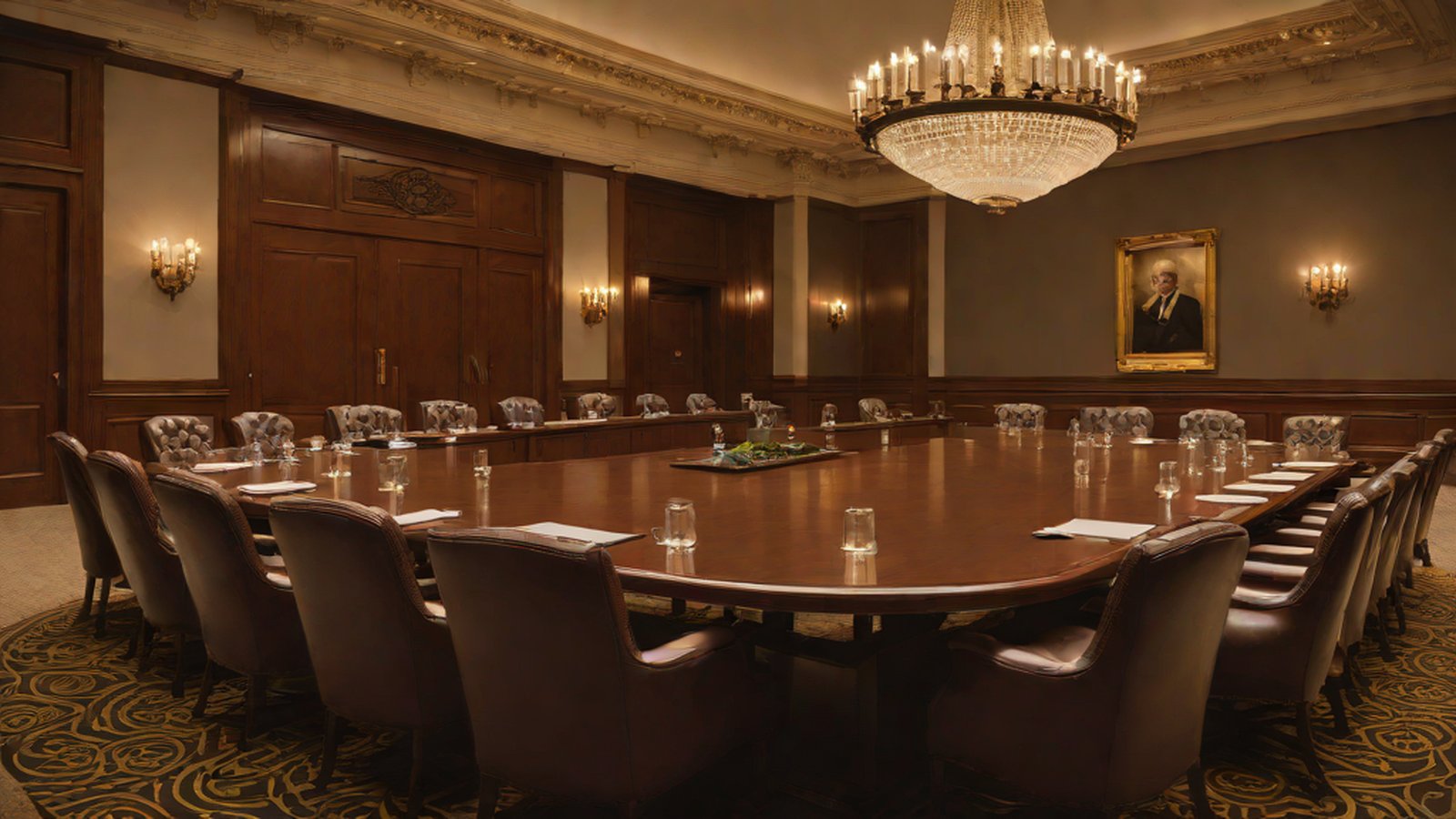
According to reports from Reuters, there is a necessary physical condition that a seat on the Board must be vacant for the next Fed Chair, Kevin Warsh, to take office. Since the new Chair cannot open the door and walk into the meeting room if the chairs are full, it is easiest to understand it as Governor Miran readily giving up that space for the greater stability and purpose of the entire organization.
Where We Stand
Currently, the interior of the Federal Reserve in Washington, D.C., is riding a subtle but orderly wave of change due to this massive leadership transition. When formally delivering his resignation letter to the Board, Governor Miran sent a message of full support for the nominee for the next Chair, Kevin Warsh, to succeed him and take office.
His decision to resign is closer to a scheduled step already marked on the calendar rather than a sudden earthquake-like shock to those in the financial sector. What the stock market fears most is “unpredictability,” and this process is proceeding with remarkable transparency. InvestingLive, an investment news outlet, reported on the event with the clear headline “No Surprise.” This suggests that Miran stepping down and Warsh replacing him is a very natural political and administrative process within the structure of the Fed.
By analogy, the current situation is like a quiet intermission just before the curtain rises on a new act of a grand play. Governor Miran, who has been an excellent supporting actor, has completed his preparations to exit the stage safely after giving a polite final bow to the audience. Behind the curtain, the new protagonist, Warsh, is checking his microphone and catching his breath in the wings, waiting to receive the spotlight in the center of the stage.
What’s Next
Now, from the tie-wearing investors on Wall Street to ordinary office workers checking mortgage rates with dreams of owning a home, the eyes of the world are fixed on the lips of Kevin Warsh, who will soon take the seat of the Fed Chair. As mentioned earlier, Governor Miran’s resignation will officially take effect at the moment—or just before—Warsh takes the oath of office to officially join the Federal Reserve. A seamless baton pass with zero margin for error is taking place.
Once Warsh officially holds the heavy gavel of the Fed Chairmanship, he will lead the FOMC and bear the immense responsibility of determining the direction of U.S. benchmark interest rates for the next one to five years. Global media will be on high alert, analyzing his first official statements and actions for hints on how the new captain will avoid the storm of inflation and adjust the sails (whether to maintain, raise, or lower rates) to catch the tailwind of economic growth.
The gears of change have already begun to turn quietly. On the new path opened by Stephen Miran’s decision, we will soon witness the new logbook of the great ship that is the global economy, led by its new Chair.
AI’s Take
MindTickleBytes AI Reporter’s Take: The word “resignation,” often seen in economic news headlines, can sometimes be misunderstood as internal power struggles or a crisis. Resignations in politics or corporations often come with significant noise. However, Governor Stephen Miran’s resignation demonstrates a sophisticated and mature “aesthetic of concession” thoroughly designed for a greater future and organizational stability.
This quiet process of a massive system preparing to welcome new leadership without friction is the true inner strength and power of the economic engine that is the U.S. Federal Reserve, which dictates the flow of global capital. If legal disputes or seat-fighting had occurred during the Fed Chair transition, that uncertainty would have translated directly into a global stock market crash or exchange rate seizures. Therefore, Miran’s smooth exit is a textbook scene showing how the world’s leading economy calms market anxiety and maintains steadfast trust beyond a simple administrative procedure. In the end, the safety of our wallets is being protected by the dedication of such invisible and quiet systems.
References
- Stephen Miran - Wikipedia
- Federal Reserve Board - Stephen I. Miran submits his resignation as a member of the Federal Reserve Board, effective when or shortly before his successor on the Board is sworn in
- Stephen Miran to step down from Fed board, paving the way for Kevin Warsh as Fed chair
-
[Fed’s Miran says he will vacate board seat on or just before Warsh is sworn in as chair Reuters](https://www.reuters.com/world/us/feds-miran-says-he-will-vacate-board-seat-or-just-before-warsh-is-sworn-chair-2026-05-14/) -
[No Surprise: Fed’s Miran submits resignation from Fed Board with Warsh replacing him investingLive](https://investinglive.com/centralbank/no-surprise-feds-miran-submits-resignation-from-fed-board-with-warsh-replacing-him-20260514/) - Federal Reserve - Wikipedia
- Federal Reserve - YouTube
- The Federal Reserve Board of Governors in Washington DC.
- United States Federal Reserve Interest Rate Decision
- Fed Governor Miran submits resignation, throws support behind Warsh as new chair

- Personal health issues
- To make room for the inauguration of the next Fed Chair, Kevin Warsh
- Protest against interest rate hikes
- Elected through a national popular vote
- Appointed by the U.S. President and confirmed by the Senate
- Decided by a vote of existing Board members
- The presidential election schedule
- Benchmark interest rate decisions
- New currency designs