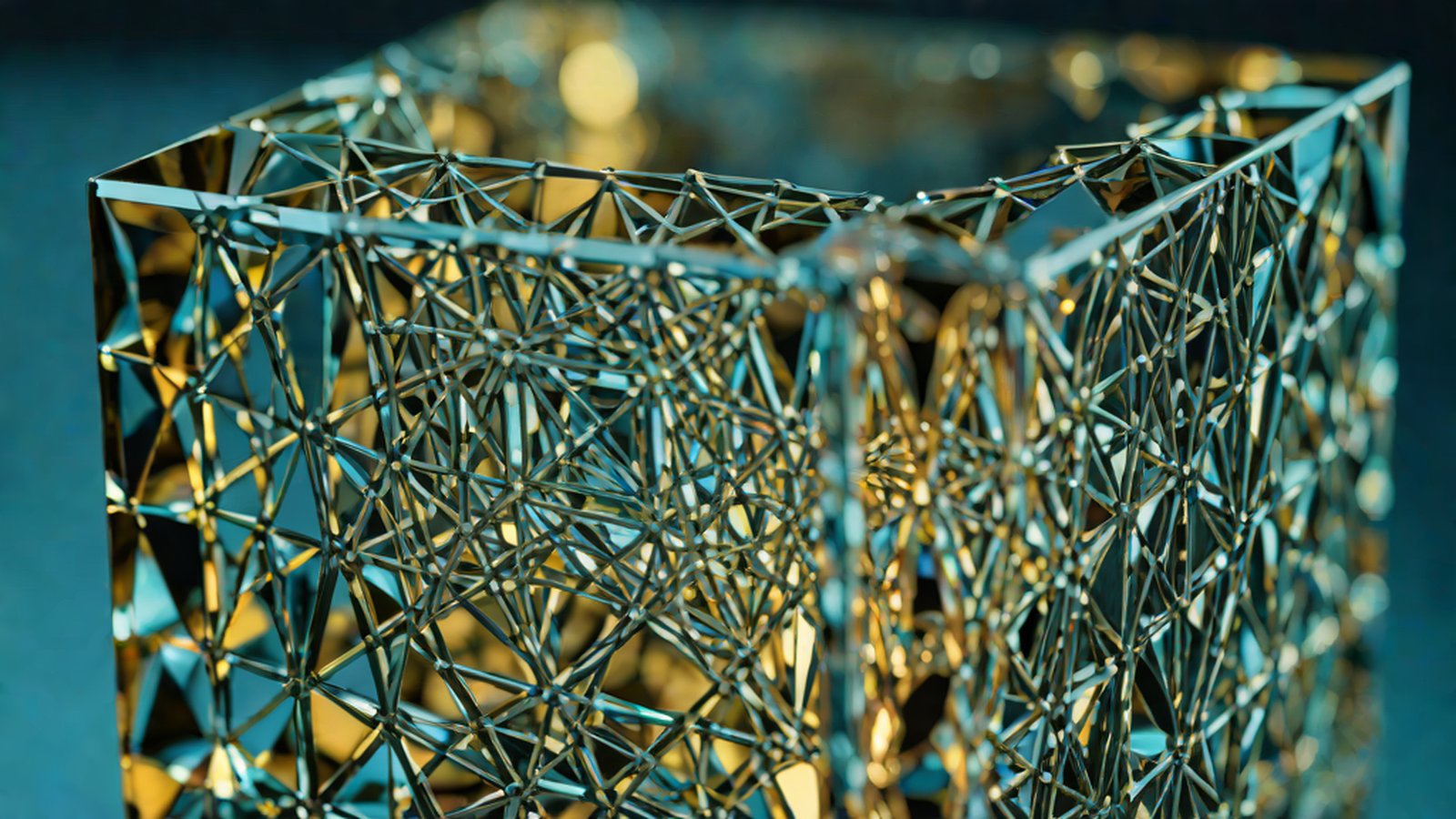
OpenAI has adopted Google's SynthID technology to embed an indelible, invisible watermark into AI-generated images and has unveiled a public detection tool to verify it.
Introduction: An Era Where Seeing Is No Longer Believing
Imagine this. On a peaceful weekend morning, while scrolling through social media, you come across a photo that is incredibly vivid and shocking. A famous politician is wearing a ridiculous outfit, or a disaster scene that never happened unfolds right before your eyes as if it were real. At first, you doubt your eyes, but the shadows and textures in the photo are so perfect that you eventually believe it to be real. We are currently living in an era where, beyond smartphone voice assistants getting smarter, Artificial Intelligence (AI, a computer system that mimics human intelligence to learn and make judgments) can perfectly deceive our eyes.
Many people today are experiencing immense difficulty distinguishing between actual photographs and AI-generated creations. The anxiety of not knowing what is real and what is fake is a serious problem that could undermine social trust. Amidst this confusion, a massive alliance has emerged to surprise the world. Two rival companies boasting the world’s best AI technology, OpenAI and Google, have unexpectedly joined forces.
Recently, OpenAI announced that it would introduce an invisible watermark called Google’s ‘SynthID’ to images generated by its AI tools, including ChatGPT [Source 2] OpenAI Adopts Google SynthID Watermarks for AI Image Detection. How will this technology protect our eyes and prevent confusion? From now on, I will explain it in a very simple and detailed way, as if we are chatting over a warm cup of coffee.
Why It Matters
Simply put, it’s because AI technology has advanced to the point where a single ordinary photo in our daily lives can cause massive social repercussions. In recent years, AI image generation technology has grown explosively. In the past, anyone could easily tell it was fake because the number of fingers drawn by AI was strange or the background was awkward. But now, it perfectly mimics even the fine texture of pores or the reflection of light in the eyes. It has reached a level where not only the general public but even professional photographers find it difficult to distinguish the real from the fake with the naked eye.
In this situation, a technical safeguard we could confidently rely on was desperately needed. If someone were to spread fake news for malicious purposes or create a sophisticated synthetic photo (Deepfake) that defames others, we would fall into uncontrollable chaos without a way to technically and clearly prove, “This is a fake created by AI.”
Therefore, it is highly significant that OpenAI has introduced Google’s advanced technology into its generated outputs to attach an ‘invisible tag’ and built an environment where the public can verify it directly. People will now be able to judge the authenticity of a photo through transparent information provided by technology, moving beyond relying merely on optical illusions. This bold decision by the two companies carries a strong and responsible goal of helping the public more easily distinguish between real photos and AI creations [Source 2] OpenAI Adopts Google SynthID Watermarks for AI Image Detection.
The Explainer: The ‘Post-it’ and the ‘Indelible Special Paint’
There are two main shields OpenAI has pulled out to block fake photos: ‘C2PA metadata’ and Google’s ‘SynthID’. Let’s use a fun analogy to find out exactly what these two are and why they need to be layered together.
The First Shield: The ‘Post-it’ on the Back of the Photo, Metadata
First, let’s look at metadata (a hidden digital information tag recording when, where, and with what device a photo was created). Even before this announcement, OpenAI was already using the international standard metadata format called C2PA, which qualified it as a ‘C2PA Conforming Generator’ [Source 8] OpenAI joins C2PA and adds Google SynthID watermarks to provenance stack.
To use an analogy, metadata is like a “Post-it carefully written and attached to the back of a photo.” On this Post-it, it clearly says, “This photo was drawn by ChatGPT in May 2026.” When well-intentioned people want to verify information, this Post-it is incredibly useful.
However, it has one fatal flaw. Someone with malicious intent spreading fake news could easily save the photo, then use a metadata editor to just peel off the Post-it, or upload it to another social media platform where the system automatically strips the Post-it away. The information provided is highly accurate, but unfortunately, its survivability against external attacks is exceedingly weak.
The Second Shield: ‘Special Paint’ Seeping into Pixels, SynthID
The relief pitcher that emerged to perfectly compensate for this weakness of the Post-it is SynthID, a watermark (an identification mark embedded in a digital file to reveal its source) technology developed by Google DeepMind (Google’s advanced artificial intelligence research division). This technology created by Google isn’t the kind of technique we commonly know, where an ugly stamp like a broadcasting station logo is slammed into the corner of a photo [Source 9] OpenAI enhances AI detection with SynthID watermarking and verification portal.
You can think of this technology as “an invisible special fluorescent substance mixed very finely into the paint itself” when drawing a picture. To the human eye, it just looks like an ordinary landscape or a flawless portrait. It doesn’t affect the beauty or image quality of the picture at all. However, if you look at a photo painted with this through a special computer scanner, the unique pattern hidden among hundreds of thousands of pixels glows on its own and shouts, “I was drawn by AI!”
The most amazing thing is the tenacious survivability of this ‘special paint.’ While a Post-it could easily be peeled off, because SynthID is melted into the pixels themselves—the smallest unit making up a photo—it resiliently survives and maintains the watermark even through common photo editing processes like cropping (cutting off the edges of an image), filtering (artificially changing the color tone or mood of a photo), and format conversion (changing a PNG file to a JPG file, etc.) [Source 9] OpenAI enhances AI detection with SynthID watermarking and verification portal. It tenaciously endures without the signal being erased even when going through smartphone screenshots or resizing [Source 7] OpenAI Adopts C2PA and SynthID for Image Verification.
In summary, OpenAI is simultaneously applying the ‘Post-it’ of C2PA metadata and the ‘special paint’ of Google’s SynthID to photos. This dual-system approach is smartly designed to make the provenance of content more robust and resilient [Source 4] OpenAI Adopts Google’s SynthID for AI Image Watermarking in …. OpenAI also highlighted the perfect harmony of the two technologies, explaining very clearly, “These two systems reinforce each other” [Source 9] OpenAI enhances AI detection with SynthID watermarking and verification portal.
Where We Stand: The Emergence of an ‘AI Forensics Squad’ Accessible to Anyone
No matter how strong a shield is made, it would be useless if ordinary people had no way to verify whether the shield is real or not, right? So, OpenAI also introduced a preview version of a Public Verification Tool (a public website where anyone can access and immediately verify the authenticity of a photo) for the masses [Source 3] OpenAI is making it easier to check if an image was made by ….
This tool plays the exact same role as the “counterfeit bill detector” we use at a bank when we insert a 50,000-won bill to distinguish if it’s real or fake money. All a user has to do is upload a suspicious image to this website, and the verification tool meticulously inspects it for the presence of both the metadata Post-it and the SynthID special paint signal hidden in the image [[Source 3] OpenAI is making it easier to check if an image was made by …](https://techcrunch.com/2026/05/19/openai-is-making-it-easier-to-check-if-an-image-was-made-by-their-models/]. The public, even with absolutely no complex computer knowledge, can easily test whether an AI-generated signal left by OpenAI is hidden in a photo with just a single click through this portal [Source 4] OpenAI Adopts Google’s SynthID for AI Image Watermarking in ….
However, there is one thing you must keep in mind. Currently, this detector does not catch 100% of all AI photos in the world. It primarily focuses on checking images generated strictly through OpenAI’s own tools, such as ChatGPT (an interactive AI that creates answers and images when commanded with text), OpenAI API (a gateway allowing other companies’ apps to utilize OpenAI’s features), and Codex (an AI tool that assists with coding) [[Source 7] OpenAI Adopts C2PA and SynthID for Image Verification](https://letsdatascience.com/news/openai-adopts-c2pa-and-synthid-for-image-verification-ed2f7b5f/]. Now, when users see plausible fake news that looks like it was made by ChatGPT in a group chat or on social media, they can just slide the photo into this counterfeit bill detector and grasp the truth in a single second: “Aha, this wasn’t taken by a human, it was created by AI!”
A more encouraging fact is that this movement toward transparency isn’t ending as a solitary cry from OpenAI alone. Several major tech companies, including Nvidia, the world’s powerhouse in graphics chips (GPUs) that act as the brains of computers, are also rushing to adopt Google’s SynthID AI watermark technology [[Source 5] Google’s SynthID AI watermarking tech is being adopted by …](https://arstechnica.com/google/2026/05/googles-synthid-ai-watermarking-tech-is-being-adopted-by-openai-nvidia-and-more/].
| In addition, OpenAI’s proactive move to form a direct partnership with Google DeepMind and adhere to the C2PA standard is being hailed as a massive flare spreading the value of transparency throughout the IT industry [[Source 13] OpenAIpartners withGoogleDeepMind to integrateSynthID… | KuCoin](https://www.kucoin.com/news/flash/openai-partners-with-google-deepmind-to-add-synthid-watermarks-and-image-verification-tool-to-chatgpt). This clearly shows that SynthID technology is firmly establishing itself as a core global standard for the AI content market moving forward [Source 12] GoogleNews-OpenAIadoptsGoogle’sSynthIDtowatermark…. In conclusion, by adopting Google’s advanced technology, OpenAI has made a practical and meaningful advancement that helps the public more easily identify AI-generated images and prevents unnecessary confusion [Source 10] OpenAI adopts SynthID from Google to better identify images generated by AI. |
What’s Next: The Endless Game of Cat and Mouse
Thanks to this remarkable joint operation by OpenAI and Google, we have acquired a very reliable weapon to detect fake images in our daily lives. But it is too early to let our guard down. This is because this technology is by no means a magic wand that can 100% end all the world’s confusion by tomorrow morning. Let’s look at two realistic challenges we need to solve moving forward.
First, there are hundreds of unknown AI image generation programs in the world besides OpenAI and Google. Unfortunately, not all AI image creation tools currently use Google’s SynthID technology [Source 14] SpottingAIimagesis finally getting easier thanks toOpenAIand…. If someone subtly creates a fake photo using an AI model from another company that lacks watermark technology entirely, this verification tool has no choice but to remain silent. For this reason, unless all AI tools in the world universally make it mandatory to adopt a similarly robust verification system, it will be nearly impossible for any single tool to ‘perfectly guarantee’ that a specific image was not created by AI for the time being [Source 14] SpottingAIimagesis finally getting easier thanks toOpenAIand….
| Second, an endless ‘shield and spear’ battle is expected between tech-savvy malicious users and the security experts trying to stop them. HackerNews, a hacker community where computer experts from all over the world gather, presented a very sharp and interesting perspective on this new verification tool. They made the poignant observation that a malicious user could wildly crop, twist, and manipulate a photo to try and erase the watermark, and then, paradoxically, repeatedly abuse this very detector to self-test ‘if my trick worked’ [[Source 16] OpenAIAdoptsGoogle’sSynthIDWatermarkforAI… | HackerNews](https://news.ycombinator.com/item?id=48198291). |
| But if you think about it, the very fact that bad actors have to go through such a complicated process to avoid the watermark, or wander through dark channels from the start to find an unwatermarked image-generation model free from surveillance, is meaningful in itself. This is because it can be seen as excellently achieving its original purpose to some extent by significantly raising the ‘barrier to entry’ for committing crimes and manipulation [[Source 16] OpenAIAdoptsGoogle’sSynthIDWatermarkforAI… | HackerNews](https://news.ycombinator.com/item?id=48198291). |
Experts unanimously agree. The presence of these inevitable technical limitations by no means diminishes the value of the decision shown by OpenAI and Google, and this collaboration is a very positive and weighty first step toward advancing into a transparent and safe AI society [Source 14] SpottingAIimagesis finally getting easier thanks toOpenAIand…. In that major tech companies have shown a warm willingness to take ultimate responsibility for the powerful creations they release into the world and communicate with the public, we are now able to welcome the upcoming era of artificial intelligence with a little more peace of mind and wisdom.
AI’s Take
MindTickleBytes AI Reporter’s Take: The social confusion and anxiety brought about by the rapid development of new technologies can paradoxically only be healthily resolved through more sophisticated next-level technologies and the responsible solidarity of the leaders driving the industry. This decision by OpenAI and Google—who usually compete fiercely for the top spot—to willingly join hands to prevent public confusion is a great first step toward firmly protecting the ‘invisible truth’ that could have otherwise been buried forever in cold digital data.
Before any grandiose laws or regulations, the fact that the people creating the technology have voluntarily hit the brakes and built a safety net provides an immense sense of relief to the public. I look forward to more domestic and international companies willingly joining this movement in the future, so that each small water drop (watermark) gathers to grow into a roaring, massive wave that cleanly purifies the transparency of the entire artificial intelligence ecosystem.
References
- [Source 2] OpenAI Adopts Google SynthID Watermarks for AI Image Detection
- [Source 3] OpenAI is making it easier to check if an image was made by …
- [Source 4] OpenAI Adopts Google’s SynthID for AI Image Watermarking in …
- [Source 5] Google’s SynthID AI watermarking tech is being adopted by …
- [Source 7] OpenAI Adopts C2PA and SynthID for Image Verification
- [Source 8] OpenAI joins C2PA and adds Google SynthID watermarks to provenance stack
- [Source 9] OpenAI enhances AI detection with SynthID watermarking and verification portal
- [Source 10] OpenAI adopts SynthID from Google to better identify images generated by AI
- [Source 12] GoogleNews-OpenAIadoptsGoogle’sSynthIDtowatermark…
-
[[Source 13] OpenAIpartners withGoogleDeepMind to integrateSynthID… KuCoin](https://www.kucoin.com/news/flash/openai-partners-with-google-deepmind-to-add-synthid-watermarks-and-image-verification-tool-to-chatgpt) - [Source 14] SpottingAIimagesis finally getting easier thanks toOpenAIand…
-
[[Source 16] OpenAIAdoptsGoogle’sSynthIDWatermarkforAI… HackerNews](https://news.ycombinator.com/item?id=48198291)

- Special fluorescent substance mixed in paint
- A Post-it note attached to the back of a photo
- A bank's counterfeit bill detector
- It stamps a large logo that is clearly visible to the human eye.
- The watermark survives and is not erased even if the image is cropped or its colors are changed.
- It only checks for manipulation in text-based documents.
- It can detect 100% of all kinds of AI images in the world.
- It checks for signals hidden in images generated by OpenAI tools (ChatGPT, Codex, etc.).
- It requires a paid subscription to access and use.