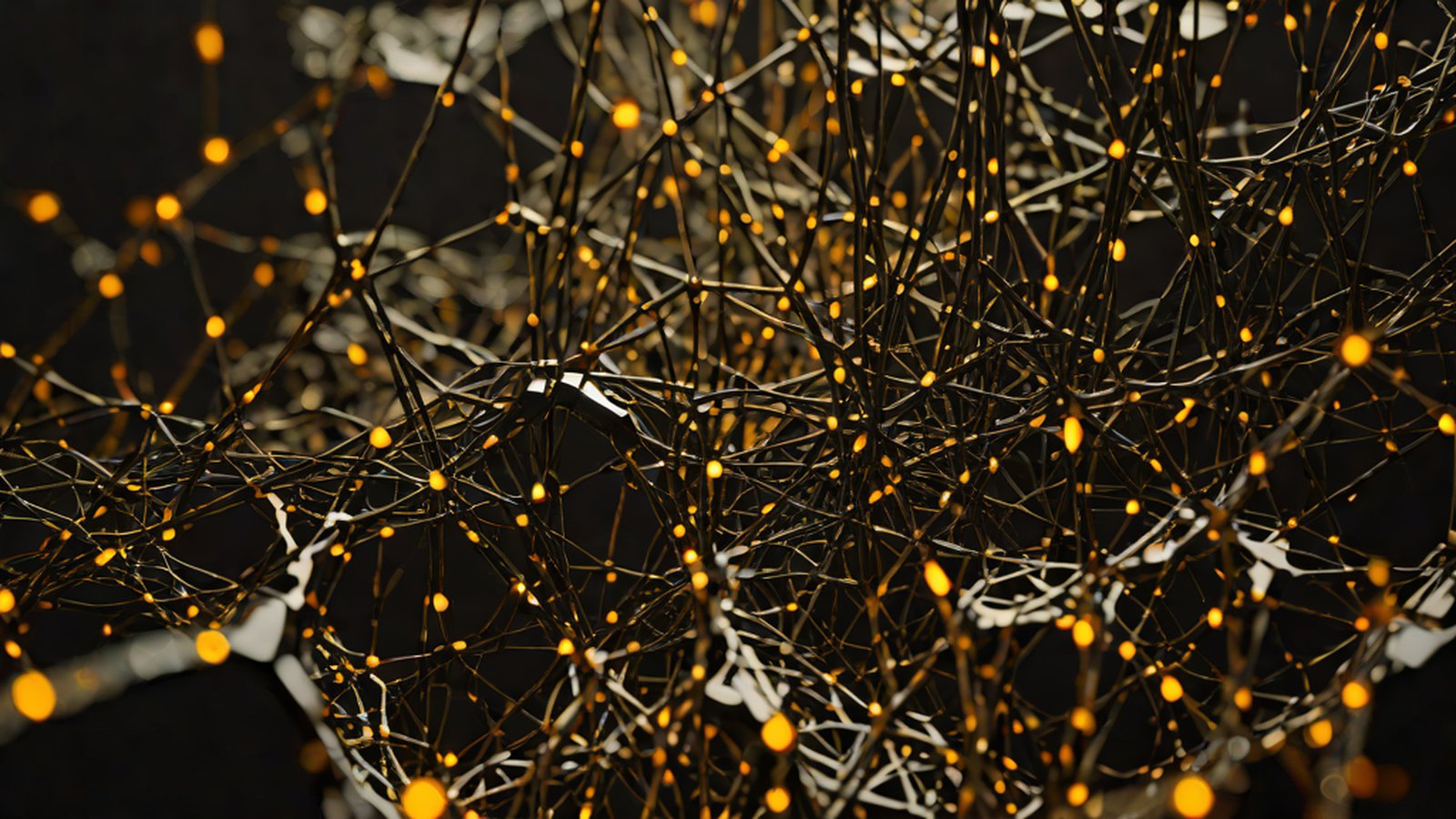
Moving beyond simply listing and storing information, AI is now using 'graph databases' to weave relationships between data points, grasping context and becoming smarter, much like a human.
Imagine this: You spent over an hour chatting with the AI assistant on your smartphone to schedule an important business trip for this weekend. You painstakingly discussed booking flights, choosing a hotel to stay in, and even the dinner menu with the client you’ll meet locally. A few days later, while packing your bags, you casually ask the AI, “What’s my business trip schedule for tomorrow?” But the AI replies in an innocent voice, “You have no scheduled business trips. Would you like me to create a new schedule?”
The assistant that was smartly comparing flight tickets just moments ago has suddenly lost its memory like a goldfish. A chill runs down your spine. What on earth went wrong? You are using a world-class, smart AI model, so why does it forget even these basic facts?
This isn’t just an unpleasant experience unique to you. It’s a common problem faced by many developers and users worldwide who are trying to deeply integrate artificial intelligence into their daily lives and work. One developer fell into deep thought after his AI agent (an artificial intelligence that judges for itself and operates autonomously to accomplish a specific goal) suffered a fatal issue of completely forgetting his flight booking. He then made a decision: to overhaul the AI’s brain structure and give it a completely new kind of ‘brain’ [My AI Agent Forgot My Flight. So I Gave It a Brain. - DEV Community].
In the past, artificial intelligence simply stored the conversations it had with you or important facts by listing them out like a long text document. But now, the architects of cutting-edge AI systems are breaking away from these simple lists or flat files (a simple file format that merely writes down text or numbers flatly without defining any relationships between the data) and moving toward a memory storage paradigm that is completely different: the ‘Graph Database’ [Vector Stores vs. Graph Database: Agent Memory Compared].
This quiet yet massive technological shift will fundamentally change the way artificial intelligence understands human life, from the voice assistant on your smartphone to the AI managing vast corporate networks.
Why It Matters
Why is this technological shift so closely related to our daily lives? Simply put, it means that AI will finally have human-like ‘intuition’ and ‘context’.
Think about when we converse with someone. The human brain doesn’t just remember sentences spoken in the past chronologically like a voice recorder. Humans remember information by weaving it together three-dimensionally, like a spider web. For example, when you recall the name of a friend named ‘Charles’, the fact that Charles has a peanut allergy, the name of the dog he raises, and the pleasant memories from the Italian restaurant you last went to with him all come to mind at once in a connected chain. This very ‘connection’ creates the comfortable context we feel when talking to a person.
However, AI up to now hasn’t operated that way at all. Traditionally, when building AI, engineers have blindly shoved countless chat logs into a simple text file or strictly relied on conventional vector search (a one-dimensional search method that converts the surface meaning of words into mathematical coordinates to find only the most similar text clusters) [Graph-Based Memory Solutions for AI Context: Top 5 Compared …].
This flat file approach has fatal and severe limitations. System architecture experts sharply point out that such complex relationships can never be expressed in a single simple text file without properly mimicking the structure of a database. This makes perfect sense; just as when building standard software or websites, you would never store all user data in a single text file like Notepad [Why AI agents need a database for memory, not just a flat file like SKILL.md - Glen Rhodes].
What magic happens if an AI agent possesses structured and tightly interconnected memories instead of fragmented, disjointed ones? Complex, multi-hop reasoning (a way of thinking that finds information by skipping across multiple connecting links), such as “Find the number of the friend I met at that restaurant I mentioned last time,” finally becomes possible [Vector Stores vs. Graph Database: Agent Memory Compared].
You no longer need to tediously re-explain your family relationships, preferences, or last week’s schedule to the AI from scratch every time. This goes beyond the mere convenience of a personal assistant; it plays a core role in massive corporate environments as well. When Agentic AI (highly advanced intelligence that plans and executes on its own) is powerfully combined with a graph database, the AI can independently grasp the complex workflows of a company and relationships between departments, making autonomous decisions that fit the perfect context without human instruction or intervention [The Agentic AI/Graph Database Combo Powering Emerging …].
The Explainer
So, how exactly does this new AI memory system work under the hood? Let’s use two core analogies to easily understand the complex principles of computer science.
First Analogy: A Bottomless Box of Receipts vs. A Detective’s Meticulous Investigation Board
The traditional Vector Store (a space that digitizes and stores text in bulk) or flat file approach is like a giant ‘receipt box’. Inside the box, millions of receipts are thrown in randomly. If you want to find specific information, you have to dump the box, pull out all the receipts with similar words, and read them one by one. Tracking what relationship Receipt A has with Receipt B is nearly impossible.
In contrast, the Graph Database approach, which is not in the form of text, is like the ‘detective’s investigation board’ often seen in mystery movies. Photos of suspects, crime scenes, weapons used, and times of the incidents are pinned to the board, with a ‘red thread’ pulled taut connecting them.
The new graph-based memory solution allows AI to go beyond simply searching for words and tenaciously track the complex relationships between these entities (independent subjects like people, objects, concepts, etc.) [Graph-Based Memory Solutions for AI Context: Top 5 Compared …]. This relational memory method provides a very powerful and essential alternative when context, situation, and relevance between information are important in AI systems intertwined with vast knowledge [Graph Databases for AI Memory — When SQL Isn’t Enough].
| The ‘Shared Knowledge Graph’, which multiple AI agents build to collaborate, is specifically composed of four sophisticated structural layers [[Building Shared Knowledge Graphs for AI Agents | Fastio](https://fast.io/resources/ai-agent-knowledge-graph-context/)]: |
- Entity Store: A place where concrete subjects like users, ongoing tasks, and important document files are clearly defined with unique identifiers (IDs). You can think of these as the character photos firmly pinned to the investigation board.
- Relationship Index: A map that shows exactly how those subjects are intertwined and connected. It reveals at a glance which AI assistant is in charge of which task, or from which specific document a certain rule was derived. This plays the role of the taut red thread connecting the photos.
- Context Retrieval Layer: A logical function that smartly selects which specific part of the giant graph to cut out and fetch when the AI receives a question from a human.
- Update Protocol: A collection of safe rules that allows the AI to realize and add new facts on its own through conversation, or correct outdated information that conflicts with past knowledge.
Second Analogy: The Magic of Strict Organization and 5 Evaluation Criteria
Metaphorically speaking, just as we don’t write down every trivial thing we experience in our diaries, AI shouldn’t blindly remember every word it hears. In fact, an AI that blindly trusts false memories is even more terrible. Because such an AI repeats outdated or completely wrong information with a confident and self-assured attitude, it can cause fatal harm to the user [Agentic Memory for AI Agents: FalkorDB, GraphRAG … - Medium].
Therefore, the AI developer who tried to solve the aforementioned blown flight reservation problem designed a filtering system that strictly scores how valuable the information is before permanently storing the memory in the database. When storing a fact, this system scores it using the following 5 interpretable dimensions as strict criteria [My AI Agent Forgot My Flight. So I Gave It a Brain. - DEV Community]:
- Future utility: “Will this information be useful tomorrow or a month from now?” (For example, “The sky is clear today” has low utility, but “I have a severe cat allergy” has extremely high utility.)
- Factual confidence: “Is this information a 100% reliable fact?” (It accurately distinguishes whether something was said as a joke or is a confirmed business meeting schedule.)
- Semantic novelty: “How new and fresh is this fact compared to what I already knew in the past?” (This is to avoid wasting brain capacity with duplicated information.)
- Temporal recency: “How recently was this updated?” (The preferences you mentioned yesterday describe the current you better than your preferences from last year.)
- Content type: It clearly classifies whether this information is strictly work-related or a personal leisure preference.
Only refined information that passes through these 5 gates and undergoes strict screening is safely stored in a true ‘Graph-Augmented Retrieval’ system (an advanced information search technology that also looks at the relationship diagrams of information). This is perfectly identical to the principle of sorting out only the necessary and precious items, labeling them, and putting them in sturdy boxes when moving to a new house.
Where We Stand
This amazing magic of memory is not a story from a distant future sci-fi movie. Currently, this technology has completely left the laboratory research phase and is being explosively introduced into actual commercial services and corporate infrastructure.
Today, when multiple AI agents team up to handle complex tasks, they don’t forcefully share context by tossing massive amounts of chat logs, amounting to hundreds of pages, back and forth as a whole block of text like they used to. Instead, they use a massive central memory layer called a knowledge graph to densely store important facts in the form of shared, structured data.
| Then, whenever other agents need specific information, they don’t have to read through vast amounts of text; they can instantly and easily find the data in this central structured network [[Build AI Agents with Memory: LangChain + FalkorDBGraphwise enhances its graph database to become the brains of …Building Shared Knowledge Graphs for AI Agents | FastioThe Agentic AI/Graph Database Combo Powering Emerging …Vector Stores vs. Graph Database: Agent Memory Compared](https://www.falkordb.com/blog/building-ai-agents-with-memory-langchain/)]. Simply put, instead of corporate team members suffering from confusion while exchanging thousands of emails with each other, it’s like collaborating pleasantly by looking at a single, perfectly organized shared dashboard. |
Even in enterprise environments, this trend has already become the mainstream. For example, in companies, an AI trained on tens of thousands of documents would often give completely irrelevant answers. However, next-generation database solutions like FalkorDB and Graphwise are deeply optimized to dramatically reduce the AI’s chronic hallucination (the phenomenon where AI cleverly fabricates lies) and provide accurate, highly relevant results based on facts through an advanced technology called GraphRAG (Graph Retrieval-Augmented Generation) [FalkorDB Graph Database with GraphRAG for AI/ML and GenAI].
What is particularly surprising and interesting is that this powerful brain infrastructure can be easily introduced into existing systems. Using a programming technique called a Python runtime patch, developers don’t have to tear down the existing system source code from scratch. To use an analogy, just as brain function can be dramatically improved simply by taking a special nutritional supplement without brain surgery, you can upgrade the brains of legacy AI agents to a super-fast graph database foundation in the blink of an eye just by bringing in the latest plugin and registering a single line of code [Graph Memory for LLM Agents with mem0-falkordb].
What’s Next
In the future, the memory storage of artificial intelligence will evolve far more organically and smartly than it does now. In a future Agentic AI structure where knowledge graphs are perfectly integrated, the system will far surpass the level of recognizing fragmented patterns.
Imagine this. Future AI will be able to reason and proactively act like a human within the complexly intertwined relationships of the real world. For example, a proactive approach will become the new standard, such as reading a company’s supply chain data graph, hearing news of a typhoon, predicting the change of inventory shortage in advance, and placing an order with another factory, or suggesting the optimal healing dinner menu by weaving together the graph of your past eating habits and your current depressed mood state [Extending Agentic AI with Knowledge Graphs and Memory Stores].
In addition, AI agents will directly access massive knowledge graphs through MCP (Model Context Protocol, a universal communication rule for AI models to safely communicate with various external data sources), which has been a hot topic in the IT industry recently. Through this, rather than relying on uncertain external internet search results, they will be more firmly grounded in verified and certain domain data (core data of a specific professional field) to make flawless and meticulous judgments [Graphwise enhances its graph database to become the brains of …]. This is expected to be a decisive key for AI to be reborn as a truly trusted companion in fields where extreme accuracy is life or death, such as medical diagnoses where human lives are at stake, financial analysis dealing with astronomical amounts of money, and legal reviews where not a single typo is tolerated.
Above all, the most heart-pounding future is that each of us will build our own unique lifestyle knowledge graph together with AI over our lifetime. A perfectly ‘personalized memory vault’—the only one of its kind in the world, where your daily habits, unique work style, complex family relationships, and preferred movies and restaurants accumulated over decades are intricately connected by millions of red threads—will take its place inside your smartphone.
AI’s Take
MindTickleBytes AI Reporter’s Take: Mechanically reading and memorizing thousands of books does not simply make a person wise and insightful. Human wisdom comes not from memorizing the sentences in a book by rote, but from the ability to organically connect the experiences and knowledge of one’s life.
The same goes for artificial intelligence. Moving beyond the ignorant accumulation of simple information and data, it is only reborn as a true partner and assistant when it perfectly possesses a ‘knowledge graph’—the ability to dimensionally connect the invisible context and human meaning between information. If the AI of the past was a warehouse with piles of documents frantically stacked up, the AI of the future will be a wise librarian who sees through the meaning of the documents and hands over the most appropriate answer.
In the fierce future competition to come, ultimately, the absolute turning point for AI technological innovation will not be which AI service searches the most vast knowledge one-dimensionally, but which one builds a ‘smart memory system’ that understands human life as the deepest and most organic graph. Because the essence of technology ultimately lies in understanding humans more deeply.
References
- Graph Memory for LLM Agents with mem0-falkordb
- My AI Agent Forgot My Flight. So I Gave It a Brain. - DEV Community
- Why AI agents need a database for memory, not just a flat file like SKILL.md - Glen Rhodes
-
[Building Shared Knowledge Graphs for AI Agents Fastio](https://fast.io/resources/ai-agent-knowledge-graph-context/) - FalkorDB Graph Database with GraphRAG for AI/ML and GenAI
- Agentic Memory for AI Agents: FalkorDB, GraphRAG … - Medium
- Graph-Based Memory Solutions for AI Context: Top 5 Compared …
- Vector Stores vs. Graph Database: Agent Memory Compared
- Extending Agentic AI with Knowledge Graphs and Memory Stores
- Graph Databases for AI Memory — When SQL Isn’t Enough
-
[Build AI Agents with Memory: LangChain + FalkorDBGraphwise enhances its graph database to become the brains of …Building Shared Knowledge Graphs for AI Agents FastioThe Agentic AI/Graph Database Combo Powering Emerging …Vector Stores vs. Graph Database: Agent Memory Compared](https://www.falkordb.com/blog/building-ai-agents-with-memory-langchain/) - Graphwise enhances its graph database to become the brains of …
- The Agentic AI/Graph Database Combo Powering Emerging …

- It takes up too much computer storage space
- It is difficult to grasp the 'relationships' or context between pieces of information
- It can only be used when connected to the internet
- Entity Store
- Relationship Index
- Update Protocol
- Future utility
- Factual confidence
- Emotional appeal