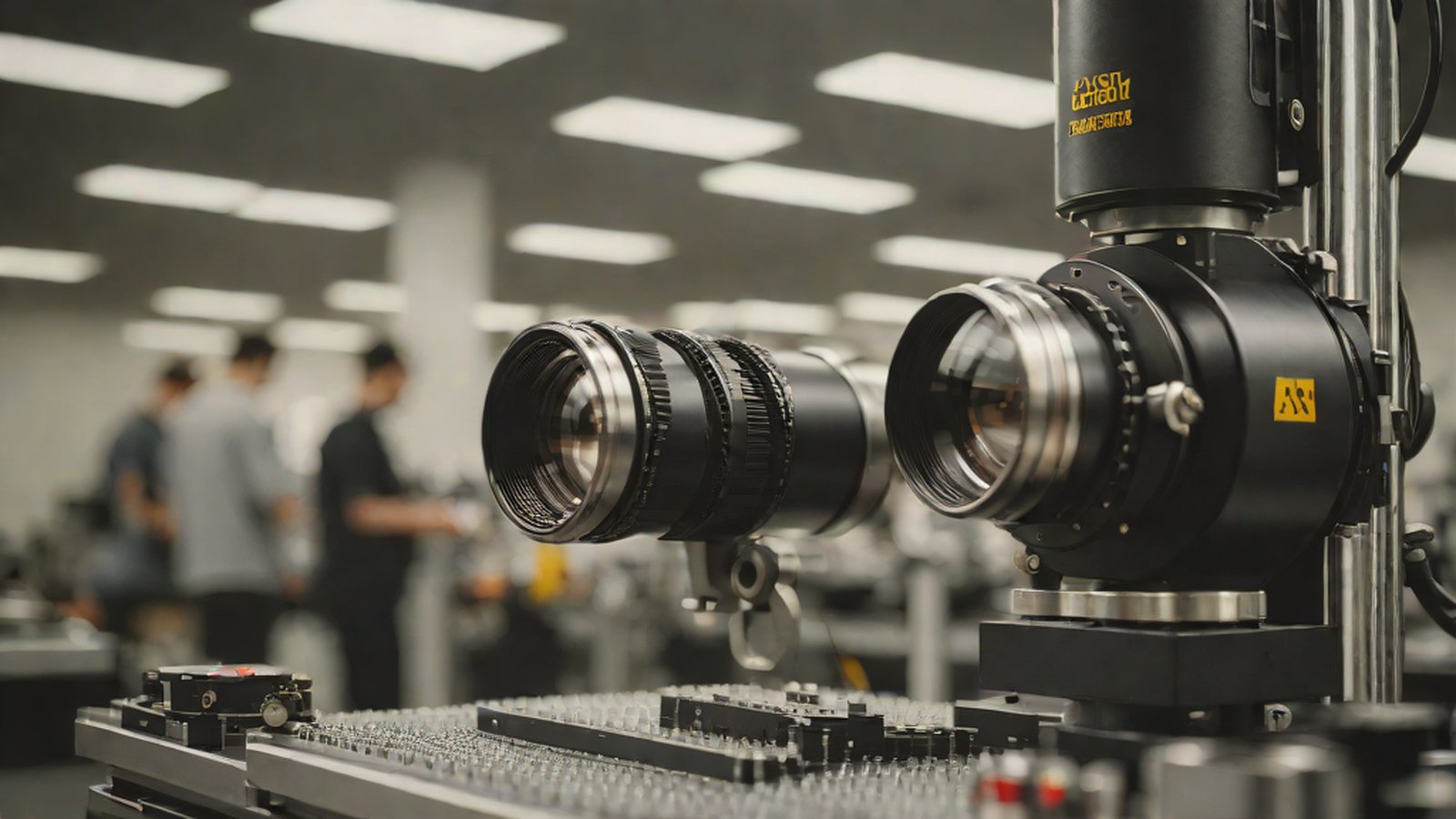
OpenCV, which has served as the backbone of the computer vision field for over 20 years, is releasing OpenCV 5—a complete rebuild from the ground up to fully utilize the performance of the latest hardware, marking the first major architectural change in 15 years since 2009.
Imagine walking down the street early in the morning. When you point your smartphone camera at an unfamiliar foreign sign, a real-time translation pops up on the screen. The camera smoothly detects passing license plates or people’s movements. When a visually impaired person wears smart glasses, the glasses instantly identify stairs or sudden obstacles ahead and gently warn them with a voice. This technology, which allows computers and machines to visually perceive the world as accurately and quickly as—or even faster than—human eyes, is what we call ‘Computer Vision’ (a field of AI that helps computers extract and understand meaningful information from digital images or videos).
Behind this magical technology lies a massive, invisible pillar firmly supporting the world. That is the open-source (software whose code is made freely available for anyone to view and modify) library called ‘OpenCV’. For over 20 years, OpenCV has served as the robust foundational backbone for computer vision technologies worldwide (OpenCV Archives - OpenCV). But now, a historic seismic shift is happening to this quiet yet colossal framework. For the first time in 15 years since 2009, ‘OpenCV 5’ is emerging, fundamentally overturning the structure and rules of the program itself. Let’s explain in simple terms what OpenCV 5—considered one of the most important updates in computer vision history—is and why we must pay attention to this change.
Why It Matters
First, let’s address why this change is so crucial. The hardware of the smart devices we interact with daily has evolved at a blinding speed in recent years. Chipsets and processors embedded in smartphones, robots, and autonomous drones have become unfathomably faster and more powerful than before. However, even if you build a sports car with a top-of-the-line engine, it can never reach its full speed if the road it runs on is a dirt path or if its steering mechanism (software) is an outdated model.
For a long time, one of the biggest dilemmas for experts researching computer vision has been: ‘How can we efficiently harness the immense power of massively advanced modern hardware without wasting it?’ OpenCV 5 takes precise aim at this exact frustration. This new version has introduced significant changes to its internal structure (architecture) to dramatically boost visual data processing performance and properly utilize 100% of today’s powerful modern hardware (“What We Learned Porting to OpenCV 5 with Claude Code…”). This is not just a cosmetic redesign or the addition of a few minor features. It is considered one of the most critical releases in OpenCV’s history, quite literally rebuilt from the foundation up (OpenCV - Open Computer Vision Library).
What this means for our ordinary daily lives is profound. For example, one of the most prominent positive technological trends seen in artificial intelligence (AI) competitions is the use of computer vision to improve the quality of life for the visually impaired. Warm technologies are constantly being developed to assist them when walking or finding objects (5 Emerging Trends in Computer Vision Applications from OpenCV’s AI Competition - OpenCV). What if OpenCV, the very foundation of the system, offered faster and more responsive performance? It could process dangerous movements caught on camera much more smoothly and drastically reduce the reaction time before an alert sounds. The ‘eyes’ of autonomous cars, which are directly linked to human lives, or the vision of hazard-detecting robots deployed in disaster zones, would inevitably become much faster and more agile.
The Explainer
So, what exactly is OpenCV 5 changing, and how? Let’s put aside the complex technical jargon for a moment and understand it through two simple analogies.
First, simply put, it is like a major construction project replacing the old, narrow plumbing network of an old large building with state-of-the-art, high-capacity direct water pipes. OpenCV 5 is a historic release that radically revamps its API (Application Programming Interface, the communication rules that allow software to send and receive commands) and the library’s internal contents for the first time since the OpenCV 2.x version released in 2009 (OE 5. OpenCV 5).
Let’s stretch our imagination a bit further. There is a large building built sturdily a very long time ago. Millions of people around the world have used this building without issues for decades, but its plumbing network (old API) was built to the narrow specifications of the past. Recently, however, an ultra-powerful water pump (modern hardware) was invented, capable of pushing water at immense pressure and speed. Because the old pipes were narrow and winding, they couldn’t properly handle that massive water pressure, causing bottlenecks where the water flow got blocked. Until now, they managed by making minor superficial fixes or patching the pipes as a stopgap measure. But they finally made the bold decision to strip the building down to its bones and undergo a total replacement using the thickest, strongest, state-of-the-art pipes—this is exactly what the OpenCV 5 overhaul is. Now that 100% of the water pump’s power can be unleashed, the congested road for processing massive high-definition video data at ultra-high speeds will be wide open. Developers will be able to prototype and validate high-performance visual systems much faster (Building High-Performance Data Paths: New Evaluation Platforms for…).
Second, it can be compared to a perfect cookbook translation system in a global kitchen where countless chefs from around the world work together. This magical technology that makes computers see the world was initially written in C++, a very fast and powerful but notoriously difficult computer language. However, not every programmer in the world uses only C++. That’s why OpenCV has evolved over a long time to run excellently in other programming language environments such as Python, Java, and MATLAB (OpenCV and Computer Vision in Python: What It Is… / Skillbox Media).
This is like providing localized cooking tools and translated editions so that Korean, English, and Spanish speakers can comfortably read a perfect Michelin cookbook written in French (C++) and cook superb dishes. For instance, developers using Python—the most popular language these days—use a dedicated packaging wrapper like ‘opencv-python’ (wrapper packages, code that wraps complex functions from another language so they can be easily called and used) to utilize these features very easily (Wrapper package for OpenCV python bindings.). The principle is that if the foundational original recipe warehouse (OpenCV 5) itself is improved to be more efficient, the countless developers in other languages who translate and use it will also be able to create more delicious dishes (fast and accurate advanced AI visual technology) with less effort.
Where We Stand
However, completely replacing a massive framework solidified over decades is by no means an easy task. Surprisingly, OpenCV version 5.0 was originally planned to be released in 2020. But this colossal overhaul was delayed for an entire 4 years, eventually rescheduling its release to the summer of 2024 (OE 5. OpenCV 5). Being the first major surgery in 15 years, it proves how carefully they have polished and refined it to ensure not a single error exists. Countless developers in the community are constantly communicating with project contributors (like contributor Jia Wu) and sharing weekly progress summaries to perfect this massive update (OpenCV 5 Progress Update (May 9, 2024) - OpenCV).
Looking back at OpenCV’s history makes it clear why they are so cautious. The first alpha version of OpenCV (an initial draft created for internal testing) debuted way back in 2000 at the ‘IEEE Computer Vision and Pattern Recognition (CVPR)’ conference. And between 2001 and 2005, it went through a long, nearly 5-year tempering period with as many as five beta versions (versions for testing before official release) coming out (OpenCV - Wikipedia). The most important philosophy OpenCV pursued at that time was: ‘To advance commercial vision applications, let’s make performance-optimized code free for anyone to use.’ They employed a very generous and permissive license policy, lacking even a condition that forced developers to open up their code to the public if they built commercial products to make money using this technology (OpenCV - Wikipedia).
This warm and open philosophy has remained unchanged for over 20 years. As a result, today OpenCV has established itself as the reliable hometown that anyone around the world learning and utilizing Deep Learning (technology where computers think and learn like the human brain) and AI turns to first (OpenCV - Open Computer Vision Library). It is still operated transparently as an open-source project that anyone can view via GitHub, the playground for developers worldwide (GitHub - opencv/opencv: Open Source Computer Vision Library).
| Today, we can easily implement real-time Hand Tracking technology capable of processing 30 frames per second using just the CPU (Central Processing Unit) performance of a standard everyday laptop, without needing a massive supercomputer ([Hand Tracking 30 FPS using CPU | OpenCV Python (2021) - YouTube](https://www.youtube.com/watch?v=NZde8Xt78Iw)). Beneath the technology where a computer seamlessly follows our hand gestures without stuttering lies the sweat and effort of OpenCV. Furthermore, Data Augmentation techniques (methods of obscuring or mixing parts of images to train AI without confusion), used to train AI models to be smarter, are difficult to research smoothly without powerful vision libraries ([Modern Data Augmentation Techniques for Computer Vision | W&B](https://wandb.ai/authors/tfaugmentation/reports/Modern-Data-Augmentation-Techniques-for-Computer-Vision–VmlldzoxNzU3NTU)). In short, the present era of computer vision technology we enjoy has practically grown alongside OpenCV. |
What’s Next
So, once OpenCV 5, which sheds its old framework and mounts a new ultra-high-speed engine, fully takes root in the world, what changes will we face in our daily lives?
Of course, the design of your smartphone apps won’t magically change overnight tomorrow morning. This transformation happens behind the scenes. The ‘data blood vessels’ controlling cameras in unmanned stores, autonomous drones, and smartphone facial recognition apps will widen enormously. Until now, even if an expensive, high-quality camera was installed, it hit the limits of older software, resulting in slight screen stuttering or forcing the image quality to be artificially lowered. But now, high-definition data will be processed pleasantly and smoothly, like flowing water.
The first to feel the benefits of this massive leap firsthand will be AI developers and engineers. They will be able to drastically reduce the wasted time they used to spend forcing backward compatibility with old software and fixing bottlenecks every time a new device was released (Building High-Performance Data Paths: New Evaluation Platforms for…). And that precious time engineers save will return to us in the form of superior products. It will lead directly to the creation of battery-efficient and fast smartphone camera apps, autonomous vehicles that prevent accidents in a fraction of a tenth of a second, and highly responsive smart glasses that become the true eyes of the visually impaired.
Ultimately, the emergence of OpenCV 5 is a historic turning point that rewinds the clockwork that had been stuck in outdated standards for 15 years. We just have to sit back comfortably and watch how this colossal project, which has silently pioneered the way we visually perceive the world, will guide our lives into an astonishing world of artificial intelligence in the future.
AI’s Take
MindTickleBytes AI Reporter’s View: When building a sturdy building, the most important thing is not the flashy marble exterior, but the steel framework driven deep into the ground. No matter how dazzlingly hardware advances, if the brain and framework called software fail to support it solidly, its potential gets trapped inside a narrow pipe.
OpenCV 5 is a “quiet giant” that will clear out the congestion of software architecture that has piled up around us and completely unleash the immense power of modern hardware. Even if it doesn’t immediately look like a flashy new product launch to the public’s eye, it is a true game changer that will drastically boost the perceived speed and performance of Visual Intelligence technologies in our everyday lives from behind the scenes. This massive update clearly proves that fundamentally changing the solid groundwork at the very bottom, rather than the flashy exterior, is the most certain innovation to change the world. We are currently standing on the threshold of a new renaissance in computer vision.
References
- OpenCV - Wikipedia
- OpenCV - Open Computer Vision Library
- OE 5. OpenCV 5
- 5 Emerging Trends in Computer Vision Applications from OpenCV’s AI Competition - OpenCV
- OpenCV 5 Progress Update (May 9, 2024) - OpenCV
- OpenCV Archives - OpenCV
-
[Hand Tracking 30 FPS using CPU OpenCV Python (2021) - YouTube](https://www.youtube.com/watch?v=NZde8Xt78Iw) - GitHub - opencv/opencv: Open Source Computer Vision Library
- Building High-Performance Data Paths: New Evaluation Platforms for…
-
[Modern Data Augmentation Techniques for Computer Vision W&B](https://wandb.ai/authors/tfaugmentation/reports/Modern-Data-Augmentation-Techniques-for-Computer-Vision–VmlldzoxNzU3NTU) - “What We Learned Porting to OpenCV 5 with Claude Code…”
- Wrapper package for OpenCV python bindings.
- OpenCV and Computer Vision in Python: What It Is… / Skillbox Media

- Transition to a paid model
- A complete overhaul of the API and internal architecture
- Switch to a web-browser exclusive version
- 2000
- 2009
- 2020
- Python
- Java
- C++