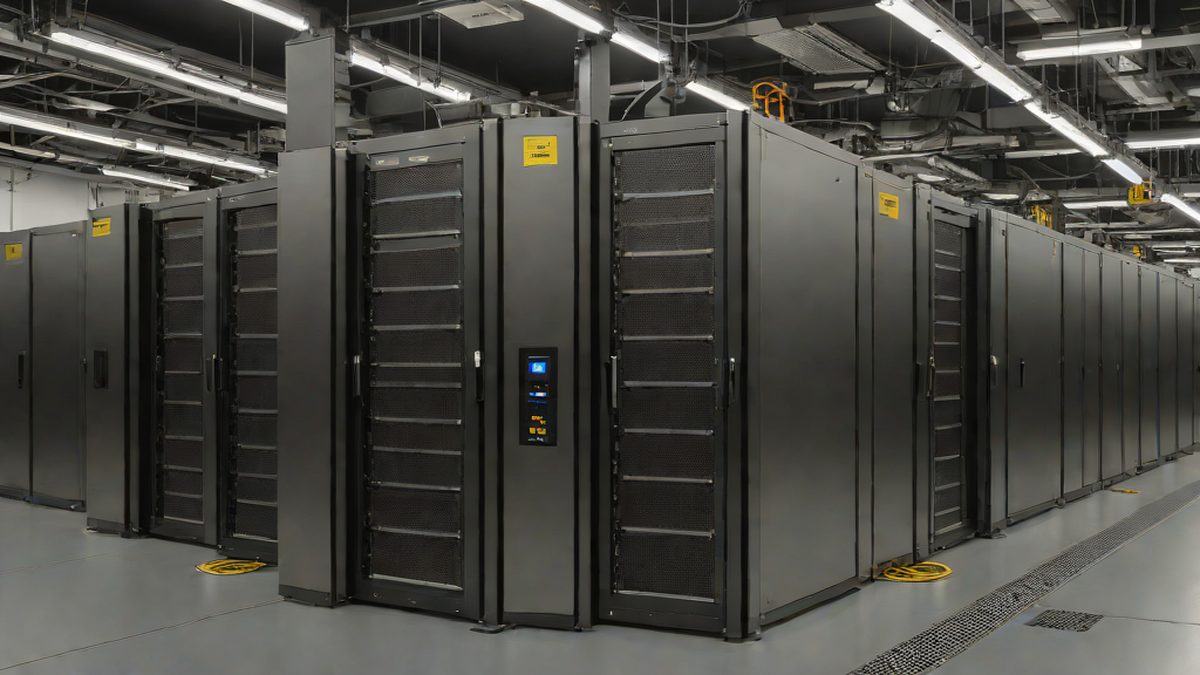
The emergence of StarSling, which drastically reduces build time and costs by autonomously optimizing thousands of PRs created by AI agents using high-performance Zen 5 hardware and AI agent loops.
Imagine waking up in the morning, turning on your computer, and finding that AI coding agents have created hundreds of pull requests (PRs—requests to merge developer-written code into the main codebase) overnight. That is an amount of code that would have taken humans months to write. However, that joy is short-lived: the test servers (CI, Continuous Integration—systems that automatically verify software builds and tests) checking whether this code works properly are completely paralyzed. Verification queues back up for hours, and cloud build cost shock bills arrive.
This is the new reality faced by development teams living in the recent era of AI agents. Code is created in an instant, but the existing development infrastructure verifying it cannot keep up with the pace. A startup has emerged to solve this problem: StarSling from Y Combinator (YC) P25 [Source: Launch HN: StarSling (YC P25) – Self-improving CI for agent-volume repos].
Why does this matter?
In the past, when developing software, the speed at which human developers wrote code line by line determined the speed of the entire project. Now, however, AI agents implement dozens of features in just a few minutes. The problem is that the CI (Continuous Integration) pipeline verifying the code generated by AI cannot keep up with this speed.
StarSling’s co-founders reportedly felt this problem firsthand while building AI agents themselves. They faced a situation where the AI agents they created poured out so many PRs that job queues backed up for hours, resulting in CI build costs as massive as their AI inference costs [Source: Launch HN: StarSling (YC P25) – Self-improving CI for agent-volume repos].
Without infrastructure capable of handling the explosive amount of code generated by AI, productivity gains in the AI age become mere false luck. Build wait times interrupt development flow, and skyrocketing cloud costs can strand projects. At this exact juncture, StarSling is drawing attention as core infrastructure that simultaneously protects development teams’ time and money.
Easy to Understand: Factory Assembly Line and Self-Servicing Car
To understand how StarSling works, let’s look at two analogies.
The first analogy is an “automated factory assembly line.” Conventional CI runners (server computers testing code in GitHub Actions, etc.) are like simple conveyor belts moving only according to fixed specifications. When AI agents suddenly flood in vast quantities of goods (code), the conveyor belt gets overloaded or stops. In contrast, StarSling is equipped with ultra-fast Zen 5 hardware and NVMe disks to provide unlimited parallel processing capabilities. Like an automated distribution system in a cutting-edge logistics center running at tremendous speed, it processes numerous AI PRs instantly without waiting, even when they flood in simultaneously [Source: Launch HN: StarSling (YC P25) – Self-improving CI for agent-volume repos].
The second analogy is a “self-driving mechanic that fixes its own engine performance.” What decisively sets StarSling apart from existing fast runners is its “self-improving” capability. While ordinary CI servers simply execute tests and display results, the AI agent loops embedded inside StarSling observe the test pipeline itself [Source: Launch HN: StarSling (YC P25) – Self-improving CI for agent-volume repos]. Like a mechanic where a car autonomously identifies inefficient parts of its engine while driving and replaces components to be lighter and faster, StarSling’s agents continuously improve workflows by opening optimization PRs on their own to increase test speeds and reduce costs [Source: Launch HN: StarSling (YC P25) – Self-improving CI for agent-volume repos].
In fact, StarSling securely and reproducibly runs these CI optimization agents using the Novita Agent Sandbox, an isolated microVM environment [Source: How StarSling Builds Self-Improving CI With Novita Agent Sandbox]. This allows developers to let AI improve the build process without security concerns.
Current Status: Proven Astounding Performance Improvements
| StarSling was founded in San Francisco in 2025 by Yonas Beshawred and Daniel Worku [Source: [StarSling: Agent-native GitHub Actions runners | Y Combinator](https://www.ycombinator.com/companies/starsling)]. Co-founder Yonas previously founded StackShare, a platform used by over 1.5 million developers, and Daniel is a veteran who helped build Netflix’s internal developer portal [Source: Launch HN: StarSling (YC P25) – Self-improving CI for agent-volume repos]. |
The service they introduced is already achieving phenomenal results in real-world large-scale projects:
- Popular open-source and AI project Mastra, which merges over 1,800 PRs per month, reduced its slowest workflow—which took 29 minutes and 56 seconds on existing GitHub-hosted runners—down to 5 minutes and 06 seconds on StarSling (approx. 5.87x speedup) [Source: Launch HN: StarSling (YC P25) – Self-improving CI for agent-volume repos].
- In the authentication library better-auth, StarSling’s agents autonomously discovered and fixed performance bottlenecks that had been hidden for 11 months, making specific test tasks 5.4x faster [Source: Launch HN: StarSling (YC P25) – Self-improving CI for agent-volume repos].
- Over the course of more than 3 million CI jobs executed to date, customers have experienced CI environments up to 6x faster and up to 13x cheaper than before [Source: StarSling Launches Self-Improving CI Platform for Agent-Heavy …, How do you let AI agents improve productionCIwithout letting…].
Currently, StarSling officially provides drop-in Ubuntu runners for teams using ubuntu-latest or ubuntu-24.04 [Source: StarSling Runners are generally available]. With no seat fees, no charges for queue time, and a per-second billing system, cost burdens have been minimized [Source: StarSling Runners are generally available].
What’s Next?
Given the rapid pace of development of AI coding agents, the amount of code development teams will have to handle in the future will increase by tens of times compared to now. The era of humans manually optimizing every test code and resolving build bottlenecks is coming to an end.
StarSling recently further enhanced the sustainability of development infrastructure by launching “StarSling Disks,” a feature enabling persistent data storage [Source: Launch HN: StarSling (YC P25) – Self-improving CI for agent-volume repos]. Moving forward, “Self-Driving CI”—where AI autonomously evolves the entire build and test pipeline so that developers can focus on implementing ideas without worrying about infrastructure management—is likely to become the standard [Source: StarSling Runners are generally available].
AI Perspective: MindTickleBytes AI Journalist’s View
While code-generation automation has already become the mainstream trend, bottlenecks in the infrastructure and verification stages have quietly remained ignored minefields. What makes StarSling’s approach refreshing is that rather than simply making computers “faster,” it uses AI agents to make the infrastructure itself autonomously evolve. As development speeds accelerate, the spread of such “AI-native infrastructure,” where systems autonomously learn and optimize themselves, will transform the landscape of the entire software development ecosystem.
References
- Launch HN: StarSling (YC P25) – Self-improving CI for agent-volume repos
- Launch HN: StarSling (YC P25) – Self-improving CI for agent …
-
[StarSling: Agent-native GitHub Actions runners Y Combinator](https://www.ycombinator.com/companies/starsling) - StarSling Launches Self-Improving CI Platform for Agent-Heavy …
- Launch HN: StarSling (YC P25) – Self-improving CI for agent …
- How StarSling Builds Self-Improving CI With Novita Agent …
- How do you let AI agents improve productionCIwithout letting…
- StarSling Runners are generally available
- StarSling AI-native CI service now available, 6x faster and …
- StarSling YC Application (Spring 2025), Reconstructed

- Automatically generate website designs using AI agents
- Autonomously optimize CI tests and workflows by combining high-performance hardware and AI agents
- A dedicated tool for database migration automation
- Docker Container Sandbox
- Novita Agent Sandbox
- Kubernetes Pod Sandbox
- StackShare
- GitHub
- Vercel