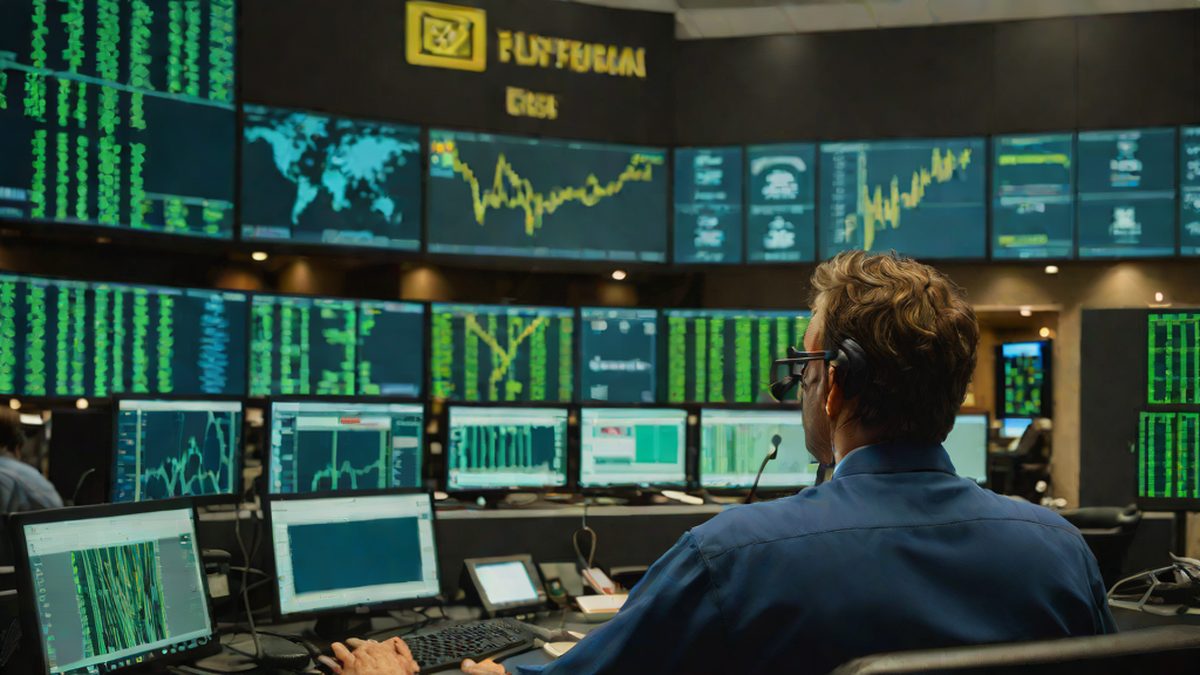
Anthropic's long-awaited IPO suffered a stock price plunge amid a $4 trillion wipeout on Wall Street. An in-depth analysis of the astronomical development costs hidden behind surging revenues and investor anxiety.
Imagine this: you spend years burning the midnight oil developing groundbreaking technology to change the world, and you finally make a grand debut on the world’s premier stage, the New York Stock Exchange. As soon as trading begins, the stock skyrockets and people cheer. But that joy is short-lived; amidst a massive storm engulfing the entire market, the stock plummets in an instant. This is not a scene from a movie. It is the reality faced by major artificial intelligence (AI) company Anthropic [Source 3, Source 8].
Recently, global financial markets have been shaken by an unprecedented and fierce tech sell-off. Amidst this turmoil, Anthropic, a heavyweight in the generative AI industry, debuted on the stock market [Source 2, Source 8]. Public expectations were sky-high, but the outcome was harsh. This incident goes beyond a mere IPO happening; it casts a fundamental question mark over the AI craze that has driven the global economy for the past several years. What on earth is happening on Wall Street?
Why does this matter?
Every day, we comfortably use AI services like ChatGPT and Claude on our smartphones and computers. When we ask questions like “What’s the weather like today?” or “Summarize this paper,” AI answers right away. However, supporting these convenient AI services requires unimaginably massive data centers and astronomical computing power.
Anthropic’s IPO plunge and the evaporation of $4 trillion (an astronomical amount exceeding 5,000 trillion Korean won) in market capitalization across the AI sector vividly reflect Wall Street’s anxiety regarding the primal question: “Is AI actually a profitable business?” [Source 2, Source 4, Source 6, Source 7]. Companies have begun adjusting the pace of AI adoption, and investors are starting to question when actual revenue will materialize compared to the endless pouring of development costs [Source 17].
If even the leaders driving the AI ecosystem struggle with fundraising and defending their stock prices, it could directly impact the pace of development and usage methods of the AI services we enjoy. In other words, we have entered an era where events unfolding in Silicon Valley’s massive laboratories profoundly impact our wallets and everyday technology environments.
Making it Simple: Why is AI Development Called ‘Pouring Water into a Bottomless Pit’?
Put simply, building state-of-the-art AI models is similar to launching a spacecraft.
Imagine this. To launch a Mars exploration probe, top scientists worldwide must gather and research for years, costing billions of dollars from rocket fuel to launch pad construction. Furthermore, nobody can guarantee 100% whether the rocket will launch successfully or explode mid-air along the way.
The process of developing Frontier AI (large artificial intelligence models that surpass human intelligence levels or test the limits of cutting-edge technology) is exactly the same. For a company like Anthropic to introduce Claude, an even smarter AI model, tens of thousands of the latest supercomputers worldwide must run uninterrupted for months. In this process, power costs and data training costs alone run into the trillions [Source 9].
Indeed, this reality is clearly revealed in the prospectus released by Anthropic ahead of its IPO. Anthropic’s revenue in 2025 skyrocketed by a staggering 12-fold compared to the previous year, achieving massive top-line growth of approximately $4.6 billion [Source 13].
However, at the same time, the net loss scale also ballooned like a snowball [Source 13]. This is because while it is earning an immense amount of money, it is pouring in far more to maintain AI models and build even larger next-generation models. It is akin to building a giant department store and generating hundreds of billions of won in revenue, but running a deficit because building and operating costs are too high. Wall Street investors cheered this explosive growth, yet simultaneously felt the fear of “When will this deficit end?”
Current Situation: Wall Street Where Hope and Fear Intersect
Initially, Anthropic was set to proudly enter the Wall Street stock market as the first generative AI company, beating competitors like OpenAI and Elon Musk’s xAI [Source 8, Source 11]. Market valuations discussed ranged from $1.5 trillion to $2 trillion, capturing global attention [Source 8, Source 17].
However, the mood on the day of the listing was harsh. As trading began, Anthropic stock soared from its initial offering price of $83 to over $110 at one point during the session, seemingly proving its explosive popularity [Source 3]. Praises like “As expected, the AI leader” seemed to emerge, but that joy did not last long.
As a fierce selling storm swept across the stock market as if residents were evacuating, Anthropic’s stock quickly turned into a sharp downward trend, plummeting disastrously below the initial offering price line of $83 [Source 3]. This incident is tied less to a single company’s insolvency and more to the AI bubble theory spreading across the market as a whole. As tech stocks overall took a massive hit, a massive market capitalization evaporation phenomenon occurred, with a staggering $4 trillion evaporating from AI-related assets in just a short period [Source 2, Source 4, Source 6, Source 7].
This situation goes beyond mere stock price declines. As signals are detected that companies are starting to reduce corporate AI spending due to recession concerns and cost pressures [Source 17], investment sentiment across the AI ecosystem is freezing over.
What’s Next?
So, after Anthropic’s IPO plunge, will the AI industry run aground like this? Experts interpret this incident not as a death sentence for AI technology itself, but as the starting signal of a ‘Tech Reset’ and a sobering reality check [Source 11].
- Demand for Profitability-Centered Structural Reform: Moving forward, the market will persistently question “How are you making money with that AI and when can you turn a profit?” rather than simply “How smart an AI did you build?” Companies with large deficits must streamline their cost structures and prove concrete, money-making B2B business models in real industrial fields to survive.
- Regulation and Rationalization of AI Investment Speed: The ‘gold rush’ era where companies recklessly poured budgets into AI infrastructure will calm down, entering a maturity phase that carefully weighs cost-effectiveness. In the short term, this will increase stock volatility for AI-related companies, but in the long term, it can help clear away bubbles and build a substantive ecosystem.
- Reassessment of Regulation and Risks: As mentioned in Anthropic’s prospectus, the potential risks of advanced AI models and the resulting regulatory risks have also established themselves as crucial variables that investors cannot overlook [Source 8]. Going forward, only companies that perfectly digest safety and legal liability issues hidden behind the glamour of technology will be able to gain market trust.
Ultimately, this incident can be called a historical milestone showing that AI is no longer a fantasy future technology, but has been fully integrated into the heart of a ruthless business world that must undergo rigorous capital logic and performance verification.
References
- Anthropic’s IPO bust deepens $4 trillion AI wipeout on wall …
- Anthropic IPO fails to calm AI jitters as tech stocks plummet
- ANT news, real time ANT stock news, Anthropic PBC … - Webull
- Anthropic, PBC (TSX:ANTH) Stock Price, Chart & News
- WSJ.com: Markets - feeds.content.dowjones.io
- Anthropic IPO explained: $2 trillion valuation, ballooning …
- Anthropic’s IPO filing details steep losses, rapid growth …
- Anthropic IPO might kick off tech reset if the AI stock …
- Anthropic’s IPO prospectus shows sweeping AI vision, surging …
- Stock Market Crash: Why Stock Market is crashing today …
- Techmeme

- 3x
- 6x
- 12x
- $95
- Over $110
- $150
- $1 trillion
- $4 trillion
- $10 trillion