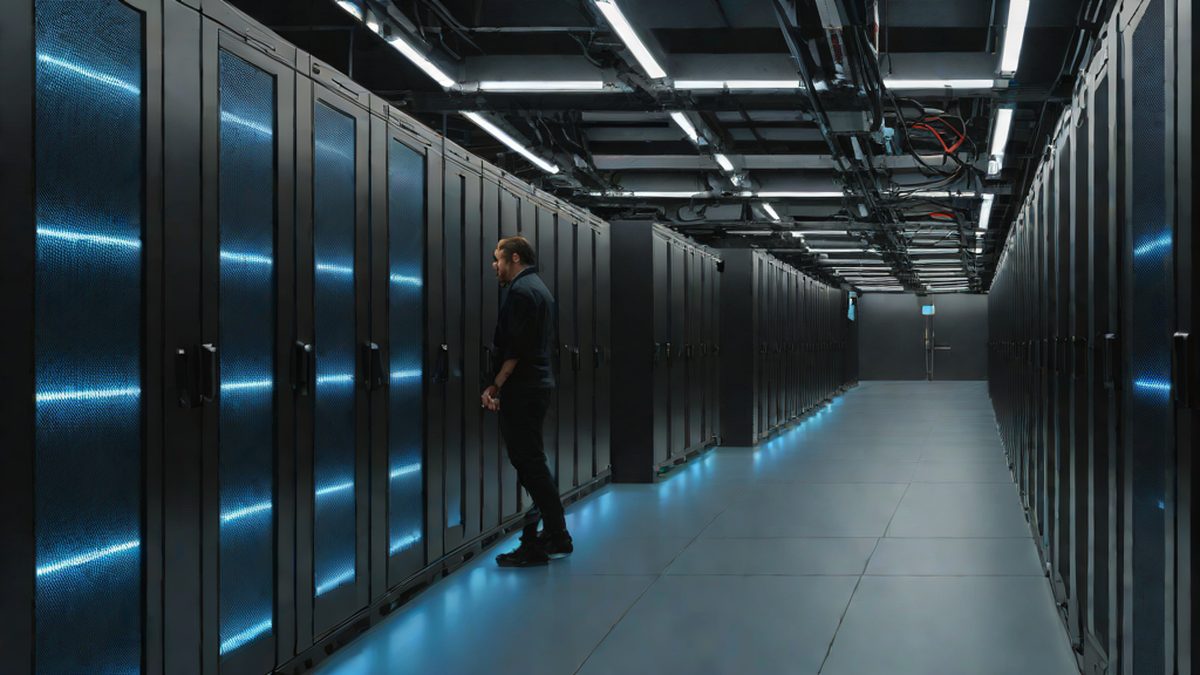
The MCP gateway is core infrastructure responsible for security and communication, mediating access between AI agents, enterprise apps, and databases.
Imagine this: You come to work in the morning, turn on your computer, and tell your AI assistant, “Check my backlog of internal messenger chats from yesterday, pick out the urgent bug tickets from Jira, and share them in the Slack team channel.” In less than a second, the AI connects to numerous internal systems and executes the tasks effortlessly. It’s a remarkably convenient world, but a sudden anxiety crosses your mind: “What if the AI accidentally leaks customer data or executes a weird command with the permissions I’ve handed over?”
As the era of Autonomous Agents fully takes off—where artificial intelligence (AI) goes beyond a simple conversational partner to directly manipulate your computer and enterprise apps—this question is no longer a sci-fi fantasy story. And the key that has emerged to solve this massive problem of security and connectivity is the MCP Gateway (Model Context Protocol Gateway). This is also why innovative companies like Snap are building systems that simultaneously verify both the person and the agent [Source 1]. Today, we will unravel this complex world of technology so that even non-majors can understand it in 10 minutes.
Why Is This Important?
To put it into perspective, AI in the past was close to a friendly library assistant who, when asked a question, would combine knowledge floating around the internet to provide an answer. However, today’s AI agents are evolving not into library assistants, but into all-around managers holding direct keys to freely enter and exit bookshelves and warehouses.
Latest AI clients like Claude or Cursor communicate freely with coding environments, browsers, databases, and internal collaboration tools [Source 2]. The problem is that the more powerful tools an AI holds, the greater the risk of “accidents.” An AI tricked by malicious prompt injection could wipe out an entire database or access sensitive unauthorized documents. Simply put, it carries risks similar to handing the steering wheel of a massive truck to someone who just got their driver’s license.
Consequently, an intermediary acting as a thorough ‘immigration office’ between AI and external tools became necessary. This is the MCP gateway. From enterprise security officers to individual developers, the gateway has now become a survival necessity rather than a choice for anyone looking to introduce AI into practical work.
Understanding It Easily: What Is an MCP Gateway?
To help understand this abstract concept, let’s use an everyday analogy.
An easy analogy: Imagine you have a genius secretary (AI agent) assisting a conglomerate chairman (user). The secretary is extremely smart, but cannot directly touch the company safe or personnel files. The chairman issues the secretary an ‘access pass (token and authentication)’ and sets a rule that whenever the secretary requests something from an internal warehouse or external partner, they must go through the security information desk (MCP gateway). The information desk meticulously inspects whether the request form brought by the secretary was truly approved by the chairman and whether the intended task is safe before finally opening the door.
In this analogy, the security information desk is the MCP gateway.
Basically, the MCP (Model Context Protocol) architecture is a set of communication rules that regulate how AI applications can securely exchange requests with external MCP servers (servers providing tools, resources, and prompts) [Source 11]. In this structure, the MCP gateway is positioned in front of the registered MCP servers that the AI agent attempts to access, securely mediating communications destined for external HTTP endpoints or local services [Source 4].
Comparing Various Gateway Architectures: From Docker to Open Source
Various types of MCP gateways exist in the world, adopting different architectures depending on development environments and security requirements. To use an analogy, it is like how security systems differ depending on the building’s purpose, ranging from a small neighborhood safe to a government complex boasting ironclad security.
- Docker MCP Gateway: A method where each upstream MCP server is isolated and spun up inside its own independent Docker container, then safely and uniformly exposed to the client [Source 6]. This is useful when you want to fundamentally block cross-contamination between servers. It’s like a study room with iron doors and separate locks installed on each room.
- Proxy-based Integration Approach (e.g., Composio): A structure where tool execution is directly delegated (proxied) on the server side. It helps developers use complex underlying integration structures conveniently without exposing them directly as raw MCP servers [Source 6]. It also supports AI-native integrations like Context7, providing an LLM-friendly structure [Source 7].
- All-in-One High-Performance Gateway (e.g., Bifrost): Bifrost, an open-source high-performance AI gateway released by Maxim and others, is designed to integrally perform the functions of an LLM gateway, MCP gateway, and agent gateway all within a single system [Source 10].
- Enterprise Gateway (e.g., Tetrate Agent Router): In large-scale enterprise environments at production scale, functions for routing AI agents to desired models, settling token costs by team, and debugging multi-agent failure cases are essential [Source 12].
Practical Applications: Internal Apps, Collaboration Tools, and Development Environments
How, then, is the MCP gateway being used in actual practice? Let’s look at a few representative ecosystem examples.
- Atlassian MCP Server: Connects browser or desktop AI agents so they can access Atlassian work apps like Jira and Confluence [Source 8]. All these connections operate smoothly based on a massive relationship network called the ‘Teamwork Graph’ [Source 8].
- Shopify and E-commerce Automation: Combining the no-code automation tool n8n with the Shopify.dev MCP server allows e-commerce store operators to easily build powerful store AI agents that perform product registration, order management, and inventory checks through conversation alone [Source 9].
- Developer Tools (GitHub, GitLab, Cursor, Windsurf): In development settings, guides are widely used to integrate with GitHub and GitLab repositories in AI IDE environments such as browser tools MCP or Cursor/Windsurf, automating code reviews, issue creation, and token/prompt configuration [Source 15, Source 17].
- Agent Rails and Delegation Vetting (Wever Labs Agentic Rails): Among tools provided via platforms like Glama, systems have emerged that tightly control an agent’s authority delegation by binding wallet proofs (
X-Wever-Wallet-Proof) to tool routes and returning verification reports containing Ed25519 signature receipts [Source 5]. Additionally, benchmark evidence checking features are provided to verify safety by reading only in-call data without page fetches or fund transfers [Source 16].
Security and Authentication: How to Verify Both the Person and the Agent Simultaneously
The reason Snap’s engineering blog is gaining attention is because it contemplates an architecture that goes beyond simple technological integration to simultaneously verify two entities: the ‘User’ and the ‘Agent’ (Checks Both the Person and the Agent) [Source 1].
Requests emitted by autonomous agents may sometimes differ from the user’s true intent. When a malicious attacker attempts to manipulate an agent to execute hidden commands, it is difficult for the system to block this without a gateway. To use an analogy, it is like inspecting in real-time whether a designated driver (agent) is actually being directed to the correct destination by the real car owner (person) sitting in the backseat, and whether anyone else with malicious intent has intervened in the middle.
Therefore, modern leading MCP gateways build multiple lines of defense as follows:
- User Identity Verification: Is the user who issued the command an authorized internal employee with valid permissions?
- Agent Permission Scope Setting: Do the MCP server and tools that the agent attempts to access have the qualifications to perform the corresponding task (e.g., payment, DB modification)?
- Request Integrity Verification: Have the transmitted JSON arguments and tokens been tampered with? (Utilizing cryptographic receipts such as Ed25519 signatures) [Source 5]
What Lies Ahead?
In the future, AI agents will permeate every corner of our lives. Countless AIs will work and communicate with each other inside browser windows, within smartphones, and across enterprises’ massive cloud server infrastructures.
If all agents run around recklessly down their own paths during this, the digital world will become a lawless zone. For AI to safely wield tools and help humans, the role of the MCP gateway—a robust and flexible immigration office—is expected to grow even larger. Open-source gateways like Bifrost, Docker-based isolation architectures, and sophisticated agent verification systems will establish themselves as standard infrastructure for more enterprises moving forward [Source 6, Source 10].
AI’s Perspective
The smarter AI becomes, what we need is not ‘more freedom’ but ‘a sturdier and more transparent seatbelt.’ The MCP gateway is a reliable shield of the digital era helping AI and humans collaborate in mutual trust. As technology advances, security should not become complicated; rather, it should work perfectly behind the scenes without the user having to worry about it. In that sense, the advancement of gateway technology can be called a true hidden protagonist opening the era of AI popularization.
References
- MCP Gateway: How Snap Checks Both the Person and the Agent
-
[MCP Servers for Claude, Cursor & AI Agents MCP.so](https://mcp.so/) - How microVM Isolation Actually Secures your Autonomous Agents
-
[Wever Labs Agentic Rails - wever_delegate-vetting-check Glama](https://glama.ai/mcp/connectors/com.weverlabs/agentic-rails/tools/wever_delegate-vetting-check) - MCP Gateway 2026: Composio vs Docker vs MCPJungle vs Obot
-
[Context7 MCP Integration for AI Agents Composio](https://composio.dev/toolkits/context7_mcp) -
[Get started with the Atlassian MCP server Atlassian AI Gateway](https://support.atlassian.com/atlassian-ai-gateway/docs/get-started-with-the-atlassian-remote-mcp-server/) - This Shopify AI Agent Does EVERYTHING (n8n + MCP…) - YouTube
- GitHub - maximhq/bifrost: Open-source, high-performance AI gateway…
- MCP Architecture: A Complete Technical Analysis Examined Through Diagrams
- Tetrate: The Enterprise AI Gateway Proven At Production Scale
- Develop Faster using the browser tools MCP… - YouTube
-
[Wever Labs Agentic Rails - wever_benchmark-evidence-check Glama](https://glama.ai/mcp/connectors/com.weverlabs/agentic-rails/tools/wever_benchmark-evidence-check) -
[MCP для GitHub и GitLab: настройка 2026 токены… AiManual](https://ai-manual.ru/article/mcp-dlya-github-i-gitlab-polnyij-gajd-po-nastrojke-s-tokenami-promptami-i-konfigami-dlya-ai-instrumentov-2026/)

- Mediates access and manages security between AI agents and external services/MCP servers
- A hardware device that turns computer power on and off
- Improves smartphone battery efficiency by over 50%
- Bundles all services into a single massive process
- Spins up each upstream MCP server in individual containers and exposes them unified to the client
- Operates only locally without internet connection
- Directly connects Atlassian apps and work details in the chat window via the Teamwork Graph
- Exclusively supports email sending functionality
- Automatically compiles source code
- Simultaneously performs the roles of high-performance LLM gateway, MCP gateway, and agent gateway
- A security program that only acts as a web server firewall
- A blockchain wallet management tool