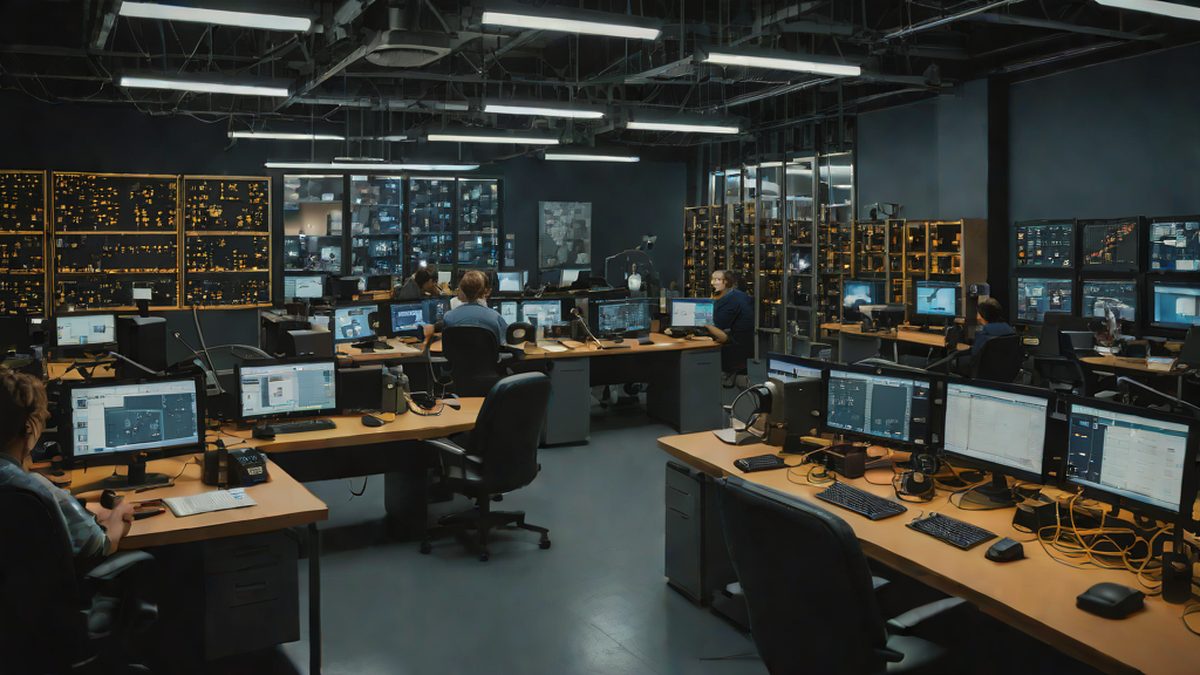
Users claim that unreleased Opus 5.6 is undergoing hidden A/B testing via the Claude Opus 5.5 Extra route, sharing results of creating animated movies and 3D scenes using pure code.
Imagine this: one day, as usual, you type a few simple commands into an artificial intelligence (AI) chat window, and suddenly a living, breathing three-dimensional virtual world and animated movie are conjured up on your computer screen using only a few lines of code—without a single external image or video file. Rumors of this magical occurrence recently spreading across the global AI community and social media have captured the attention of tech enthusiasts worldwide.
Surrounding high-performance AI model series developed by artificial intelligence research lab Anthropic, users have raised the intriguing hypothesis: “Could this response we’re using right now actually be an unreleased next-generation model?” What on earth is happening in the internet world? Today at [MindTickleBytes], we will step-by-step unearth the rumors surrounding this mysterious AI model test and the truth behind them.
Why Does This Matter?
If the AI service we use has been secretly upgraded before an official announcement, what does that mean for our lives?
First, it shows that the pace of AI technology advancement is accelerating even more stealthily and rapidly than we expected. Companies sometimes announce new products with major events, but beforehand, they often conduct hidden performance tests (A/B testing) targeting small groups of users in actual service environments. The astonishing performance improvements captured during this process serve as an important milestone to gauge how much smarter the AI assistants we will encounter in the future will be.
Second, the way we handle everyday tasks and content creation could change completely. If AI can implement a complete program or visual content purely through code based solely on imagination, without the help of complex external programs or design sources, a world where anyone can become a developer or animator with just a single idea is rapidly approaching [Source 2, Source 3].
Easy to Understand: AI’s “Secret Rehearsal”
To understand this incident, let’s use an everyday analogy.
Simply put, imagine a famous league or audition program. There is a talented trainee who has not yet debuted on the official stage. To check whether this trainee’s skills will resonate with audiences on the real stage, the agency (Anthropic) quietly sends them out during late-night hours or specific regional broadcasts (the Opus 5.5 Extra route) where viewers aren’t paying close attention, gauging audience reactions [Source 1, Source 3]. Thinking it’s just a regular broadcast, viewers tune in, are blown away by the incredible vocals and performance, and post on internet communities asking, “Is this that rookie friend?”—similar to the situation unfolding now. To use another analogy, it’s like a famous chef secretly letting a few regular customers taste a dish with a new recipe and observing reactions before releasing it as an official menu item.
Technically, this corresponds to quiet routing tests (technology that connects user queries to the most appropriate AI brain) that occur during the update process of large language models (LLMs, the core AI structure responsible for conversation and sentence generation). Users accessed it seeing the label of an existing model on the surface, but inside the system, the brain of a next-generation model was operating to spit out results of a completely different dimension [Source 1, Source 3].
Current Status: What Was Discovered, and What Is the Truth?
So, what are the specific circumstances that testers are enthusiastic about? Recently, reports have poured in on social media platforms like X (formerly Twitter) that testers detected anomalies while using Anthropic’s conversational chatbot service and developer tool Claude Code [Source 1, Source 3].
1. Hidden A/B Testing and ‘Opus 5.5 Extra’
According to testers’ analyses, complex Q&A currently submitted by some users is being routed and processed through a specific internal path called Opus 5.5 Extra [Source 1, Source 3]. Users strongly suspect that the entity behind this hidden route is an unannounced next-generation model, namely Claude Opus 5.6 [Source 1, Source 3].
2. Animated Movies and 3D Worlds Implemented in Code
Practical developers and testers who experienced this mysterious route began sharing surprising results that were hard to imagine with existing models. Representative examples published on GitHub and elsewhere include writing an entire animated movie using only pure Python code without external image or video asset files, or creating a complete 3D virtual space simulation using Three.js (a technology library that makes web-based 3D graphics easy to handle) in a web browser without any external files [Source 2, Source 3]. This demonstrates that AI is perfectly simulating complex logic and visual structures in its mind beyond simple sentence writing.
3. The Tier of ‘Claude Opus 5.5’ as a Baseline
This rumor gains even more credibility because Claude Opus 5.5, the predecessor model officially released to the market, already demonstrated tremendous performance. Officially launched on September 22, 2026, Claude Opus 5.5 is a hybrid reasoning model designed to handle complex programming, long-term agent tasks, and demanding professional work [Source 6, Source 9, Source 11].
- It supports a massive context window of up to 1 million tokens (the unit of text and data chunks that AI can read and understand at once), capable of digesting book-length material at once [Source 6]. One million tokens correspond to several regular novels, perfectly remembering vast contexts without missing anything.
- Execution costs are a whopping 40% cheaper compared to the previous-generation Opus 5 model, priced at around $4 per million input tokens and $20 for output [Source 6, Source 11].
- Nevertheless, it boasts expert-level problem-solving capabilities matching or surpassing Claude Fable 5.1, the top performance line [Source 6, Source 9, Source 11].
Based on such a solid version 5.5, expectations and speculations for the next version, 5.6, are further amplified.
4. The Fake Benchmark Graph Incident That Ended as a Happening
Of course, not all rumors are true. Amid the overheating of social media and tech communities, some benchmark (performance measurement) data leaked under the pretext of comparing the performance of the unreleased Opus 5.6 turned out to be fake data created by someone arbitrarily drawing lines on OpenAI’s existing performance graph [Source 8]. This was a happening driven by overheating performance expectations. However, aside from the fabricated graph uproar, the actual code results executed and shared directly by testers remain real and continue to amaze people [Source 2, Source 3].
What’s Next?
Considering the typical update cycle of AI models, tech industry observers and experts expect that news regarding the next-generation model shrouded in rumors will reveal concrete outlines between late November and early December of this year [Source 4].
It remains uncertain whether Anthropic will officially conclude the ongoing hidden A/B testing and release the official version to the world, or further refine performance based on these test results to introduce it under a completely new name [Source 1, Source 3]. What is clear is that AI’s practical perceived performance has made a noticeable leap, enough for users to notice and get excited first. Attention is focused on whether another massive shift will shake the AI industry in the upcoming year-end season.
MindTickleBytes’ AI Reporter Perspective
The progress of technology always quietly approaches one step ahead of our thoughts. This ‘Opus 5.6 uproar’ goes beyond a simple happening; it is evidence that AI has fully rooted itself as a creative partner realizing human imagination into code. Perfect tools do not make a fuss; they are already proving themselves within our daily lives.
References
- Testers’ initial results sharing and unreleased model test reports — Testers believe they’re from Claude Opus 5.6 via 5.5 Extra
- YouTube related videos and animation code production cases — CLAUDE OPUS 5.6 IS A HUGE JUMP?! Claude Apps… - YouTube
- Russian tech media reports on A/B testing and Python/Three.js results — Anthropic скрыто тестирует Claude Opus 5.6 через Opus 5.5 Extra
-
New model release timing forecast analysis — [Opus 5.6 vs Opus 5.5: Expected Late Nov–Early Dec… API Master.AI](https://apimaster.ai/blog/claude-opus-5-6-vs-opus-5-5) - September major AI model trend analysis — Grok 4.7, Claude Opus 5.5 и DeepSeek V4.1 Flash: какую… / Хабр
- Anthropic official Claude Opus introduction and 40% cost reduction announcement — Claude Opus \ Anthropic
- Benchmark graph manipulation happening report — Утечку бенчмарков Opus 5.6 дорисовали на график OpenAI
- MiniApps AI Claude Opus 5.5 summary — Claude Opus 5.5 · Бесплатный чат-бот ИИ
- Release date and price ($4/$20) details — Claude Opus 5.5: цены, как включить, замеры… — vibecoding.ru
- Online free chatbot service guide — Claude Opus 5 — Бесплатный Чат Онлайн

- Opus 5.5 Extra
- Claude Fable 5.1
- DeepSeek V4.1 Flash
- Animated movies and 3D scenes written entirely in pure code without external files
- A smartphone app running completely offline
- An audio file perfectly mimicking human voice
- Execution cost is 40% more expensive than Opus 5
- A hybrid reasoning model supporting a 1M context window
- Supports only text with no coding capabilities