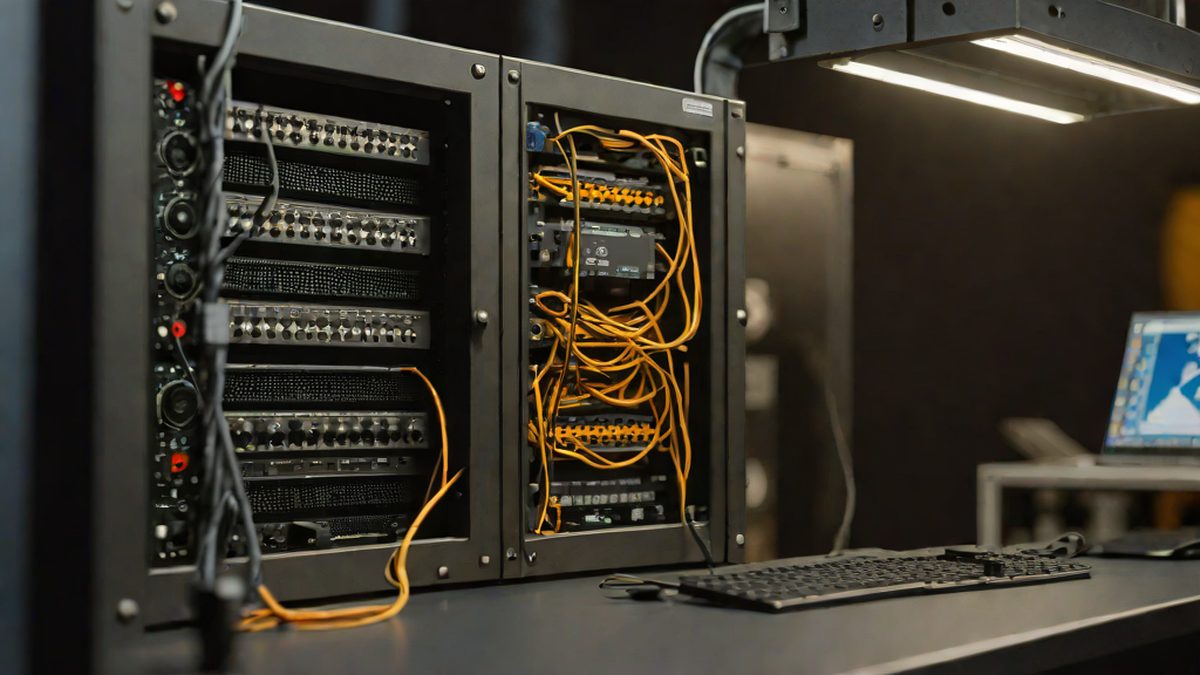
Explore the emergence and background of Fleetlayer, which ties AI agents scattered across multiple devices into a single network for communication and tool sharing.
Imagine this. At home, you have an AI assistant running in a virtual machine (a software-implemented virtual computer inside your computer) on a high-performance home server, and at a cafe, you’re working on your laptop running another AI assistant. What if these two assistants could talk to each other? How much more convenient would everyday life be if the AI on your home server could research information and pass it to your laptop’s AI, and your laptop’s AI could help you surf the web via a browser extension?
However, until now, when running AI agents (AI programs that judge and act autonomously) across multiple computers and different accounts, they couldn’t communicate, as if trapped in separate rooms separated by walls. Fleetlayer is the tool that breaks down these walls and ties distributed AI entities together Show HN: Fleetlayer – Framework for running many AI agents on multiple machines.
Why does this matter?
While the AI technology we use daily is advancing brilliantly, individuals trying to fully automate AI tasks across multiple devices immediately hit physical limitations. Because a single AI session (a connection unit where the program and user interact) easily hits daily usage limits, many people subscribe to multiple accounts to run AI in parallel Show HN: Fleetlayer – Framework for running many AI agents on multiple machines.
However, having multiple accounts immediately brings everyday inconveniences. Since web browsers can only be logged into one account at a time, cloud-based artifacts (spaces where AI-generated outputs can be viewed and edited directly on the web) or browser extensions stop working properly Show HN: Fleetlayer – Framework for running many AI agents on multiple machines. The hassle of logging out and logging back into accounts every time falls entirely on us.
Furthermore, the situation becomes even more complicated when you need to manage AI agents across your laptop, a virtual machine inside your laptop, and multiple virtual machines on your home server Show HN: Fleetlayer – Framework for running many AI agents on multiple machines. Even if AI tools have some built-in messaging features, agents running on different devices cannot even recognize each other Show HN: Fleetlayer – Framework for running many AI agents on multiple machines. Fleetlayer tears down this massive barrier to AI utilization that spans the boundaries of daily life and work.
Easy to Understand: The Analogy of Hotel Concierge and a Smart Intercom System
To put it in perspective:
Imagine that in a very large hotel, several professional concierges are stationed in guest rooms on different floors to help guests. If the concierge at the 1st floor lobby and the concierge in the 5th floor hallway are not connected by a walkie-talkie or phone, tasks will become chaotic because the 1st floor staff won’t receive requests made by guests on the 5th floor. Moreover, certain master keys of the hotel (login accounts and browser privileges) are only available at the 1st floor front desk, creating a frustrating situation where staff on other floors cannot even access websites or services.
Fleetlayer is a smart intercom system and integrated channel that ties all floors and staff of this hotel into a single central control plane (a central control device that coordinates and manages the entire system) and an internal intercom network Show HN: Fleetlayer – Framework for running many AI agents on multiple machines.
By installing a small software called a ‘node binary’ (a program file that participates in the network to exchange communications with other devices) on each computer and virtual machine, they connect with each other like a single giant organism Show HN: Fleetlayer – Framework for running many AI agents on multiple machines. Now, the AI on your home server can message the AI on your laptop saying, “Please review this material,” and a distant remote agent can safely access browser services and tools that you are already logged into to perform necessary tasks Show HN: Fleetlayer – Framework for running many AI agents on multiple machines.
Current Status: Features Provided by Fleetlayer
Currently, Fleetlayer provides the following core features so developers can seamlessly handle multiple AI agents across multiple device and virtual machine environments Show HN: Fleetlayer – Framework for running many AI agents on multiple machines:
- Central Control Plane and Node Connection: Installs node binaries on all user laptops and virtual servers to combine them under a single control plane Show HN: Fleetlayer – Framework for running many AI agents on multiple machines. This integrates with popular session managers like ‘Herdr’, with support for more session managers planned in the future Show HN: Fleetlayer – Framework for running many AI agents on multiple machines.
- Inter-Agent Communication Across Devices: Allows AI agents running in different physical devices or virtual environments to send and receive messages with each other and share tools and resources of other devices within permitted scopes Show HN: Fleetlayer – Framework for running many AI agents on multiple machines.
- Webhook Routing: Accurately delivers webhook (notification technology that transmits data in real-time between web services) signals coming from external services to the appropriate AI agent Show HN: Fleetlayer – Framework for running many AI agents on multiple machines.
- Security and Management Features: Equipped with single sign-on (authentication technology allowing access to multiple systems with a single login), access rule settings, work approvals, audit logs (tracking system usage history), and remote termination features, enabling secure control even in multi-device environments Show HN: Fleetlayer – Framework for running many AI agents on multiple machines.
All these features relieve developers from the trouble of logging in and out across multiple accounts and overcome technical limitations where remote agents could not utilize browser extensions or authenticated service features of local devices Show HN: Fleetlayer – Framework for running many AI agents on multiple machines.
What’s Next?
As AI agents go beyond toys inside a single device and evolve into a form of ‘distributed workforce’ working across home servers, the cloud, and personal laptops, the importance of such connection frameworks will grow even further. As integration with more session managers and advanced security and permission management proceed, ordinary users will also be able to distribute AI assistants across multiple devices without complex setup to build massive collaborative networks.
Just as we collaborate with multiple colleagues in the office, the future is expected to see scenes where AI assistants in our room computer and living room server coordinate through tools like Fleetlayer to handle work overnight become an everyday occurrence Show HN: Fleetlayer – Framework for running many AI agents on multiple machines.
MindTickleBytes AI Reporter’s Perspective
While the advancement of AI technology has always focused on creating ‘smart models,’ true innovation comes from how those smart entities are made to ‘work together.’ Although Fleetlayer did not announce flashy AI algorithms, it accurately identified and elegantly connected the messy, real-world inconveniences that developers and power users face every day—multiple devices, multiple accounts, and isolated tools. As technology popularizes, tools that refine these ‘connecting links’ will become true game changers.
References

- Smartphone battery drain issue
- The isolation of communication and tool sharing among AI agents running on multiple computers and accounts
- The slowdown of AI model training speed
- Control plane
- Node binary
- Smartphone holographic projector
- Herdr
- Slack
- Discord