The story of Archive95, an independent archive reviving pre-1996 web history lost before the age of automated web crawling into over 260,000 pages unearthed from 37 legacy CD-ROMs and backup disks.
The Internet of 1995, Unknown to Google or the Wayback Machine, Is Back? A Developer’s Miraculous Digital Archaeology
Have you ever imagined what kind of web pages people were looking at about 30 years ago, when the unknown new world called the internet first appeared to the public? There were no smartphones, no Google where typing a single word into a search box pours out hundreds of millions of pieces of information. Instead, people explored the world beyond telephone-line modems, clicking blue-underlined hyperlinks (pathways moving to other documents) on computer screens accompanied by beeping dial-up sounds.
Unfortunately, most of those web pages from back then have vanished without a trace. Even the Wayback Machine (a non-profit digital repository that automatically collects and stores past records of websites worldwide)—the giant digital library that first comes to mind when we look back at the internet’s past today—only began full-scale collection around 1996 [Show HN: Archive95, an independent archive of the early web]. So, have the memories of that pure era when the web was first born before 1996 vanished forever into digital darkness?
Miraculously, one developer’s persistent tenacity has dug up and revived this forgotten history as if unearthing it from a tomb. Developer Ian Edmonds spent about five years starting in 2021 meticulously combing through discarded old computer parts, antique CD-ROMs, and forgotten backup disks to recover 268,205 early internet web pages and media files, releasing an independent web archive called ‘Archive95’ to the public [Show HN: Archive95, an independent archive of the early web, Archive95 preserves 268,205 early web pages and media from 37 …]. Here is an easy-to-understand look at this incredible independent web archive project created not by a giant corporation or government agency, but by a single individual.
Why It Matters
We often believe that “once something is uploaded to the internet, it is never erased.” From a technical standpoint, however, this is only half true. In fact, the internet is a fragile space that is easier to erase and break than any recording medium humanity has ever invented. The moment a server’s power goes out due to unpaid bills, a domain contract expires, or an operator formats a hard drive, the articles and photos contained within fly away into thin air. In academia, this is known as ‘digital extinction’ or the ‘digital dark age’, where past data is completely lost, leaving future generations unable to look back at history.
Of course, wonderful projects like the Wayback Machine operated by the Internet Archive exist [InternetArchive: Digital Library of Free & Borrowable Texts, Movies…]. However, the operating principle of the Wayback Machine is fundamentally rooted in automated crawlers (robot programs that automatically read web documents, follow links, and copy/store them) [Show HN: Archive95, an independent archive of the early web]. In other words, it is a method where robots bustle across the internet network, recording currently open doors like taking snapshots.
The problem is the web before 1996, before automated crawling went into full swing [Show HN: Archive95, an independent archive of the early web]. During this period, robot systems that automatically scraped web documents practically did not exist, and internet users were few. Therefore, websites from the debut of the first web in 1991 up until 1995 were either not caught on the Wayback Machine’s radar or, even if caught, yielded only a fraction of their data [Show HN: Archive95, an independent archive of the early web].
This is precisely why Archive95 resonates so deeply with us. It filled the historical gap that mainstream archives could not reach or technically record, not through automated programs, but through pure ‘manual data excavation’ [About Archive95, Show HN: Archive95, an independent archive of the early web]. The first page of a lost history book proving how the roots of the giant tree called the internet spread out has finally been filled.
The Explainer
How on earth could internet addresses that had already vanished be revived 30 years later? For those unfamiliar with technology, let me explain using two familiar analogies.
1. Street View Camera Car vs. Unearthing an Attic Album
As an analogy, the difference between the Wayback Machine and Archive95 can be compared to a ‘Street View camera car’ versus ‘unearthing an attic album’.
The Wayback Machine is like a modern road view car that mounts a camera on its roof and regularly patrols city streets to capture streetscapes. The scenery of neighborhoods after 1996, when cars began circulating, remains relatively densely photographed. However, the scenery of back alleys before 1995—before those cars came into existence—could never be captured on those cameras no matter how hard you search [Show HN: Archive95, an independent archive of the early web].
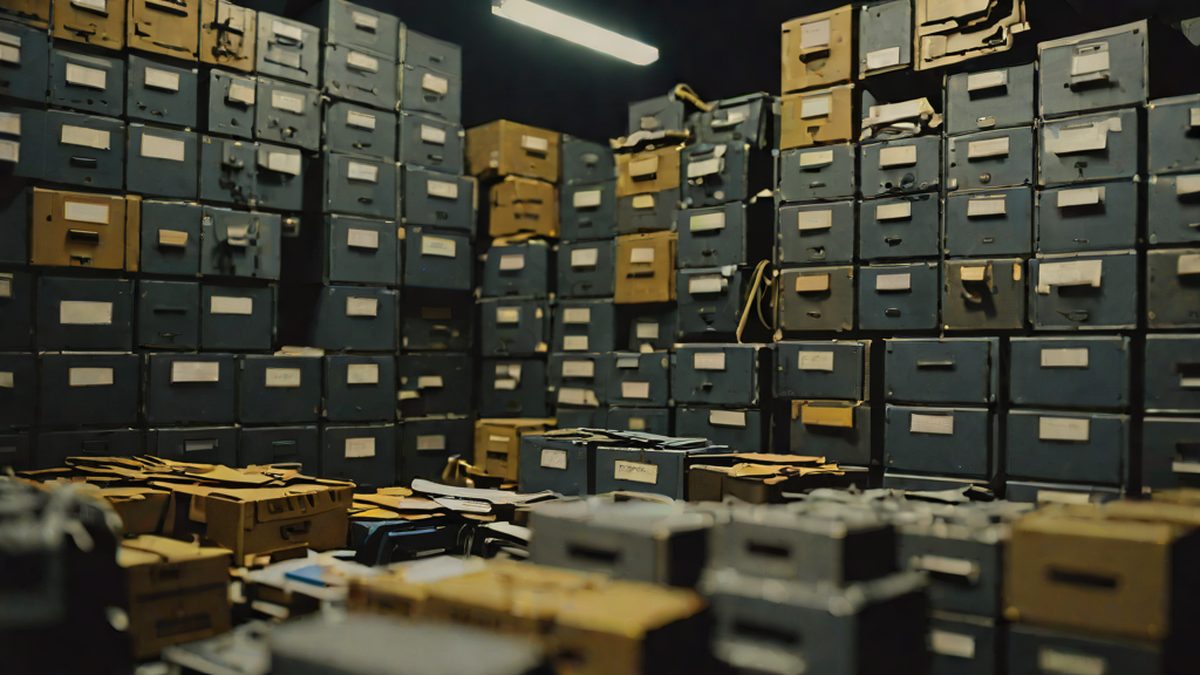
In contrast, Ian Edmonds, the creator of Archive95, didn’t patrol streets with a camera; instead, he searched the attics of old houses slated for demolition and flea markets. In the mid-1990s, because internet speeds were too slow, people frequently burned entire contents of web pages, useful software, and internet catalogs onto CD-ROMs to distribute or sell as computer magazine supplements [Show HN: Archive95, an independent archive of the early web, Archive95 preserves 268,205 early web pages and media from 37 …]. Additionally, tucked away in the corners of hard drives on computers used at the time were browser caches (temporary file storage for quickly redisplaying previously visited pages) and backup disks, slumbering intact [Show HN: Archive95, an independent archive of the early web, Archive95 preserves 268,205 early web pages and media from 37 …].
Securing a total of 37 sources of these abandoned CD-ROMs and dusty backup disks, the developer pulled out and restored web page files and images frozen like cryopreserved humans one by one [Archive95 preserves 268,205 early web pages and media from 37 …]. The road view car missed it, but he retrieved the true scenery of the early 1990s vividly embedded in someone’s old photo album.
2. 260,000 Digital Pieces Restored Like Matching Broken Pottery
The data excavated in this manner is far more than just a compressed archive of old files. A web page is a complex structure intertwined with text, background images, icons, and hyperlinks leading to other pages. Files from 30-year-old cache files or CD-ROMs frequently had broken link addresses or mixed-up file names.
Ian Edmonds restored these fragmented files meticulously, much like a museum curator matching pieces of broken white porcelain [Show HN: Archive95, an independent archive of the early web]. The number of files brought back to life in this way reaches an astounding 268,205 [Archive95 preserves 268,205 early web pages and media from 37 …, Show HN: Archive95, an independent archive of the early web].
Imagine This: What If You Took a Time Machine Into the Internet of 1995?
Let’s visualize a specific scenario in our minds.
Imagine this.
It’s a late autumn evening in 1995. Sitting in front of a thick gray monitor, you listen to the Windows 95 boot sound. You tear open the plastic wrap on the back of a magazine bought at a computer store and insert the silver-shining companion CD-ROM into the drive. The drive begins to spin with a whirring sound, opening a web browser with crude primary color buttons and a gray background on the monitor.What kind of writings did people post back then? It was an era without flashy videos or flashing flash animations yet. Simple research introductions posted by university researchers, pure self-introductions by hobbyists who had just taken their first steps on the internet, and pages organizing album release news for their favorite music bands using crude table tags fill the monitor.
Visiting the Archive95 website offers an experience akin to taking a time machine back to that exact moment 30 years ago [Show HN: Archive95, an independent archive of the early web].
What Special Features Are Contained on the Archive95 Site?
If it had merely piled files away in a warehouse, this project would not have received enthusiastic praise from developer communities worldwide. The developer directly created sophisticated features allowing users to explore this massive record through modern web browsers as well as vintage methods from 30 years ago [Show HN: Archive95, an independent archive of the early web].
-
Full-text Search Tool for Entire Contents
Unlike simple lists that require you to know old website addresses, typing specific words, people’s names, or events from inside document bodies into the search bar instantly brings up early 1990s web pages containing that text [Show HN: Archive95, an independent archive of the early web]. -
Domain-based Directory Browser
A systematic explorer that allows you to browse contents sequentially by folder according to the domain addresses of websites that existed at the time [Show HN: Archive95, an independent archive of the early web]. -
Backlink Viewer: Who Linked This Page?
Given a specific web page URL, this feature allows you to track which other websites at the time recommended and linked that address [Show HN: Archive95, an independent archive of the early web]. This visually helps understand how early 1990s web surfers navigated the web and the inter-site link ecosystem. -
Access via 30-Year-Old Original Browsers! (Vintage Browser Compatibility)
This is one of the most technologically astonishing points of the project. Because modern web servers require security standards (such as HTTPS) and modern technical specifications, connecting with ancient browser programs from the early 1990s is fundamentally impossible.
However, Archive95 is designed to allow direct server connections using legendary graphical browsers from the early 1990s like ‘Cello’, and theoretically even ‘WorldWideWeb’, the first browser created by Tim Berners-Lee in 1991 [Show HN: Archive95, an independent archive of the early web]. According to the developer’s explanation, websites supporting access from such ultra-early vintage browsers are virtually unique worldwide, alongside historical archive sites likefloodgap.com[Show HN: Archive95, an independent archive of the early web].
Additionally, the developer has made the web server code publicly available on GitHub as Open Source so that other researchers and developers can freely study and utilize this system [Show HN: Archive95, an independent archive of the early web].
Where We Stand
Starting in 2021 through steady trial, error, and improvement, developer Ian Edmonds announced that he has finally completed a robust and stable technical foundation over the past year [Show HN: Archive95, an independent archive of the early web].
Currently, the scale of what Archive95 preserves is as follows:
- Total preserved pages and media files: 268,205 [Archive95 preserves 268,205 early web pages and media from 37 …, Show HN: Archive95, an independent archive of the early web]
- Data sources utilized for excavation: 37 independent legacy CD-ROMs, cache repositories, and backup media [Archive95 preserves 268,205 early web pages and media from 37 …]
- Remote backup data preservation: Project data is also backed up and linked in the data repository directory of the Internet Archive, the world’s largest digital library, ensuring safe preservation [archive95-web-data directory listing]
However, objective limitations also exist. This project does not contain ‘all’ web pages that existed in the early 1990s. Because it meticulously restored data that physically survived from 37 specific sources, countless other sites from that era not included in these sources remain uncharted territory [Archive95 preserves 268,205 early web pages and media from 37 …, Data Sources - archive95.net]. The developer also candidly states that this project does not aim to completely replace the existing giant Wayback Machine, but rather serves as a reliable ‘companion and backup’ filling areas that the Wayback Machine cannot reach [Show HN: Archive95, an independent archive of the early web].
What’s Next
As Archive95 has become known to the world, it is blowing a fresh breeze into the field of digital preservation. The ultimate direction of this project is clear.
First, expanding humanity’s collective understanding of the early web before 1996, which exhibited the greatest vulnerability in historical record-keeping [Show HN: Archive95, an independent archive of the early web]. For historians and researchers studying the communication methods and cultural forms of early web communities—filled with academic purposes and pure curiosity before the internet commercialized—this archive will serve as invaluable primary source material.
Second, building an independent archive ecosystem that reduces reliance on giant single repositories. No matter how large a public library is, it can never be completely free from threats such as technical failures, hacking, or fires. The more independent projects like Archive95 that preserve data using diverse sources and methods, the more safely and robustly humanity’s digital heritage will be protected [Show HN: Archive95, an independent archive of the early web].
Third, continuous expansion of ancient browser emulation and data discovery. The developer continues research to successfully implement the 1991 original WorldWideWeb browser emulation not yet fully realized, and plans to continuously add other vintage data sources likely hidden across the globe [Show HN: Archive95, an independent archive of the early web].
MindTickleBytes AI Perspective
While the internet we encounter today is dominated by dazzling algorithms and massive platform companies, the first pages of the web 30 years ago were filled with the modest and pure passion of individuals who simply wanted to share knowledge and connect.
Archive95, meticulously restored over five years by a single developer like picking up discarded CD-ROMs and dusty cache fragments with tweezers, warmly illuminates the blind spots of digital history that had been overshadowed by convenient automated technology. No matter how brilliantly technology evolves, this project quietly proves the fact that the power to protect precious memories of the past and pass them on to the future ultimately stems from human determination and affection, not machine algorithms.
References

- Real-time page collection via automated internet crawler programs
- Precise data compilation meticulously restored from old CD-ROMs, web browser caches, and backup disks
- Automatic backup of blog posts recently written by users
- After the popularization of smartphones in 2010
- During the dot-com bubble burst in the 2000s
- The early days before 1996, prior to the generalization of automated crawling technology
- Support for accessing via vintage web browsers from the early 1990s such as 'Cello'
- 3D rendering exclusive to the latest virtual reality (VR) devices
- Automatic website generation feature using artificial intelligence