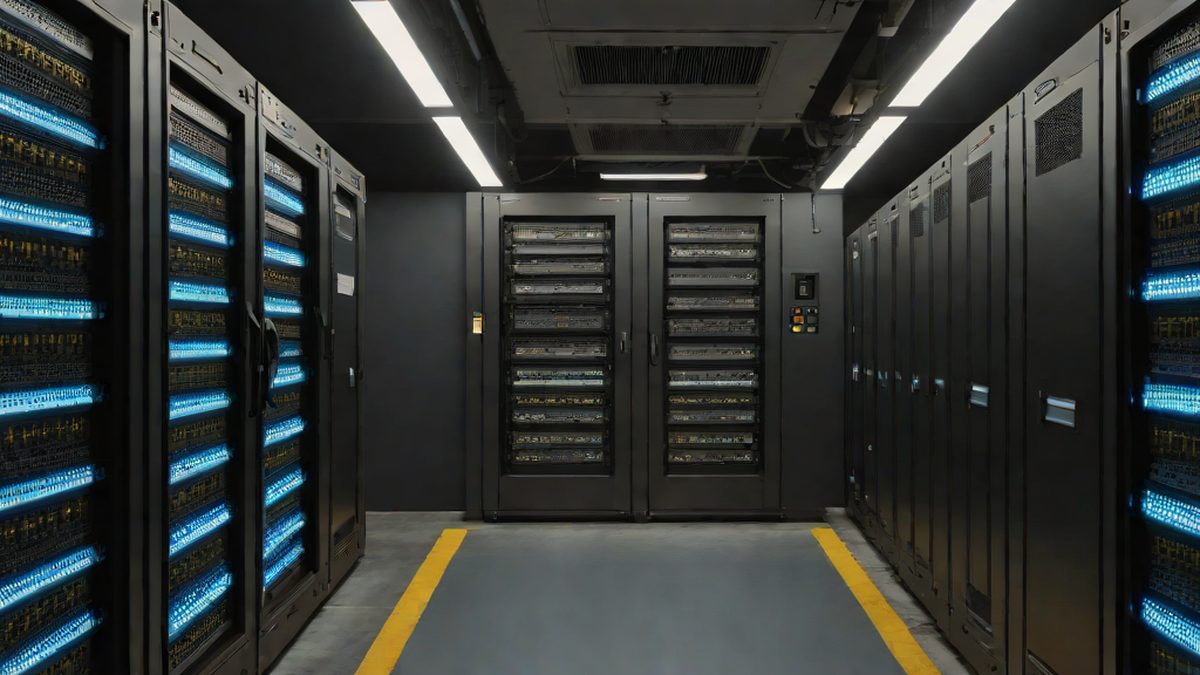
Explore the principles and latest trends in encrypted inference, which completely protects user prompts using hardware vaults (TEE) and fully homomorphic encryption (FHE).
Imagine this. One night, you enter your recent health concerns or sensitive corporate confidential project documents into a large artificial intelligence (AI) service to seek advice. The AI on your screen instantly delivers astonishingly sophisticated and useful answers. However, a sudden anxiety crosses your mind: ‘Where is this sensitive information I entered being stored right now? Could the cloud server administrator or service provider be peeking at my questions?’
Behind the AI services we use every day lies massive cloud data centers. When a user sends a question (prompt), the cloud server receives the data, decrypts it, passes it through an AI model, and generates an answer [Source 4]. During this process, data is easily exposed in plaintext (unencrypted raw data) in the server’s memory or storage devices. Encrypted Inference and Trusted Execution Environments (TEE) are innovative technologies that have emerged to bridge this security gap [[Source 1], [Source 3], [Source 4]].
Why Is This Important?
As artificial intelligence permeates every corner of daily life and industry, privacy protection has evolved from a mere “option” to a “survival condition.”
First, it prevents the leakage of personal and corporate secrets. Medical records, legal consultation details, personal financial asset data, and a company’s core source code or trade secrets must never be leaked externally. However, conventional cloud structures have a structural limitation where even service providers’ engineers can peek at user conversations if they wish.
Second, it ensures regulatory compliance and builds trust in High-Risk AI. For instance, when financial institutions use AI to make large-scale investment decisions or execute automated trades, they must comply with strict regulations (such as SEC rules in the U.S.) [[Source 8]]. Verifiable inference technology combined with audit logs and robust hardware security via TEEs are essential to gaining regulatory approval and social trust [[Source 8]].
Simply put, encrypted inference technology is the key to completing future digital fundamental rights: “enjoying the immense intelligence of AI while keeping my privacy and secrets thoroughly hidden.”
Understanding It Simply: The Meeting of Hardware Vaults and Transparent Gloves
Let’s break down these complex security technologies using everyday analogies and concrete scenarios. Metaphorically, it is like handling a locked vault and transparent boxes.
1. TEE (Trusted Execution Environment): A Steel Vault Guarding Data
Simply put, a TEE is a “bulletproof glass and steel vault” installed inside a server computer. Inside modern powerful server processor chips and the enclave regions of the latest graphics cards (GPUs), there exists an independent hardware-encrypted memory zone that external programs—and even the server operating system (OS)—cannot access [[Source 3]].
Imagine a bank teller handling a customer’s confidential documents by inserting their hands only through a special transparent acrylic box where contents are completely invisible from the outside. People outside the box cannot read the documents inside. A TEE plays precisely this role of the acrylic box. When a user sends an encrypted question into this vault, the AI model safely completes computations inside the vault and returns the result, also encrypted, back to the user. Cloud providers or hackers might linger around the vault, but they can never see what happens inside it.
2. FHE (Fully Homomorphic Encryption): Calculating Without Unsealing the Envelope
Then, is it possible to perform mathematical calculations on data while it remains completely unencrypted during transit to the vault or processing inside it? This is where Fully Homomorphic Encryption (FHE) comes in [[Source 4], [Source 9]].
Metaphorically, FHE is like a “transparent box fitted with a padlock.” You place puzzle pieces (numbers) inside the box and secure it with a strong padlock. Since the box is now fully sealed, you cannot see the contents inside. Yet, astonishingly, without ever opening the padlock, you can reach into the box from the outside to add or multiply the numbers inside [[Source 4]]. When the calculations are complete and you unlock the box, you find results that exactly match those obtained from operations performed without locks.
The essence of AI inference is ultimately the addition and multiplication of massive numbers (matrix operations) [[Source 4]]. As noted by Benoit Chevallier-Mames, Head of Machine Learning at Zama, and researcher Jordan Frery, fully homomorphic encryption now allows data scientists and developers to perform machine learning computations without ever decrypting the data [Source 9]. Although computational overhead has traditionally been a major challenge, recent multi-GPU frameworks (e.g., Cerium) that simultaneously leverage multiple GPUs to drastically accelerate FHE calculation speeds are accelerating practical adoption [Source 13].
3. The Full Journey of End-to-End Encrypted Inference
Let’s trace the steps of how these technologies work together in real-world services [Source 2]:
- Local Encryption: The prompt is securely encrypted on the user’s device (browser or app) [Source 2].
- Enclave Attestation: The user’s device verifies that the server’s TEE vault is a genuine, secure zone [Source 2].
- Relay and Transmission: Using specialized routers like AnonRouter or RedRouter, only encrypted data (ciphertext) is safely transmitted while the user’s actual IP address and identity remain concealed [[Source 2], [Source 11], [Source 14]].
- Secure Computation and Response: The AI model performs inference inside the TEE in an encrypted state, seals the answer again, and returns it to the user. Only the user can decrypt and read it [[Source 2], [Source 10], [Source 11]].
Current Status: Privacy AI That Has Become Reality
Encrypted inference and TEE technologies are no longer confined to theoretical laboratory papers. They are already being quietly adopted across our everyday lives and cutting-edge platforms.
A prime example is Brave Leo, the AI assistant in the popular web browser Brave, which partnered with NEAR AI Cloud to provide privacy-guaranteed confidential inference features [Source 11]. When a user asks Leo a question, the browser encrypts this prompt using Oblivious HTTP so that it is locked solely with an encryption key existing inside the TEE enclave [Source 11]. Brave’s intermediary relay server completely strips the user’s IP address, ensuring that NEAR AI (which provides the AI) never knows “who asked this question,” and the relay server itself never sees “what the user asked” [Source 11]. Complete bidirectional data isolation is achieved [Source 11].
Furthermore, encrypted inference is actively being adopted in ecosystems requiring decentralization and high security. Arcium’s Blackthorn framework combines multi-party computation (MPC) networks with two layers of encryption to enable secure encrypted AI inference for sensitive workloads even on standard NVIDIA GPU environments [Source 16]. Projects like Keryx utilize secp256k1 ECDH and ChaCha20-Poly1305 algorithms to perform on-chain AI inference while securely sealing user prompts with miners’ escrow keys, returning the encrypted answers safely to requesters [Source 10].
For users seeking security-focused AI API alternatives, platforms like Venice AI and Experiential Labs also prominently feature TEE and end-to-end encrypted inference capabilities, rapidly positioning themselves as alternatives to traditional big tech clouds [Source 19].
What Lies Ahead?
As encrypted inference and TEE technologies become mainstream, the future ahead is clear.
First, privacy-centric AI services will become the default standard. In the past, it was a zero-sum game where users had to sacrifice cloud convenience for security or surrender personal data to big tech for convenience. Thanks to the advancement of TEEs, FHE, and dedicated routing SDKs like AnonRouter or RedRouter, developers can now build fully End-to-End Encrypted (E2EE) AI apps with minimal performance degradation [[Source 2], [Source 14], [Source 15]].
Second, AI adoption in heavily regulated industries like finance, healthcare, and public sectors will accelerate rapidly. In sensitive areas such as algorithmic trading in financial institutions or precision medicine handling patient genomic data, regulatory audit requirements must be satisfied while fundamentally eliminating data leakage risks. The combination of hardware-based TEE security and verifiable audit logs will easily clear the stringent compliance barriers of these high-risk industries [Source 8].
MindTickleBytes AI Reporter’s Perspective
The progress of technology has often demanded a trade-off between convenience and privacy. The era where the notion “You must sacrifice a bit of your privacy to use smart AI” was taken for granted is now fading. TEEs and encrypted inference are remarkable engineering achievements that teach AI “how to work with blindfolded eyes.” Users have the right to put forth their most sensitive truths without trembling in anxiety, and technology must evolve to protect that right without infringing upon it. The final piece for artificial intelligence to truly become our clever and trustworthy assistant is finally falling into place.
References
- The Comprehensive Guide to Encrypted Inference with Tees
-
[End-to-end encrypted inference AnonRouter Documentation](https://docs.anonrouter.ai/e2ee) - Hardware-Attested TEE AI Chat: How End-to-End Encrypted LLMs…
- What is Encrypted Inference? AI that never reads your… - YouTube
- Confidential Computing AI Inference: TEE Implementation Guide
- AI Trust, Audit, and Verification: Watermarking… — Prompt20 Blog
- Machine Learning over Encrypted Data with Fully… - YouTube
- Keryx — Encrypted On-Chain AI Inference
- NEAR AI Cloud Brings Private Inference to Brave Leo — NEAR AI
- Enabling Homomorphically Encrypted Inference
- Multi-gpu Framework Enables Encrypted Large-Model
- RedRouter: low-refusal inference API for security work
-
[SDKs AnonRouter Documentation](https://docs.anonrouter.ai/sdk) -
[Arcium Blackthorn: Encrypted AI Inference on… Solana Compass](https://solanacompass.com/news/arcium-launches-blackthorn-encrypted-ai-inference-on-any-nvidia-gpu-via-mpc) -
[Venice AI API Alternative for Security Work Experiential](https://www.experientiallabs.ai/blog/venice-ai-alternative)

- TEE (Trusted Execution Environment)
- HTTP Protocol
- GPU Multithreading
- Fully Homomorphic Encryption (FHE)
- Symmetric Key Encryption
- Blockchain Hashing
- Oblivious HTTP and internal TEE encryption keys
- Open-source weight sharing
- Local disk encryption