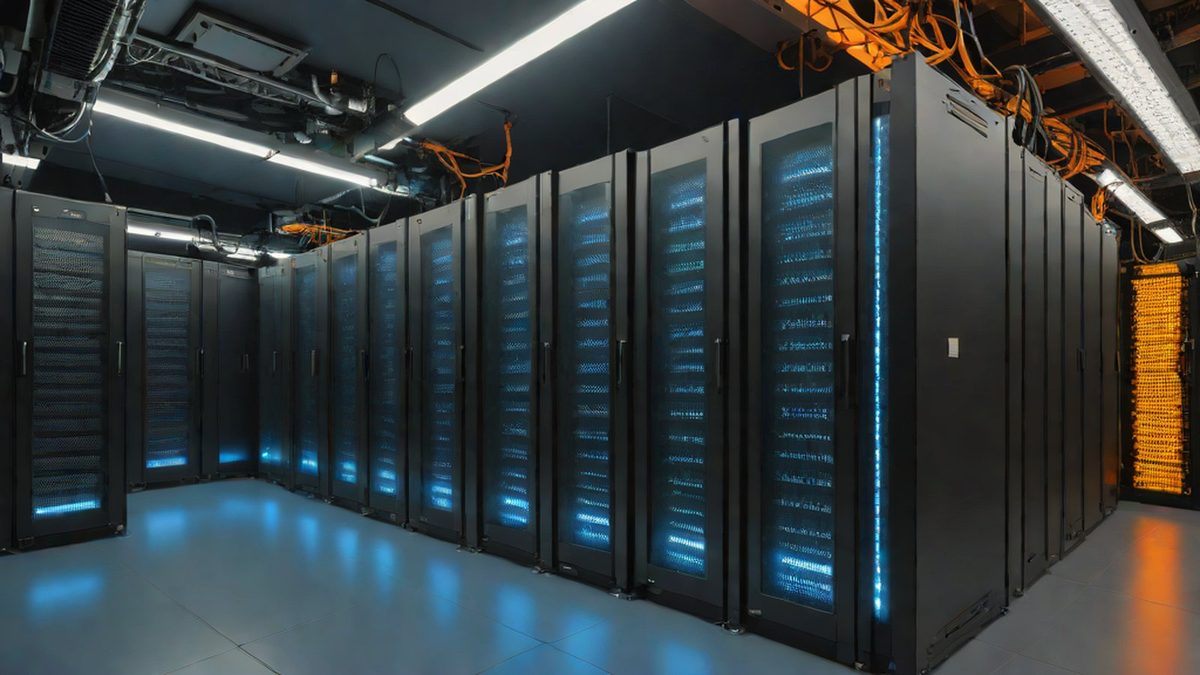
Exploring the reasons and sustainability issues behind why generative AI models consume up to 180 times more energy when processing non-English text compared to English.
Imagine waking up in the morning, turning on your smartphone, and asking an AI assistant to summarize a long text in Korean or another non-English language. Words pour across the screen in a split second, but it is easy to overlook the massive amount of electricity flowing behind the scenes. While artificial intelligence technology is advancing at a dazzling speed and transforming our everyday lives [Source 3], hidden behind its glamorous features are environmental secrets and language-based imbalances we never knew existed.
According to a recent study by a University of Michigan research team, when generative AI models process and generate text in languages other than English, they can consume up to 180 times more energy than in English [Source 11, Source 12, Source 13]. Even for sentences conveying the exact same meaning, power consumption and costs vary wildly depending on the language used. This phenomenon raises profound questions about global digital equity and environmental sustainability that go far beyond mere technical curiosity.
Why Does This Matter?
Generative AI that we use daily does not operate like magic simply inside a computer screen. Building and maintaining complex software systems requires massive data centers, consuming enormous amounts of electricity and computational energy in the process [Source 5, Source 14]. From the training phase, where AI models analyze vast amounts of data and learn patterns, to the inference phase, where they generate answers in real-time, data center power grids operate tirelessly [Source 5].
What happens if energy consumption becomes exceptionally high when using non-English languages? Studies show that processing non-English text not only consumes more power but often results in lower-quality outputs and higher costs for non-English users [Source 9, Source 11]. With the vast majority of the world’s population speaking non-English languages, if the benefits of AI technology impose heavier environmental and economic burdens on specific language users, it becomes a serious fairness issue. As AI adoption expands globally, this energy gap is emerging as a core challenge threatening sustainability and equality [Source 10].
Understanding Simply: AI’s ‘Word Chunks’ and the Secret of Tokenization
So why does such a massive energy gap exist between English and non-English languages? To understand this, we must examine how AI reads and processes text.
Simply put, AI cannot understand words all at once like humans do. Instead, it breaks text down into small pieces to process them, and these pieces are called tokens (the basic character/word chunk units used by AI to read and process sentences). To use an analogy, English is like the standard blocks of a building toy. Frequently used words are already prepared as neat, appropriately sized larger blocks, allowing AI to assemble a small number of blocks to complete the meaning when reading a sentence.
In contrast, many non-English languages that do not use Latin scripts or have relatively scarce digital training data severely lack these standard blocks [Source 12, Source 15]. As a result, to understand even a single word, AI must chop the characters into extremely fine pieces and divide them into numerous small chunks (tokens).
To put it another way, when trying to convey a sentence of the same length, while English might require fitting just 10 large puzzle pieces, certain non-English languages require piecing together 100 tiny fragments individually. The more fragments there are, the exponentially greater the computational load on the AI, consuming correspondingly more electricity and energy. While the act of generating text itself consumes less power compared to image generation [Source 2], an explosion in the number of tokens causes energy usage to skyrocket along with it.
Current Situation: How Much Do Languages Differ?
The analysis by the University of Michigan research team illustrates the reality of this energy imbalance with concrete figures:
- Total Energy Gap Range: When generative AI models generate non-English text, the energy used ranges from 1.4 times up to 180 times that of English [Source 12, Source 13, Source 15].
- Western European Languages: Most Western European languages enjoy relatively abundant training data and use Latin scripts, keeping energy consumption relatively manageable at under twice the level of English [Source 12, Source 15].
- Non-Latin Scripts and Low-Resource Languages: The imbalance becomes extreme in languages that do not use Latin scripts or have scarce digital content [Source 12, Source 15]. For example, due to higher token counts, Hindi and Bengali require 7.9 times and 15.3 times more energy than English, respectively [Source 13, Source 15]. Similar tokenization inefficiencies and energy waste phenomena have been pointed out in research regarding Russian and other non-English analyses [Source 6].
- Reference Benchmark: The energy consumed to generate text 1,000 times with AI is equivalent to only about 16% of a full smartphone charge [Source 2], but an explosive increase in token counts in non-English environments quickly surpasses this baseline.
Thus, AI models consume significantly more computational resources when processing languages other than English, and this often translates into a double blow of lower-quality results and higher costs for non-English users [Source 9, Source 11].
What Lies Ahead?
What efforts will be needed going forward to solve this problem? Scientists and engineers recognize that the rapid energy consumption and carbon emissions of large language models (LLMs, massive AI models trained on vast text to converse like humans) pose critical challenges to sustainability [Source 14].
In the near future, active research is expected to fundamentally improve tokenization methods for non-English languages to reduce unnecessary token fragmentation. Furthermore, attempts to minimize power consumption by actively integrating energy-efficient optimization technologies during model deployment are ongoing [Source 14]. For AI technology to establish itself as a fair and eco-friendly tool for everyone worldwide, a structural shift away from English-centric structures toward equal efficiency across all language users is essential.
AI Perspective: The View of MindTickleBytes AI Reporter
The “language-based energy gap” overshadowed by the pace of AI technology advancement clearly illustrates why we need to broaden our perspective on technology. Everyone in the world should enjoy the benefits of AI equally, but if specific language users consume more resources and bear environmental costs out of sight, it is difficult to call it a truly universal technology. Future AI innovation must move beyond the expansion of computing power toward sustainable efficiency innovation that embraces linguistic diversity.
References
- Making an image with generative AI uses as much energy as charging your phone
- Generative AI exists because of the transformer
- Grantable
-
[Qwen3 потратила на пушту в 179 раз больше энергии… Дзен](https://dzen.ru/b/avil0ZyUZDO-SaDV) - Qwen
- Free AI Video Generator — No Sign-Up, No Watermark
- Generative AI burns more energy on non-English text - Futurity
- Generative AI Uses More Energy on Non-English Text
- AI Models Burn More Energy Processing Non-English Text
- Generative AI Uses More Energy for Non-English Text
- Non-English text consumes up to 180 times more AI energy
- Optimizing Large Language Models: Metrics, Energy Efficiency …
- Generative AI burns more energy on non-English text

- 10 times
- 50 times
- 180 times
- Tokenization inefficiency
- Server overheating
- Internet slowdown
- 1.4x and 5x
- 7.9x and 15.3x
- 50x and 100x